The Underwhelming Underworld

The ‘darkness within’ is a trope of popular movies and stories. There is a certain kind of relatability we have with the modern villains. But when it comes to the ‘underworld’ (that includes angels and demons, the devil, death and the spiritual realms), it’s out there in the darkness at the edge of society, certainly far from the center of our being.

The popular portrayal of these realms is one of fantastic horror and unbelievable fantasy. That means that the Christian’s understanding of such realities will very much be shaped by the popular and dramatic storytelling taking place through the media. And we should all know by now that such popular storytelling is often egregiously in error (albeit in an entertaining way).

Could it be that the underworld is more mundane than we are led to believe?

In a sense, yes.

You see, the influence of the underworld (whether the devil, demons, or otherwise) holds power only insofar as it uses the resources we provide them with. What might that valuable commodity be? It is the sin that lurks within. Sin is the currency of the underworld. Peter Bolt in his book Living with the Underworld puts it this way, “The underworld can only do what it does because it exploits the weaknesses that exist in the rest of us.” p31.

It seems a brazen move to say that the ‘supernatural’ is actually rather natural. But Bolt makes an important connection we should not miss. He highlights Jesus’ words to Peter in Matt. 16:23. Peter is trying to derail Jesus’ death and Jesus bursts out with, “Get behind me, Satan! For you are not setting your mind on the things of God, but on the things a man.” Here Bolt paraphrases Jesus to make his point, “[Peter], you aren’t thinking like God; you are thinking like a human being.” P 73. Which is to say that the devil’s ways are our natural “human” ways of operation. Bolt goes on, “To think in a typically human way is to be on the side of Satan rather than God… Peter is thinking like a human being. The whole world lies in the power of the evil one. All the kingdoms and all their glory are his. By the time we come to any moment of decision, we are already ensnared in the devil’s ways, because the world that we call home is so deeply enthralled that to think like a human being is to think exactly how the devil wants us to think. We are held captive by him to do his will.” p74

It’s quite damning to consider that our everyday mundane existence can be so leveraged by the underworld because we carry within us all the mark of sin – its effects, its debt, its pull. That is because the world of the underworld is so linked to our everyday world. But we must also remember that the death of Christ on our behalf has freed us from sin and thus from any leverage it might afford the devil against us. But do not miss this point. It means that the Lord Jesus has changed our entire world, our existence and relation to it, but specifically our world’s relation to the underworld. This idea is at once a condemnation of everything we would consider “ordinary”, yet shows us how cosmic and all-encompassing Jesus’ death and victory is.

We relate to the underworld as vicarious victors. Although that is not to say that the war is not still going. It’s more like our victory has begun but it’s being worked out in time, until the apex of Judgement Day.

So how can we relate to the underworld as vicarious victors in the meantime? Bolt reminds us, “Christians are never called upon to directly engage with the devil and his forces. There is no exhortation in the New Testament for anyone to perform exorcisms. In fact, the only passage that speaks of ‘spiritual warfare’ directly – Ephesians 6:10-20 – doesn’t mention anything remotely like exorcism. What it mentions is what you might call the ‘ordinary’ things of the Christian life: faith, salvation, gospel preaching and prayer.” p140.

In one sense you might think that this is ‘too ordinary’. But Christian, nothing could be more extra-ordinary than a life of victory in Christ lived out through faith and prayer.


Bolt, P. (2007) Living with the underworld. Kingsford, N.S.W., Australia: Matthias Media.

On Attraction

Recently I’ve been reading a very helpful book called, ‘Confronting Christianity: 12 Hard Questions for the World’s Largest Religion’ by Rebecca McLaughlin. It was published relatively recently – in 2019 – and it features a wonderful combination of McLaughlin’s sharp wit and a plethora of footnoted stats and research. Definitely worth a read if you would like a fresh angle on addressing the hottest questions of our time.  

Something I would like to express – both in light of this work and another that I recently read (‘The gospel comes with a house key’, by Rosaria Butterfield) – is my thankfulness for the work of Christians who experience same-sex attraction in writing on this subject. It is wonderful to hear in their own words that knowing Christ is so much better than pursuing one’s own desires. That our Lord rescued them. Things that I know myself in other ways. 

I wanted to reflect more on attraction in this post. In her chapter on homosexuality, McLaughlin quoted some interesting research by Lisa Diamond which indicated that bisexuality is quite common (see McLaughlin p.168). Namely, many people who may identify themselves as being predominantly oriented towards the same or opposite sex will also report at times experiencing attraction to the other sex. While obviously many are predominantly same or opposite-sex attracted, her point was that this is often not exclusively so. 

The reason why I mention this is because it highlights our agency. Namely, just because one may feel an attraction, does not mean that one must then identify with and actively pursue that way of life. McLaughlin offers her own story as a woman primarily attracted to other women, and yet happily married to a man. For her as a Christian, this then means that sexual temptation will usually come from the direction of other women. I am grateful for her story, because I resonate with her that as a Christian, all forms of temptations to sin do come, but the calling for all of us who follow Christ is the same: we are called to holiness. We are called to deny our selves and follow Christ with our mind and actions – regardless of whatever attractions we experience.

As I think about my own life, I’m currently happily married to a Christian man who is shorter than me. However, for the most part, attractions have come from men who are slightly taller than me, and there have also been occasions where I mentally acknowledged budding attraction to particular women. What does a Christian do with such feelings? As I reflect upon this, I think about a quote from Martin Luther – to the extent that you can’t stop the birds from flying over your head, but you can stop them from making a nest in your hair. That is, thoughts and feelings will come, but we can control what we set our minds on and pursue.

So what do I do? I do several things.

Firstly, I acknowledge the desires for what they are: enticements to sin (see James 1:14-15). In God’s eyes, sexual intimacy is to be only expressed between one man and one woman within the exclusive bond of marriage. And as a married woman, my desires should be directed exclusively towards my husband. Holiness when single involved being chaste. Holiness when married involves being faithful to my spouse. This is good. And I particularly appreciate McLaughlin’s point that these boundaries do not necessitate loneliness for Christians attracted otherwise, because the local Christian community is to be a family – where deep friendships can be formed (see McLaughlin p.160-161). This really should not be underestimated. As McLaughlin comments, ‘In modern society we are led to believe we cannot live without sex. In fact, I believe we are more likely to wither without friend and family love.’ (p.160)

Secondly, I strive to do what Jesus calls me to do, and flee temptation. When speaking of lust, Jesus said, ‘if your right eye causes you to sin, tear it out and throw it away!’ (Matthew 5:29) He is speaking hyperbolically, but the point is to cut off the source of temptation – for dwelling on and entertaining such thoughts in one’s heart leads to sin, and if persevered with unrepentedly, hell. (Note: This does not mean shunning or avoiding particular brothers or sisters in Christ if I am regularly in fellowship with them, but it does mean guarding my heart and being careful to not put myself in potentially compromising situations.)

Thirdly, Paul writes in multiple places about setting our minds on good things (eg, Philippians 4:8, Colossians 3:2). And so, I strive to re-focus my thoughts on what is good. When I was single, I would pray and give my desires to God (and then persevere in doing this when they came back). When married, I still pray, but I now re-focus my thoughts on my husband, where they are meant to be. This is something to be persevered with and cultivated.

As I think about all this, it occurs to me that the life Christ calls us to is very counter-cultural. 

Our culture says to ‘follow your heart’ (thanks, Disney). Yet as a Christian I know that, ‘the heart is deceitful above all things’ (Jeremiah 17:9). 

Our culture says to ‘express yourself.’ Jesus says, ‘deny yourself and follow me’ (Mark 8:34, my paraphrase).

Yet knowing Jesus is worth it, a thousand times over. He rescues us from the darkness of blindly pursuing our own desires, and following him brings light to our path and life to our soul. 

References:

McLaughlin, Rebecca. Confronting Christianity: 12 Hard Questions for the World’s Largest Religion. Wheaton: Crossway, 2019.

Bill Bryson’s “Body”, and God.

In Bill Bryson’s book “The Body”, you will find a truly remarkable account of the biological makeup of the human frame. There is a lot of detail about all its intricacies, as well as an account of the historic investigations that led to many of the discoveries in human biology. How Bill Bryson and his team managed to write on such a topic while doing it justice is quite astounding. It certainly helps that it’s a very fun read as well.

But I’m particularly interested in thinking about Bill Bryson’s book and what it does and does not say about God.

The body is both an unbelievably complex organism (of which humans cannot even create one of the most basic principle parts – the cell), as well as a dishearteningly fragile specimen which is susceptible to illness and ultimately death. These two aspects of the human body warrant theological consideration. To ponder them from merely a scientific perspective would not do justice to the kind of consideration that the body beckons in its complexity and its fragility.

So how does Bill Bryson talk about those two aspects?

When it comes to the complexity of the body, Bryson will always talk in high regard about the amazing fact that evolution somehow produced a conscious, functioning, world-changing creature such as the human without even trying. The explanation which is essentially unguided chance is an underwhelming account when Bryson is painting a picture of just how marvelous the human body is. The terminus of ones praises is in a mere theoretical principle, evolution. So what will continually happen is that we personify evolution, like it’s got some sort of grand plan, or has an intention, or volition. But it doesn’t, and we (kinda) know that. Which in itself undercuts our praises of it (and also makes us look silly in the process because, well, we are the ones praising it…). Evolution may very well be part of the story, but its not even the best part of the story. It might be a ‘how’, but it’s not even close to a ‘why’. It’s like me writing a blog post about the amazingness of Tolkein’s pen and missing the mind that guided the hand.

On the other side, Bryson will talk occasionally about people claiming the existence of the eye or what-have-you is evidence of intelligent design. He then goes on to propose that some other organ is more so worthy of delivering such a killer verdict (I forget what he cited at this point – forgive me, the book is large). But at the same time he says that any intelligent designer would be deranged to conclude that childbirth the way it happens for humans is a good idea given all the crazy processes needed to deliver a baby safely (albeit it is simultaneously a miracle, etc., etc. no contradiction here…). All that to say that if we were God we would do it differently. (By the way, why aren’t we God?)

All in all, the book (at least theologically and philosophically speaking) is a bit of a hodgepodge, but it’s not about delivering a robust explanation regarding anthropology from a theological or philosophical perspective. It is a biological and scientific exploration of the human body. So it shouldn’t surprise us that when theological and philosophical comments are made, they are done so in a rather “ordinary” fashion.

Given all that, I think it is well worth the read because it is such a fantastic biological and scientific exploration of the human body – the very purpose of the book! As Christians, we still have a lot to appreciate about this book. Read it knowing that the Lord our God has created us and that he has done so in such a magnificent way. The book will hopefully give you a greater sense of the grandeur of God. That’s certainly what it did for me.

Yet when it comes to the topic of death, decay, sickness and mortality, it is again a mixed bag. These topics aren’t light and breezy by any means and Bryson does a good job of acknowledging just how profound suffering is at certain times in the book. However, they ought to be pondered very, very thoroughly and deeply. I think it would have been an opportunity for Bryson to acknowledge his area of expertise and the scope of the book and point readers elsewhere for answers on these issues. I felt that he treated them rather quaintly overall. And in typical western fashion, when discussing the topic of death at the very end, he just kinda throws his hands up in the air and says “Oh well, life is a nice ride isn’t it …?” And you just gotta think to yourself, “But we are dealing with the topic of death here in stark contrast to the living specimen of the magnificent human body. Death is really bad. One can’t just sweep it under the rug or minimise it.” Not that he always minimises it, but he tries to play both cards at the same time. Which is typical. “Death is really bad [therefore, coping mechanism] but that’s just life aye?”

At this point, the Christian is most thoroughly equipped with the gospel. Death is always destructive and invasive no matter when (even in the seemingly “natural” end of our lives, in the so-called “season of death”). We live in the shadow of death. Mortality will not leave us alone. Don’t let Bryson fool you by minimising it. Instead, as you finish the book, take a moment to remember the gospel. The Lord Jesus conquers death in his human body for our sake, that he would redeem our bodies. We are more than just our bodies, but we are indeed embodied. The Lord Jesus in his incarnation has come to redeem our bodies, and in the end, bring them to glory.

Bear that in mind as you read this wonderful book.  


Bryson, Bill. The Body: A Guide for Occupants, 2019.

Conversations with JWs: Jesus the firstborn

The identity of Jesus as being both fully human and fully God is at the core of the Christian faith. However, it is also something that, throughout history, various movements and individuals have sought to deny – in one form or another. In the 2nd century AD, gnostic philosophy led some to deny Jesus’s humanity – with the stance of docetism claiming he only appeared to be human. A couple of centuries later, Arius denied his eternal divinity. There are many other movements that also have presented skewed representations of Jesus, including various biblical scholars of the last 200 years who would deny anything supernatural about him at all – which, like docetism, is very much influenced by the dominant philosophy of the time – in our case, naturalism. However, one claim that in more recent years would be presented at your front door is that Jesus is an archangel. This is the view of Jehovah’s Witnesses (JWs).

In this post I will engage with one of their favourite passages for arguing that Jesus is a created being (and therefore not God), then will explore the important question of what difference does this make? 

When chatting with a JW about Jesus, it doesn’t seem to take long before Colossians 1:15 comes up. ‘He is the image of the invisible God, the firstborn of all creation.’ 

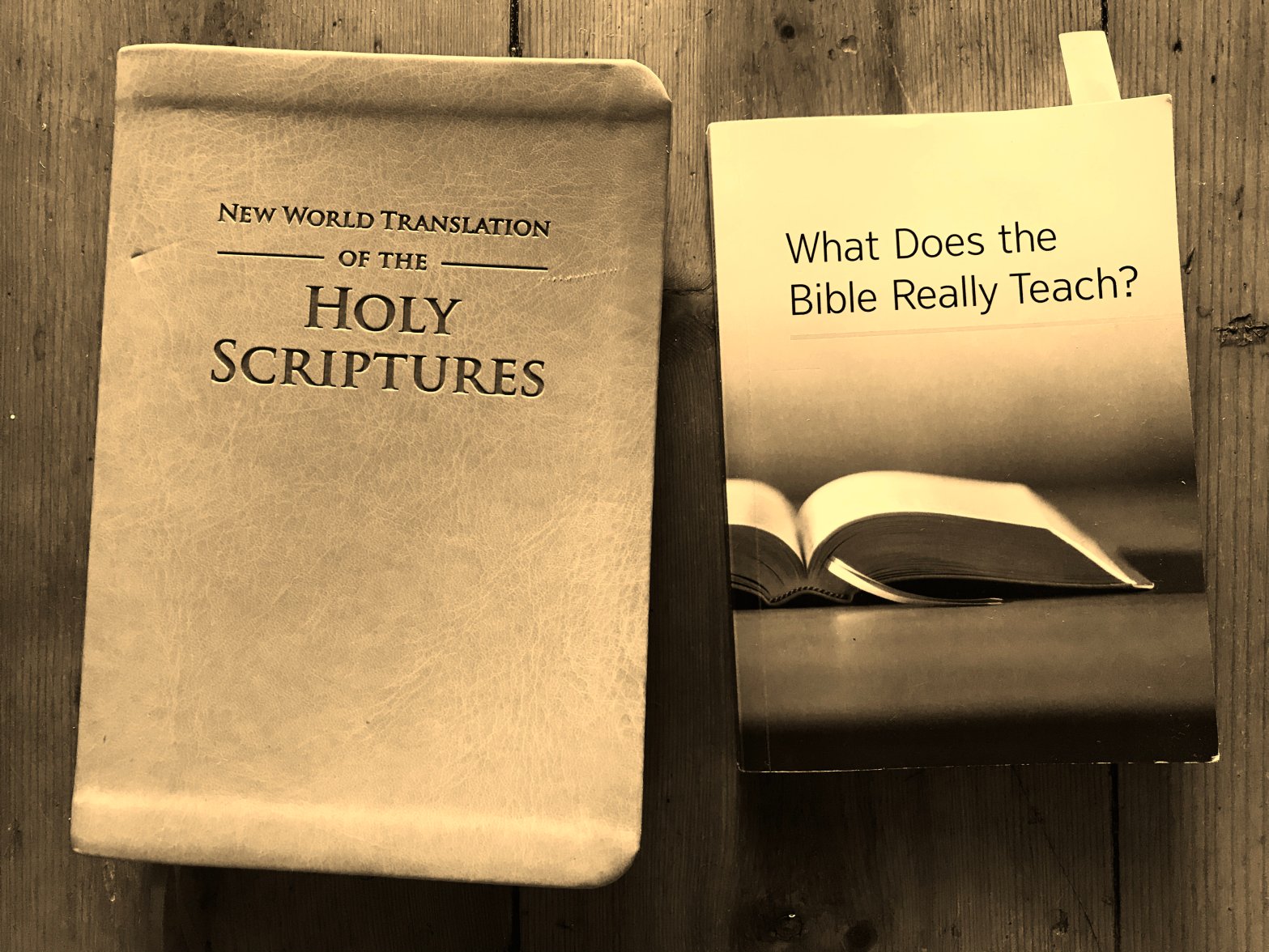
In their doctrinal tract, ‘What does the Bible really teach?’ JWs write regarding Jesus that, ‘He is called “the firstborn of all creation,” for he was God’s first creation.’ (p.41) Now, this idea is not new. It is very similar to that spread by Arius in the 4th century – which was condemned as a heresy. 

But superficially the idea makes sense. It is simple and pervasive. However, it is also wrong. 

Ask yourself, which context makes better sense in which to read the language of the New Testament: the context of our own language and culture, or the context of the Old Testament? Surely the latter. 

After all, Paul, the writer of the letter to the Colossians, was a 1st century Jew. For early Christians like him, the Old Testament books were their holy scriptures. And so when he writes ‘firstborn’ we need to fill this word with a concept that is informed by the richness of biblical thought – as expressed in the Old Testament. 

So what did ‘firstborn’ mean?

Obviously there are many references in the Old Testament to people who were literally born first. And there were all the rights and privileges of inheritance that being the firstborn entailed (cf. story of Jacob and Esau in Genesis 27).

However, as the Christ was a descendant of David, and therefore inheritor of all the Davidic promises, what is more likely on view in Paul’s use of the word ‘firstborn’ is a reference to Psalm 89:27:

“And I will make him the firstborn, the highest of the kings of the earth.” (Context: Psalm 89:19-37)

In this passage, the ‘firstborn’ is evidently a special status of exaltation. David is made the firstborn, which here is juxtaposed with the clarifying phrase, ‘the highest of the kings of the earth’. That is, he is declared by God to have this exalted, ruling status. He wasn’t literally born first – 1 Samuel 16 tells us he was the youngest of his brothers. 

Keeping this idea of exalted ruler in mind, re-read Colossians 1:15. If Jesus is the ‘firstborn of all creation’, then he is the ruler of creation – the one who both rules and inherits it. What is more, this idea of Jesus ruling and inheriting creation comes out in the following verse: 

“For by him all things were created, in heaven and on earth, visible and invisible, whether thrones or dominions or rulers or authorities — all things were created through him and for him. And he is before all things, and in him all things hold together.” (Colossians 1:16, ESV – Italics mine.)

The passage further goes on to say, ‘that in everything he might be preeminent’ – that is, being first in the sense of having the highest rank over everything – which also ties in with this understanding of ‘firstborn’.

So, reading Colossians 1:15 in its proper context, it becomes evident that, far from talking about Jesus being a created being, the passage is actually exalting him over creation. 

On this note, a related idea that JWs will assert is that after God created Jesus, he used Jesus to create all other things (p.41). However, the passage itself works against this reading. Yes, Colossians 1:16 says, ‘For by him all things were created,’ and, ‘all things were created through him’, however, this places Jesus ontologically on the side of the creator God, rather than the side of a created being. The New World Translation actually inserts the word ‘other’ here at both these points – to support the Jehovah’s Witness’s idea that Jesus made ‘all other things’ (but was himself created by God). However, the word ‘other’ is not in the greek text – I know because I can read it. It’s not even implied. Rather, Colossians 1:16 is saying that all things were created through Jesus. And if he created all things, then he can’t be a ‘thing’ that has been created. John 1:3 asserts the same idea – ‘all things were made through him’, and even repeats it in the negative – ‘without him was not anything made that was made.’ Again, this means that Jesus himself cannot be something ‘made’. (For a video of John Piper making this point see here.) Rather, ‘in him, the whole fullness of deity dwells bodily’ (Colossians 2:9). He is fully God dwelling in a man. 

But what difference does this all make?

Firstly, if Jesus were not fully God and human, then when he died on the cross, God would have been punishing an innocent third party. The whole Christian mechanic of salvation – of God taking on the punishment for sin himself in the person of his son – would be put out of joint. There is much more that could be said on this – such as Jesus’ obedience being able to be perfect because of his divine nature, and his overcoming death. But this would be compromised if he were not fully God as well as man.

Secondly, the difference is in who we worship. Because if Jesus is a created being and not truly the eternal God, then we should not worship him as such. But if this is the case, then why is he placed alongside the Father as someone to be given equal honour and worship? (See John 5:23 and Revelation 5:13). Such a thing would be blasphemous if he were a creature. Yet early Christians were recorded as singing hymns to Christ ‘as if to a god’ (Pliny the Younger, writing in the early 2nd century AD – quoted in Andrew Errington, ‘Can we trust what the gospels say about Jesus?’ Matthias Media: 2009. p.17).

And thirdly, the difference is in knowing God. Let’s consider the alternatives: If Jesus is just a man, then he wouldn’t really be all that different to the rest of the prophets who brought God’s word to people, but who did not bring God himself. Likewise, if Jesus were an angel born as a human (as Jehovah’s Witness will claim), then what he brings is not really all that different in weightiness to the Old Testament law (which Hebrews 2:2 indicates was ‘declared by angels’). However, if Jesus is truly, ‘the radiance of the glory of God and the exact imprint of his nature’ (Hebrews 1:3), and if indeed ‘in him the whole fullness of deity dwells bodily’ (Colossians 2:9), and if John said, ‘the word was God’ (John 1:1), then the message he brings is truly greater than all those who came before him – whether prophet or angel. This message is not only of a greater salvation (Hebrews 2:3), but he reveals God’s character to us in his own person (John 1:14, 18, 14:7, 9). As such, to see Jesus is to see his Father (John 14:9-11). Yet if he were just a human, or an angel, then he simply could not do this. We would not see God so intimately as we do in his son, if Jesus were not fully, the same divine, uncreated substance as his Father. 

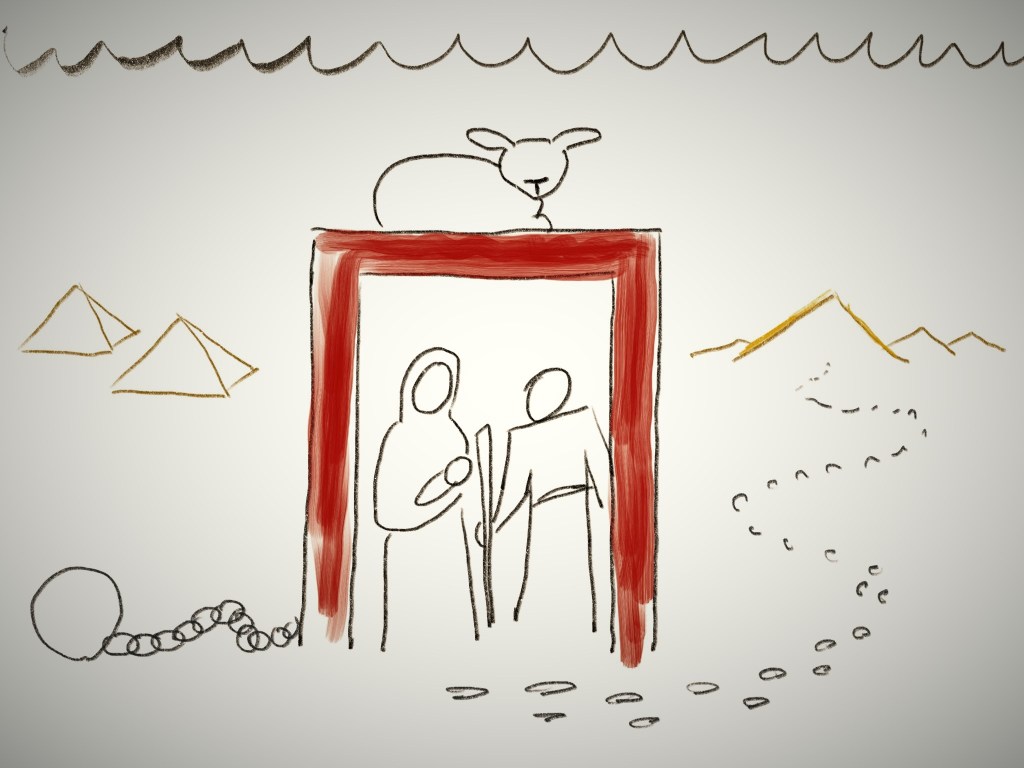
Death, Pass over.

Egypt, Judgement was coming.

Justice was coming.

Death was in the air.

But where was mercy to be found when death abounds?

Under the blood of a lamb.

Blood, upon the door.

It writes, this family belongs to the Lord.

Death, pass over.

But God’s people were slaves.

Paying an endless debt to their spiteful King.

Not anymore.

The exodus.

God’s people were freed that night.

 Judgement is coming for each one of us.

Justice is coming.

Death is in the air.

But where is mercy to be found when death hunts us like a hound?

Under the blood of the Lamb.

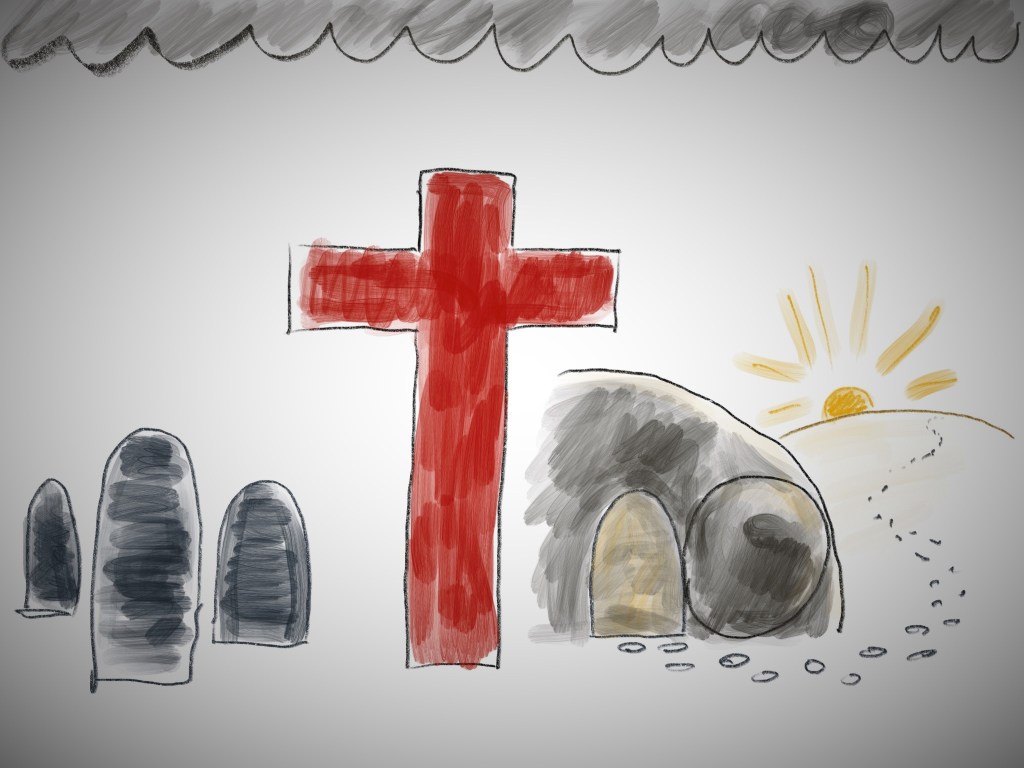
The blood upon the cross.

For the one who looks upon the tree,

The Lord says of you, “This one belongs to me.”

Death, pass over.

Once bound by the prince of the world, we were slaves.  

Once bound by the fear of our graves.

Not anymore.

God’s people are freed.

Whom the Son sets free is free indeed.

God, the great storyteller.

He tells his story through history.

He paints a picture with his words.

In the first Passover, God was sketching an outline.

But on that fateful Passover, God fulfilled the work, once for all time.

What he had done, told of what he would do.

And in each of his pictures, he has left us a clue.

In place of the firstborn, a lamb in its stead.

But now the firstborn of all creation takes our place in his death.

Salvation through Substitution.

Death, Pass over.

Kintsugi, Idealism and Moderation.

Some months back I was walking with a mate and we mentally meandered across the topic of Kintsugi. It is the art of repairing pottery with gold joinery. Turns out that this topic is getting the spotlight in Christian circles as a bit of a metaphor. Instead of deeming something un-valuable and not worth fixing (like ourselves) it is instead an opportunity to repair what was broken and make it more valuable than it originally was. To go through the process of being broken can in the end lead to greater value as we are repaired with golden glue. It is basically a metaphor that encapsulates the value of suffering and in a sense redeems the experience. The Christian can look at the work of Christ as having parallels with Kintsugi. We are made more valuable by the Lord Jesus who repairs us by his precious blood. Not bad, not bad.

I don’t mind this analogy, but that was actually incidental in the conversation. Me and my mate were particularly thinking about Kintsugi in regards to modern consumerism. We agreed, it’s got some good value to it. Let’s fight against our consumerist tendencies to merely replace what we break, let’s not give in to inbuilt obsolescence.

But how far do you go? What about repairing your broken jeans? How about learning amateur electronics to fix a broken power board? Do I learn how to bind books to fix the wear and tear mine have gone through? Or stitch myself together like action movie heroes do to themselves… I did do a nursing degree, hmmmm.

As we went through this process the difficulty of it becomes apparent. My mate labelled this difficulty as idealism. I think he was quite right in saying so. There is a sense in which, if you begin on the path of applying ‘Kintsugi’ into your life, you must ask, “where does it stop?” And if it stops sooner rather than later, does that mean you a bad person for not caring enough? When does convenience win?

Kintsugi is a hard practice in and of itself. But it is an especially hard ideal in the absolute sense. It is not convenient, it is against the tide, and time is indeed money. As a society we have lost many basic skills, such as mending things and basic agriculture. But we have gained a huge degree of specialisation. Every trade-off is obviously a trade-off. You are trading some goods for other goods. And in the case of modern consumerism it’s the ability to repair our own things and produce basic necessities for the sake of convenience.

This is not necessarily wrong. It’s just the trade-off we decided to pay. Convenience is not bad, just ask anyone whose clothes washer is broken for a week. It’s the reasoning behind our conveniences. The way we apply the rational of convenience is the issue. When you make the trade of convenience at the expense of justice, or compassion, or greed, you win in some way (such as more time, or ease of access) but you have done so at the cost of your integrity. Perhaps we might say it’s the integrity of your conscience which is now sullied.

In the end, Kintsugi is a nice idea applied more broadly (metaphorically speaking) to everyday life. That takes the art out of it in a sense, and devalues the wonder of Kintsugi. But that’s the price when life imitates art. However, in the end, I like my mate’s insight – it’s a hard master in its idealistic force. The weight of guilt this idealism would bring is impossible to deal with. I think justice warriors of our age might not get that, or they don’t see that (and most likely are just living by some unforeseen double standard).

The Mission of Marriage

Lately I’ve been writing about marriage. It just so happens I read a book on the topic, The Seven Principles That Make Marriage Work, by Gottman and Silver. Great book! We looked at a whole bunch of stuff in those posts about what the intersection between the bible and those principles were.

But as I wrote those posts I was reminded of a chapter in a book I read before I got married (this is 6 years ago now). It is Francis Chan’s book, You and Me Forever – Marriage in Light of Eternity. As you could imagine if you know the alacrity, the eagerness, of Mr. Chan with all things God Glorifying, his book on marriage has that flavor to it. Exclamation marks in abundance!!! His zeal-infused written manner is a nice pep up – and sometimes I’ll just take them wherever I can get them.

Him and his wife apply this zeal to the consideration of marriage and it provides a wonderful balance (and challenge) when considering marriage theologically and practically. So as I considered life in matrimony (more practically speaking) as I read Gottman’s book, I thought it worthwhile to revisit Chan’s writings on the subject.

The chapter I love most is chapter 4, “Don’t waste your marriage – Marriage in light of our mission”. Here are a couple of quotes I particularly found helpful.

Our mission does not call us to neglect our marriages. But a marriage cannot be healthy unless we are seeking his kingdom and righteousness first (Matt.6:33). Being in war together is what keeps us from being at war with each other.” P.97

It is our mutual love for Jesus that binds us, and our love for his mission in particular. We both love helping people repent of their sin, turn to Jesus, and be filled with the Spirit. I love watching her share her faith, disciple young women, care for the poor, and minister to children. This may sound weird, but watching her minister attracts me to her even more. And she loves it when I speak for God fearlessly, even when others hate it. She encourages me to minister and assures me that she will take good care of the kids while I’m out speaking and serving. We love being on the mission together. In fact, it is the times when we neglect the mission and just focus on our own desires that conflict arises. Staying on the mission is what draws us closer together.” p.112

What Chan is trying to do in his book (or at least in this chapter) is bring a bit of perspective to marriage. Marriage isn’t about marriage. The modern notion of marriage for the most part is that it fulfils some sort of longing in me, that it brings some kind of satisfaction to me. But the mission of marriage, which Francis Chan is trying to remind us of here, is not about our marriage. It is first and foremost about the kingdom. In a sense we might say that our mission in marriage is to do more for the kingdom together than we would be able to do apart.

In the second quote he talks about the joy that comes while husband and wife are about the task of kingdom growth together. But he also touches on the fact that when our focus is on ourselves what can often arise is conflict. He is speaking anecdotally here, but at least anecdotally I agree with him. I have found that to be the case in my own marriage (and my wife would agree). Our marriage is often at its best when we are most focused on doing kingdom work.

Let me encourage you that if you are married, make mission the mission of your marriage, not marriage the mission of your marriage. Does that even make sense? Not sure, but it sounds neat.


Chan, F. and Chan, L. (2014) You and me forever: marriage in light of eternity. San Francisco: Claire Love Publishing.

The Seventh Principle, Shared Meaning – An Addendum?

Is it possible that a good marriage could be defined by a negative, the absence of conflict? The arcane, the esoteric knowledge behind a successful marriage, could it really be as simple as avoiding the higher levels of the decibel range? Not at all.

In the book, The Seven Principles That Make Marriage Work, Gottman and Silver go on to talk about what makes a good marriage is a marriage that is creating within itself shared meaning, a marriage that is striving to achieve common convictions and goals. As Gottman puts it, “In the strongest marriages, husband and wife share a deep sense of meaning. They don’t just ‘get along’—they also support each other’s hopes and aspirations and build a sense of purpose into their lives together.” (p. 28)

Reading this book and getting to the seventh principal (creating shared meaning) made me realise my naïveté. I mean, surely no one would commit to a long-term relationship (even marriage) without first considering (or at least considering early on) what the purpose, goal, meaning and convictions of the relationship are going to be… I know you mock me now as the blue light filters through your corneas and into your grey matter. I acknowledge, I am naïve.

I have a theory as to how it is possible that so many relationships could go on to develop into something as serious as marriage and yet lack something as serious as shared meaning. Now of course you might echo the words of Detective Inspector Greg Lestrade of Scotland Yard, “You and your theories Mr Nichols”. But humour me a moment.

Physical attraction and the glue that is sex are quite powerful. And nowadays, it is totally unheard of for a couple to abstain from sex until marriage. So it is no wonder that people find themselves together and maybe eventually married, then discover that they do not share the same goals or fundamental values in life. Quite an amazing predicament to be in. Our age’s near-sightedness and lack of circumspection is something to behold.

How does all this happen? Well, feelings of affection and attraction occur for the most mundane of reasons. One of the most prevalent is simply that of proximity. The more time you happen to spend around someone, the more attracted you are to them (to a degree). Interaction breeds the anticipation of interaction.* People who have a catalogue and backlog of these mere exposures go on to develop affections. These affections coupled with physical attractiveness lead to something saucy known as sexual tension… And we all know that sexual longing must be fulfilled in every circumstance no matter!

In the end, at least humanly speaking, the mundane laws behind attraction boil down to a matter of mere opportunity, that is; proximity, interaction (and physique).

So we should not be surprised that there is such a capacity for superficiality when it comes to our relationships in the modern age. Two people might simply share the same job or the same friend circle, be attracted to each other, sleep with each other, and then the next minute you’ve got a serious relationship going on. What does this mean for future them? Well, down the line they might realise they actually don’t share any life goals or deep convictions, but have cooled down to a toleration of each other’s opposing views, because for the honeymoon time they were enjoying lots of sex…

It’s all rather childish and displays a great lack of self-control and reflection. Now of course I am making broad generalisations in my story-telling description of the situation. But to my mind it seems that the factors at play are rather obvious and well documented and understood.

As Christians, when it comes to the seventh principal of making marriage work (creating shared meaning), we must not take it for granted that we are provided with this meaning from God. We do not search it out on our own all the while hoping that someone out there who is searching for meaning themselves just happens to come up with the very same convictions and goals as ourselves. We are given meaning from God, to know him, love him, live with him, and glorify him.

The Bible urges us to practice a good degree of earnest circumspection when it comes to marriage. The seventh principal ought to be the very first for the Christian.


*These principles were drawn out from the book Exploring Social Psychology. 6th ed. New York: McGraw-Hill, 2012, written by David G. Myers. (pg 315-327)

Gottman, John Mordechai, and Nan Silver. The Seven Principles for Making Marriage Work, 2018.

Reading the Seven Principles – What you’re prepared for from the Bible

In our last post regarding the seven principles we considered some of the novel concepts that a Christian reader would encounter, that is to say, novel to Scripture. For example we considered the wisdom and recognition that Gottman and Silver had in identifying certain problematic patterns that persistently creep into marriages causing them to nosedive into a deadly divorce.

At the beginning of that post I said that the Christian doesn’t strictly need to read this book. I flagrantly and insanely stated that the Bible sufficiently directs us in a life of godliness. It’s madness! But it’s true. So what I wanted to do in this post is to look at some of the ideas that are presented in the seven principles which do have an overlap with biblical principles.

One of the most important pieces of practical advice given in the seven principles is the identification of what they call “repair attempts”. The repair attempt proffered by a spouse could take any guise from poking the tongue out to defuse tension through to direct statements of apology. Repair attempts do not occur in the midst of bliss but rather in the midst of an emotional and verbal battering that’s occurring.

Strictly speaking one could either accept or rebuff the repair attempts. Of course rebuffing them will eventually lead to a deep dark place. But in accepting them, quite the opposite. However, consider how hard it is to put aside our pride and offer an apology, or still yet to reciprocate kindly if a repair attempt is made towards us when we are suffering from an injustice and we are out for blood.

It’s a steep call. But the Christian is prepared for that call. The Lord Jesus calls us to repent (confessing our sins and shortcomings to God and each other) and also to forgive. But because marriage (in principle) is for life, you will be taking on a certain set of persistent problems in the form of another human being. To quote Gottman quoting Dan Wile, “When choosing a long-term partner . . . you will inevitably be choosing a particular set of unsolvable problems that you’ll be grappling with for the next ten, twenty, or fifty years.” (p.139) What then? We might ask with Peter, “Lord, how often will my brother sin against me, and I forgive him? As many as seven times?” And Jesus responds to us as to him, “I do not say to you seven times, but seventy-seven times.” (Matt. 18:21–22)

In another section of the book Gottman and Silver identify some common areas of conflict. One of them unsurprisingly is the “in-laws”. They state, “At the core of the tension is a turf battle between the two women for the husband’s love. The wife is watching to see whether her husband backs her or his mother. She is wondering, ‘Which family are you really in?’ Often the mother is asking the same question.” (p.202)

Could it be that the Bible has an answer to such an ancient problem? Absolutely! And it’s in the simple and ancient statement at the very beginning of the Bible (it’s as if God built his wisdom into the very fabric of creation), “Therefore a man shall leave his father and his mother and hold fast to his wife, and they shall become one flesh.” (Gen. 2:24)

The Christian is prepared for these potentially hostile hot havens of emotion by accepting their responsibility, specifically the men, to put their wives before all else and to love them as Christ loves the church. A man’s family (particularly his wife) becomes his primary responsibility regarding loving service and relational importance.

Gottman adds a little bit more worldly wisdom to this stating that at the heart of this conflict the man’s wife is longing for a sense of “we-ness” (which is not to be mistaken with the piece of skin at the end of your elbow). The man can provide this solidarity with a little bit of elbow grease directed towards his marital relationship.

There is more to mine from this book through the lens of the Bible than I’ve done here in this short reflection. But I hope to have sparked a degree of deferential acknowledgement to the sufficiency of the Bible in guiding us through some of life’s most important relationships.


Gottman, John Mordechai, and Nan Silver. The Seven Principles for Making Marriage Work, 2018.

Introduction to Conversations with JWs

A few years ago, when I was in Bible college, my husband and I were door-knocked by some Jehovah’s Witnesses (which I will refer to with the abbreviation, ‘JW’ or ‘JWs’). At the time, we were in the second year of our studies, and in our doctrine subject were learning about the Trinity. God was very gracious in his timing as he effectively showed us why such a doctrine is both relevant and crucially important for the Christian faith. Over the next couple of years we continued to meet up with a couple of the JW ladies who had door-knocked us, and even once visited their Kingdom Hall (and what a cultural experience that was! If my little artsy church gathering felt like home-brew craft beer, the JW service felt a bit like a mega fast-food chain – with content imported straight from America and re-heated locally).

Anyway, as I was at Bible college and studying the biblical languages, I was keen to examine the differences between the Jehovah’s Witness New World Translation (NWT) and the mainstream Bible translations I was using (ESV, NIV, NLT… etc.). The NWT is unique in that it intentionally narrows the meaning of many passages which would otherwise contradict JW theology – or mistranslates them. Most of these are an attempt to exclude the divinity of Jesus or the personhood of the Holy Spirit. 

For example, in some places it inserts words that are neither implied nor actually there in the Greek (such as the word ‘other’ inserted twice in Colossians 1:16). In other places, it narrows the meaning of a word to include one aspect of its sense but not others – such as when Jesus says he is ‘in the father’ (John 14:10), and the NWT would say that he is ‘in union with the father’ (which focusses on the aspect of them being united in mission, but excludes the divine mutual indwelling of the Trinity). In yet more places it seems that the NWT translators have used every superficially possible but actually unlikely alternative in translation in order to deny Jesus’s divinity. Examples of this include the famous John 1:1 ‘the Word was a god’ (NWT) instead of the usual translation, ‘the Word was God’ [ie, the quality of being God in his very substance], and Hebrews 1:8, where they prefer to jumble the word order a create a non-sense ‘your throne is God’ rather than to allow it to imply that Jesus is God (i.e., ‘But of the Son he says, “your throne, O God…”.’).

If these aspects weren’t onerous enough, probably the most unique feature of the NWT is its insistence in inserting the name ‘Jehovah’ into the New Testament whenever the NWT translation team thought the word ‘Lord’ was referring to God. The tragedy of this decision is that many of these instances are actually references to Jesus. Acts 2:21 is just one such example (compare Acts 4:10-12 – the point being that in Acts the name by which we are saved is the ‘Lord Jesus’, not ‘Jehovah’). The effect of all this is to obscure who Jesus really is to the minds of everyday Jehovah’s Witnesses. 

As I observed this practice of the NWT and considered this insistence on the name ‘Jehovah’, I was curious to delve deeper and actually devoted a good part of my final year at Bible college investigating a biblical theology of the name of God. 

In future posts I hope to outline some of the wonderful things I discovered in this, as well as other miscellaneous matters relating to NWT mistranslations of key passages that I researched over my time at college.

My writing on this subject comes out of both extensive conversations with these JW friends, combined with my own research and reflections. I share my thoughts in the hope that they will be of benefit to anyone who likewise finds themselves in conversation with JWs.

If you are trying to evangelise some JWs who have come to your door, might I recommend the book, ‘Sharing the Gospel with a Jehovah’s Witness’ by Tony Brown and published by 10 Publishing, 2019. He has far more experience than I do and writes in a more concise manner – the book is small and very helpful! 

And finally, my own reflection on the topic of evangelism to JWs is to be prepared to patiently share not only the gospel but your life as well – and this over a long time. As when trying to reach anyone from a close-knit faith community, it takes time and genuine friendship, as they will have much more reason to believe the people they know and trust than you who they may not.