Stewarding with Faithfulness

The call to steward whatever we have with all faithfulness is a lesson that I learned in the most difficult time of my life, when I lost my daughter Ellie on her eighth day of life. I knew she was going to die. So I had to decide how I was going to live in light of that reality.

There are a few ways that we make decisions in life as we seek to live ethically, or more specifically, with a Christian ethic. We can follow the commandments of the Bible. We can live according to how we were created to live. We can live as a reflection of God’s character. And we can live in light of the future – the new heavens and earth. Of course the Christian lives by drawing from all these different avenues of thought.

But before I write about how I came to live those eight days with my daughter, let me tell you what I had to actively suppress.

You see, we all live in a rather utilitarian society thanks to John Stuart Mill (amongst others). In our society we do whatever it takes to make the world a happier place but particularly to make ourselves happy. So it is that happiness becomes the goal and we make decisions in light of that goal, we pursue means to that end. This basically boils down to consequentialism, the result justifies the action taken to achieve it or at the very least ought to influence or even determine the action. That’s the basic gist of the current dominant worldview.

So why did I have to actively suppress this kind of thinking? First of all because I live in a world where one passively absorbs this sort of thinking without knowing it. Secondly and more pertinently, because I knew the result, I knew how the story was going to end. I knew my daughter would die, I just didn’t know when. In this sort of situation it’s very tempting to be gripped by another popular framework of thinking, Nihilism. Nihilism asserts that nothing you do in the end will really change the end, the outcome, and that nothing in the end has any meaning anyways. It is meaningless to try and change the end because you are only expending yourself for nothing. To try and live a meaningful life in light of a meaningless end is absurd. But some people think that living absurdly is a fitting response to such an absurd existence. I don’t buy it. I checked it out on ProductReview.com and it’s got some shady reviews.

Nevertheless, these are the kinds of thoughts that can grip one’s mind in times such as I’ve experienced. Indeed those are the kinds of thoughts that you may find assailing your mind and heart someday.

But instead of letting those ideas determine how I was to live those eight days, I chose another framework instead. Of the four ways that I mentioned earlier (creation, commands, future, character) three were particularly important (commands, future, character), but one more so than the rest – Character.

Although the future resurrection was an incredible source of comfort (and still is), it was not my source of guidance in regards to how to love my daughter in those eight days. Rather it was the character of God which taught me how to be a father to my daughter. Here I specifically think about the faithfulness of God.

I was called to be a faithful father to Ellie, whether for eight days or eight decades (if God was to work a miracle). The end of the matter did not matter at all. What mattered was how I was going to steward what I was given. So every day I had to give it my all just to be a faithful father knowing full well that a tidal wave of pain would soon be upon us as a family. It was very difficult to keep that kind of resolve up under such circumstances and were it not for the strength of the Lord I doubt I ever could. But God is faithful, that is his character, and he kept me faithful to my daughter – faithfully giving my all to her before we gave her back to Him.

Although Ellie has come and gone and is safely in the arms of the Lord, she has left an enduring mark, a lesson I hope to implement throughout all my life. Of course she has taught me many things, but this one I focus on today. We are called to be faithful with what we are given no matter the outcome. Doing so because of the faithfulness of God. Let it be said of you, that you are a faithful Christian no matter the role, circumstance or outcome, for such is God.

Community, Reality to Live, Not Ideal to Create.

When you think about Christian community do you think about something that the Christian church must primarily foster or create? Is Christian community a culture that each individual must contribute to in order to achieve a certain kind of genuine and interconnected love and service? If that is the case, then certainly the Christian or the church can fail at this task and thus this concept of Christian community will break down and not be achieved. Who would be to blame if such a situation were to arise? The Christians or the church which failed to bring it about of course. That would be a serious problem.

So what might lead to such a breakdown of Christian community? Bonhoeffer would answer that it is the very idea that Christian community is an ideal for which we must strive for in the first place, as opposed to the theological stance that Christian community is a divine reality and a spiritual reality.

Read this quote from Bonhoeffer and pay very careful attention. He writes,

“We have one another only through Christ, but through Christ we do have one another, wholly, and for all eternity. That dismisses once and for all every clamorous desire for something more. One who wants more than what Christ has established does not want Christian community*. He is looking for some extraordinary social experience which he has not found elsewhere; he is bringing muddled and impure desires into Christian community. Just at this point Christian community is threatened most often at the very start by the greatest danger of all, the danger of being poisoned at its root, the danger of confusing Christian community with some wishful idea of religious fellowship, of confounding the natural desire of the devout heart for community with the spiritual reality of Christian community. In Christian community everything depends upon its being clear right from the beginning, first, that Christian community is not an ideal, but a divine reality. Second, that Christian community is a spiritual and not a psychic reality.”

To sum up what Bonhoeffer is saying here, he is telling us, or more accurately warning us, that Christian community is first and foremost a divine reality which is purchased for us by the death and resurrection of the Lord Jesus Christ and our subsequent union with him by the Holy Spirit. From this reality Christian community find its actuation. Christian community therefore does not find its inception from the Christian first and foremost trying to make it themselves. It is the difference between ‘being’ and ‘creating’. Bonhoeffer is telling us that we do not create Christian community ourselves. Instead, and very importantly, we live out Christian community because we already are a community, a “brotherhood” or family in Christ. So it is that Christian community is the expression of our union with Christ.

Bonhoeffer makes this very clear at the beginning of the quote where he says,

“We have one another only through Christ, but through Christ we do have one another, wholly, and for all eternity.”

Bonhoeffer’s words are so important to us in our day and age (any day and age really) because at the moment community is such a longed-for experience, both by those inside the church and outside the church. The problem for the Christian, or the temptation rather, is to build our community on anything other than Christ. This temptation in the present is the ideal to build community for nothing more than the sake of community – like community is an end in and of itself. A church that does that is not experiencing “Christian community” but community that happens to be between people who are Christians. There is a big difference.

The foundation for Christian community must be the Lord Jesus Christ, the recognized reality that in him we share fellowship with each other, that this is a divine reality which we cannot escape nor create, but instead must live out.

Bonhoeffer warns us then that if we want community for community sake, we are “poisoning the roots”. We are failing before we begin. If this happens, then that which we long for will elude our grasp. So again, fix your eyes on the divine reality that Jesus’ death, resurrection and ascension have purchased for us – namely, union with God through the Holy Spirit, and thus union with each other, Christian community.


*I have used “community” instead of “brotherhood” in this quote.

Bonhoeffer, Dietrich. Life Together. Translated by John W Doberstein. 5th ed. London: SCM Press, 2015. Pg 14

A New Year’s Poem

Last year was pretty crazy, but now it’s somewhat ‘done’. 

What will this year bring? Will it be hectic, chill or fun?

Already it feels different – take Summer, let’s compare:

Instead of fire, rain. Instead of smoke, fresh air. 

During the lockdowns, global individualism learnt the need for local community. 

And while the plague continues, so does God, as He works in the hearts of humanity. 

I have seen Him work much wonder, through the cloud of suffering. 

So much good to thank Him for – such that only He can bring.

So let’s rejoice in Him through the hard times, thank Him through the good, 

Our Lord is with us – and coming soon, as he said he would. 

No News is Good News

When I was a child growing up in the 90s and continuing to grow up through adolescence in the 2000s, I wanted fun and adventure in my life without bounds or limits. The antonym to fun and adventure, the very representation and embodiment of boredom, that great dragon, was the news.

Most nights the 6 PM newscast would be on and my father would ritually be watching it. I, on the other hand, would most definitely not be watching. This was much to my father’s abasement. He would beckon me to come hither and learn of what was going on in the world, lauding the importance of achieving such a learned state. But as he would beckon me to contemporary enlightenment I would beckon his mercy in the matter. I wanted nothing to do with the news, just let me play Grand Theft Auto III on my PS2 dad!

Many years later I had managed to insulate my life from the news. When I left home I thought I was leaving the news behind. And I did! I went through my Bachelor of Nursing without the news. I survived my nursing job without the news. And I managed to get through half of my Bachelor of Divinity without the news.

But there was a turning point in my life. Adulthood was pressing in on me it seems.

Around about the time that Brexit was occurring, it hadn’t occurred to me that Brexit was indeed occurring! A comment was made during Bible study one evening to which I was oblivious and unable to contribute to. This became glaringly obvious to all involved and they sought to (playfully – I assume…) ridicule my lack of understanding in all things current and newsworthy. To me, it was a point of pride! My stature straightened, my shoulders pulled back, my chest started to bulge as I staunchly stood confident saying… nothing, because I was completely ignorant. What a proud moment it was for me. I had worked diligently at removing news from my life, never to be a cog in the machine. Huzzah. Take that dad.

But shortly afterwards when I was talking with my minister he said that ministers ought to know what is happening in the world in order to talk to their congregations about those matters. By this stage in my life I’d come to realise I need to respect, honour and follow people like my father and my minister more than I did in the past. I’m sure you can imagine that life stage were we reject just about every authority figure there is, except for yourself of course. I like to think that I was growing in Christian maturity enough to see the folly of these childish ways. And so it was that I took on board my minister’s guidance.

The pendulum was beginning to swing and it swung very hard. I went from a man who cared nought of the news, to a man reading the news every day from multiple sources.

I soon realised that this was absolutely unsustainable in a variety of ways. It took way too much time to thoroughly dissect the news, it took way too much emotional stamina to survive the onslaught of the news, and it’s an impossible task to be up-to-date on all news as there is an infinity of stories to read.

So the pendulum slowly petered to a compromise. Now I simply listen to my news through podcasts. I do so only when I have time, mainly as I do house chores. And I have a very select subscription serving from the news outlet buffet.

It turns out my father was right and my minister was right. Although it is not strictly necessary that we understand what is happening in the world, it is an excellent wisdom to practice in moderation.

I have learnt so much about the world. But importantly I’ve learnt many things I had not expected to learn. In contemplating the world and world events as mediated through the news, I’ve actually learnt a lot more about people and how the word of God can impact our lives in this world. I have come to have a fresh appreciation of God’s word as it speaks into our lives in this world. A world that is full of fear, uncertainty, evil, disaster, covetousness, deceptions and a whole other host of ills.

The word of God can speak so sharply into all these issues. So I have come to appreciate the word of God all the more for it.

Oppositely, learning more and more of human ingenuity and progress excites me. Humanity can’t help but seek after the fulfilment of the creation mandate bestowed upon us by our Creator, to take dominion of creation under his rule. So although progress in the dominion of creation is often occurring in rejection of God’s rule, it is nevertheless a wonder to see it used for good by the grace of God. 

Do you read the news? Does it fill you with fear? Does it sway your heart in unhelpful and ungodly ways? Or does it make you appreciate all the more the word of God and the great hope that we as Christians have in Christ?

Community S2:Ep11. On Christmas.

It just so happened that today (Christmas 2020!) I watched Community S2:Ep11 “Abed’s Uncontrollable Christmas”. I knew I was in for some cringing but Community makes you want to watch through their episodes to get to the next because they are mostly so well made! But it is not without its cringe biscuits. And here was one well timed crissy cringe cookie.

As Abed goes on a journey to discover the meaning of Christmas, his friends journey with him to help him get over the fact that his mother is spending Christmas with another family (because everyone’s families are affected by divorce)… let’s just sit on that for a moment.

Now moving on. 

Right before the end of the episode I said to my wife before the big reveal, “prepare to be underwhelmed.” Who would have thought such a creative show could be so predictable! But nothing is immune from Political Correctness. As Abed unwrapped the meaning of Christmas we discover that he needs his friends to help him fight off his demons (the Christmas warlock/therapist) and learn that “Christmas has meaning because we give it meaning, and we give it whatever meaning we want.” Amazing stuff! I’m blown away. I’m invigorated with Christmas zeal to spread the perfectly sanitised message of Christmas – that it’s just “whatever”… Nah. That’s coal in a dirty soccer sock. Total trash. At least the message is. Community is a lot of fun but it’s a very poor teacher. Kinda like that crazy uncle that shows up on Christmas, uncle Bob. He’s a lot of fun but don’t believe a word he says.

Christmas is the beginning of a war won by Jesus over the devil to save sinners. That’s what it is.

Since therefore the children share in flesh and blood, he himself likewise partook of the same things, that through death he might destroy the one who has the power of death, that is, the devil, and deliver all those who through fear of death were subject to lifelong slavery… Therefore he had to be made like his brothers in every respect, so that he might become a merciful and faithful high priest in the service of God, to make propitiation for the sins of the people. For because he himself has suffered when tempted, he is able to help those who are being tempted.

(Hebrews 2:14–18 ESV)

The Ironic Experience of Reading Psalm 119

I am not a naturally skilled reader. I also don’t enjoy reading a whole lot. It’s taken a good deal of intentional habit-building to start developing any semblance of wholesome habitual reading in my life. Perhaps you could call this a character deficiency. At any rate, it has put me in a funny spot as a Christian because we are to be ‘people of the book.’

All of us experience different manifestations of inner turmoil and dissonance. ‘The things we don’t want to do we do, and the things we do we don’t want to do,’ to paraphrase Romans 7:19. We want desperately to be satisfied in the Lord, yet we’re discontent with the life circumstances God gives us. We want to belong to a community, but never want to be vulnerable with anyone. We want to commune with the divine, but always on our terms. We want to be holy to fit in with our Christian friends, but long to indulge in our base desires with our non-Christian friends.

And so it is that I long to bask in all the goodness of God’s word, but I don’t want to read…

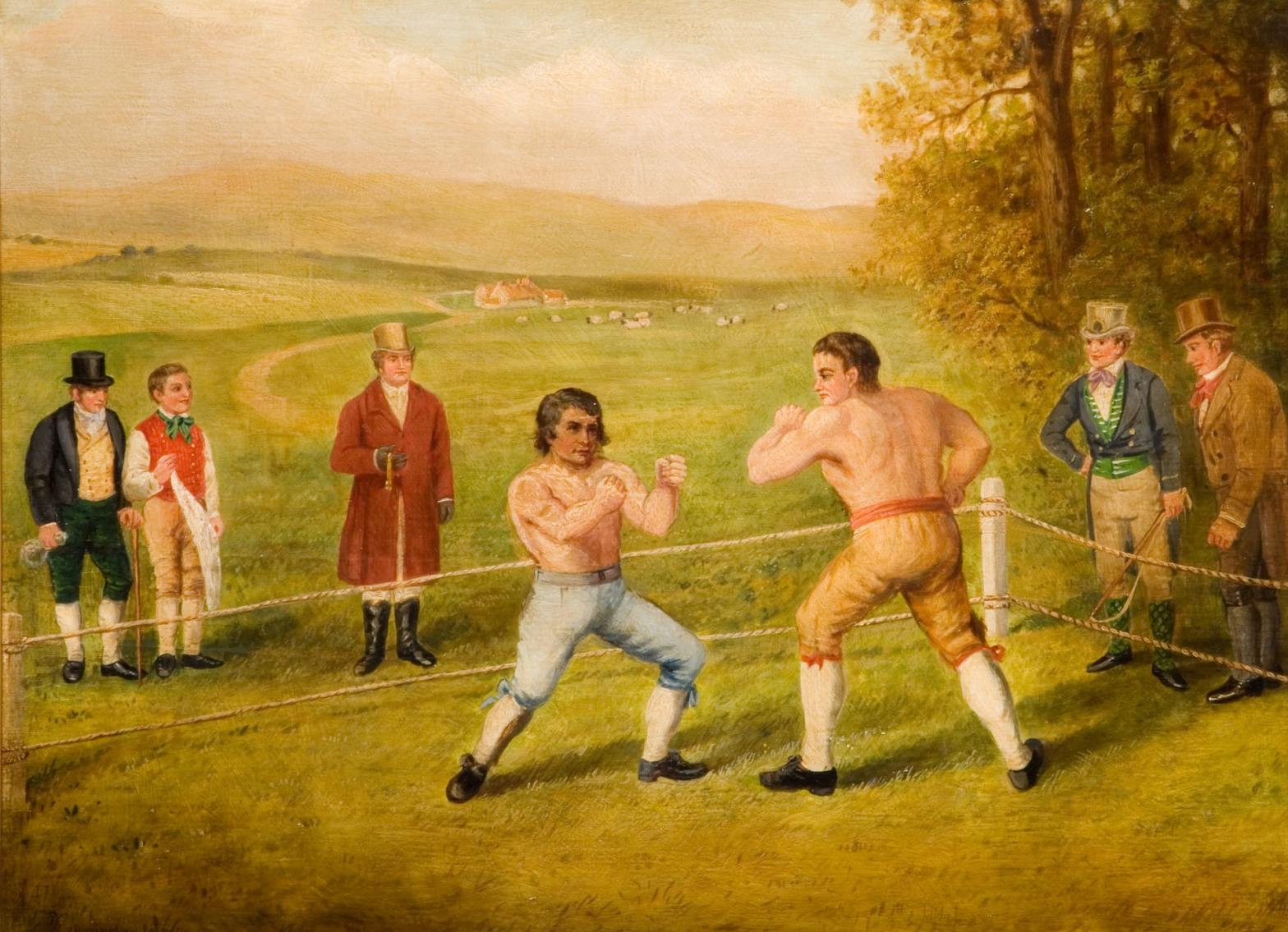
This boxing match within me became rather pronounced as I read Psalm 119. Probably the first thing that you will conjure up in your mind regarding Psalm 119 is its length. It is long. Quite long. For someone who naturally finds reading rather tedious, the length of Psalm 119 is not just ‘long’ but also daunting. Yet how ironic it is to read this Psalm as it extols God’s word in every conceivable way!

God’s word achieves what God wants it to achieve. God’s word in Psalm 119 clearly wants to achieve the goal of making me fall in love with God’s word. But it doesn’t magically do that. It puts me in the boxing ring and gives me a good left-right-uppercut combo. God used his word to bolster my love for Scripture and continually conform my non-bookish ways into submission.

When it comes to change we are not at the whim of our inner dispositions needing some self-help books. Rather we are at the mercy of God’s Spirit in the work of sanctification. But it’s not 100% God doing everything while we do 0% waiting for him. Rather it’s 100% God doing everything and the means by which he does this in us, is through us.

In a strange way, I could tangibly see God at work as I read Psalm 119. God’s Spirit was doing a work in me through God’s word and he was doing that work by building in the better habit of reading.

In what ways have you seen God work in you, through you by His Spirit and word?

Psalm 91 and our Arbitrary Literalism

The Psalm of the season is clearly Psalm 91. It lifts our eyes up from our circumstances and calls us to call God, “my refuge and my fortress, my God in whom I trust.” In a year as tumultuous as this, these words ought to be regularly uttered by us Christians.

However, there are some who take this Psalm as a protective charm against all diseases. After all, we are not to fear the terror of night or the arrow that flies by day, and especially not the pestilence that stalks in the darkness. Why? Because no plague will come near our tent. So says the Psalm.

But there seems to be an arbitrary literalness to this interpretation. ‘Pestilence’ and ‘plague’ obviously have a one-to-one correlation with the coronavirus. So let’s take that part of the Psalm and apply that to us. But why stop there? I have never been hit by a rogue arrow flying in the daylight, nor will I ever be! Shoot at me all you want (with your bow and arrow). I’m also comforted to know that when I go camping, plagues won’t bother me so long as I’m in my tent. And while I’m out camping, I got all assurance to stomp on snakes and enter fisticuffs with escapee zoo lions. I’m comforted to know that I’ve been delivered from the snare of the Fowler, despite the fact that I don’t know what that even means. As for verse seven, “A thousand may fall at your side, ten thousand at your right hand,” I am clinging desperately to this promise as I play Age Of Empires 2.

I’m making this absurd interpretation because I’m trying to highlight the arbitrary nature of our literalism at times. This arbitrary literalism isn’t only present in our time of coronavirus. It will show itself again and again at some later date when the human race faces some other crisis.

Instead of choosing parts of the Bible that we want to apply directly to ourselves, let us instead prepare for such a time by cultivating a more robust hermeneutic, one that takes into account the whole Bible as a context in which to read each text.

You will find far greater riches as you see all these promises purchased by the blood of Christ in our salvation from sin, death, the world and the Devil. As salvation history unfolds we must place each piece of the puzzle in its right place. We need to read the Old Testament in its proper context. When it comes to the physical blessings promised by God in the Old Testament, read them in the context of the Deuteronomic covenant, where the saved people of God experience the physical blessings of God after their subsequent obedience (Deut 30:11-20).

Yet these physical blessings were never truly attained because the Isralites always fell into disobedience! But lo and behold, Romans 10:5-13 uses these very words to point to Christ! Because now our place in salvation history is no longer like the nation of Israel, looking forward to the arrival of the Messiah, rather we look back to the arrival of Messiah and see all our blessings in him.

So although I really want to be completely immune from piercing damage by rogue arrows flying through the daylight, and although I deeply desire my camping tent to be a safe haven from man-flu (deadly pestilence that it is!), I have greater spiritual blessings purchased for me by Christ, and given to me through his Spirit. And so do you. So don’t settle for second best. Set your rock and refuge as God our Saviour who will see you through the storm of his judgement on disobedience as he clothes you in Christ’s righteousness. 

To Have and to Have-Not.

There is a sentiment in society today that success perpetuates success. You acheive to display acheivement, which leads to more acheivement to display all the more, which leads… This is all very well and good, appropriate and understandable (we all do this to varying degrees). But it does become a little bit more difficult when the upper echelons require such uniqueness to even enter their pearly gates. For example, Harvard University is only admitting 5% of applicants this year. This shows the discrepancy between society’s desire to enter the echelons and yet the “barred gates of heaven” as it were. What do the 5% do with their intellectual acumen? What do the other 95% feel like? Abandoned perhaps… Hopeless and helpless? They certainly know they won’t be receiving any help from the superiors looking down upon them.

You’re not alone. We’re all in that 95% … I’m not just talking about getting into Harvard University. I don’t know anyone that wants to actually do that (except for myself, but that’s just to cause trouble, and look cooler than I actually am). I mean that we are all in the situation of someone being better than us and having that which we want.

This sentiment carries over into the Christian life, or at least it can and perhaps even should – given the right motivation. We look up to certain mature saints in the faith, desiring some aspect of maturity that they have which we are seeking desperately to attain. This can be a very good thing – we are called to imitate the life of Paul as he imitates the life of Christ. All the while we are called not to covet or to be jealous of another.

However, there are not 5% of Christians who are amazing, and 95% who are ordinary. 100% of Christians ought to feel their inadequacy, because it is by grace that we are saved, not our own works. Even Paul was seeking to be mutually encouraged by brothers and sisters in the faith, those to which he was a father figure, those to which he was an apostle (Romans 1:12, 1 Cor. 4:15).

Consider how different this is to the world we live in. If getting ahead is our goal, then why would I, a candidate amongst the 5%, seek to help you in your journey to take my seat at the table?

How wonderful that this is not the case for the Christian family. As some of us recognise our own strengths, gifts given by God’s Spirit, we are then enabled to help those who are weak. And in time we will become weak in some way, we will struggle with sin and doubt in some way. It is then that another stronger than us will come to our help.

Bonhoeffer wrote, “A Christian needs another Christian who speaks God’s word to him. He needs him again and again when he becomes uncertain and discouraged, for by himself he cannot help himself without belying (contradicting) the truth. He needs his brother man as a bearer and proclaimer of the divine word of salvation. He needs his brother solely because of Jesus Christ. The Christ in his own heart is weaker than the Christ in the word of his brother; his own heart is uncertain, his brothers is sure.”

In your weakness, call to a stronger family member of the faith. In your strength, strengthen the weak amongst the flock. But not from your own humanly reservoir, rather from the word of Christ given you by the Spirit should you draw.


Bonhoeffer, Dietrich. Life Together. Translated by John W Doberstein. 5th ed. London: SCM Press, 2015. Page 12

Grief in a ‘pleasure v pain’ world

Mark Vroegop in his book on lament “Dark Clouds, Deep Mercy” writes this,

Finding an explanation or a quick solution for grief, while an admirable goal, can circumvent the opportunity afforded in lament – to give a person permission to wrestle with sorrow instead of rushing to end it.” (p.19)

This quote got me thinking about the way we often think in our society. It is not uncommon, in fact, it is becoming more prevalent to think that pleasure is the ultimate good while pain is the ultimate bad. Therefore we must seek pleasure and avoid pain. This presents itself in sayings like, “well as long as you’re not hurting anyone, do what you want.” Or, “do what makes you happy.”

So what do we do when we’re not happy? What do we do when the pain is upon us with such intensity that happiness is a very distant light at the end of a very long tunnel?

If we are working in this pleasure/pain paradigm, then the answer would be to run as hard and as fast as possible through that tunnel and into the light of pleasure once again.

Some thoughts on this.

First of all, Vroegop is telling us that to run away from this pain as fast as possible would be to miss an opportunity, or as he puts it “the grace of lament.” If we are not wrestling with grief and sorrow and pain, only seeking to end it as soon as possible, then we’ve done ourselves a disservice.

In his book, Vroegop points out the merits of sitting in pain and just wallowing (at least for a time). He talks about confronting pain and calling it what it is. Vroegop’s book is about biblical lament, and so he goes on to say that in your pain you have a special opportunity to turn to God in prayer, bring your complaints to God, boldly ask for relief, and ultimately to trust God.

That process is biblical lament. If we seek to run as hard and fast as possible down that long tunnel towards the light of pleasure, we will miss the opportunity to sit in the pain and complain, ask, and trust God.

Why am I highlighting this point? Because I think we will face the temptation to put our pains and our griefs and our sorrows behind us prematurely. We are, after all, products of our culture and in our culture pleasure rules and pain is the enemy.

A second thought, I think we actually want to face our pain. If we are aware of the practices of modern psychology then we may be aware of the need to face our pain and suffering. If that’s so, then how do we square that with the pleasure/pain paradigm? We probably say something like, “dealing with the pain here and now will lead to pleasures afterwards.” And that’s quite right, as they say, “no pain no gain.” But there are some pleasures and joys in life that we will never attain no matter how much we want to. Equally, there are some griefs and sorrows in life that we will never be rid of as much as we want that to be the case. If that is the case, then what are we to do?

If our overarching worldview is the pleasure/pain paradigm, then our life will always be, to a degree, a failure to fulfil this man-made mandate. This could lead to a vicious cycle, chasing after something that you will never attain, only to lead yourself further and further into the abyss of pain.

But if we have a biblical worldview, then glorifying God is our ultimate end, and one foundational means to this end is trusting him. Our trust in the Lord Jesus is perhaps shown most vividly through our griefs, pains, sorrows and weaknesses. In a sense, this completely upends the pleasure/pain paradigm. In another sense, in our pain and grief, we are looking forward in hope to the eternal pleasures of heaven. Face-to-face with the Lord Jesus, all of our tears and all of our pain will be eradicated. No matter our pain and sorrow now, we can say with the psalmist,

You make known to me the path of life; in your presence there is fullness of joy; at your right hand are pleasures forevermore.” (Psa. 16:11)


Mark Vroegop, Dark Clouds, Deep Mercy: Discovering the Grace of Lament (Wheaton, Illinois: Crossway, 2019).

Virtue Signaling and Psalm 26

We probably all feel that natural and ironic cringe when we encounter virtue signalling and moral grandstanding. When you meet that person and within three minutes you know they are a Minimalist and all the ethical reasoning behind their choice. How righteous! And now the right hand knows what the left hand is doing, which is just as well. Dear reader, you have been signalled, nod your head in approval. “I thank you Lord that I am not like these other people, who don’t take their re-usable bags to the supermarket, and who don’t buy ethically sorced food or clothing. I’m better, and they all know it because I let them know it. Also, I’m vegan!”

We cringe at this virtue signalling and moral grandstanding with good reason, because it’s for show most of the time. And we know its for show most of the time because most of the time we do it, we do it for show! We all have twisted motivations that pollute everything we do. Not to say we shouldn’t do good things, I’m just saying even the best things can be done with a bad heart. We want to, as far as possible, not signal our greatness, because we are not great. We want to, as far as possible, be humble.

So what do we do when we read Psalm 26? And even more the point, if we are reading Psalm 26 and even praying it, then these are your words too aren’t they?

This is what David says,

Prove me, O LORD, and try me; test my heart and my mind. For your steadfast love is before my eyes, and I walk in your faithfulness.” (Psalm 26:2–3)

That’s a bold prayer isn’t it? Asking God to try me and test my heart and my mind seems like a surefire way to get yourself in trouble. And yet David says he walks in faithfulness. What does that look like? He goes on,

I do not sit with men of falsehood, nor do I consort with hypocrites. I hate the assembly of evildoers, and I will not sit with the wicked.” (Psa. 26:4–5)

Alright, now we’re getting a wiff of that virtue signalling. Here David is explaining all the things he does not do. He doesn’t mix with the wrong crowd because he’s a good dude. But how good of a dude is he? Well he goes on,

I wash my hands in innocence and go around your altar, O LORD, proclaiming thanksgiving aloud, and telling all your wondrous deeds.” (Psa. 26:6–7)

So has David put himself on a pedestal? And if you’re praying these words are you doing the same? I don’t think so. This isn’t a self-centred “save me because I’m a good guy” prayer. Instead it’s a prayer that relies on God’s justice and God’s faithfulness. David is telling of the wondrous deeds of the Lord.

God is just. For those that do evil, speak falsehoods, love wickedness, and hate God, their end will be rightful condemnation before God the just judge. David is calling God just. In fact, he celebrates that and relies on that.

David is saying that he has done none of those things. David is saying that he is faithful to God’s ways. David is not saying that he is perfectly sinless. In fact many times David says he is faithful and yet prays that he would be forgiven of his guilt at the same time. You don’t have to be sinless to be in a relationship with God. You are simply trusting (or having faith) in God who is faithful himself.

David in this psalm is effectively reflecting on the confidence he has in his relationship with God which has shown itself through his actions. David is asking God to test him, heart and mind, not to find sin, but to find that David relies on God’s faithfulness to him.

As you read this psalm, I hope you can approach God in the same way David does. Faithfully trusting in the Lord Jesus and having a confident relationship with God. I hope you can approach God knowing that you are walking according to your calling (and that includes repenting from sin). May you say with David,

But as for me, I shall walk in my integrity; redeem me, and be gracious to me. My foot stands on level ground; in the great assembly I will bless the LORD.” (Psa. 26:11–12)