Reading the Seven Principles – What you’re prepared for from the Bible

In our last post regarding the seven principles we considered some of the novel concepts that a Christian reader would encounter, that is to say, novel to Scripture. For example we considered the wisdom and recognition that Gottman and Silver had in identifying certain problematic patterns that persistently creep into marriages causing them to nosedive into a deadly divorce.

At the beginning of that post I said that the Christian doesn’t strictly need to read this book. I flagrantly and insanely stated that the Bible sufficiently directs us in a life of godliness. It’s madness! But it’s true. So what I wanted to do in this post is to look at some of the ideas that are presented in the seven principles which do have an overlap with biblical principles.

One of the most important pieces of practical advice given in the seven principles is the identification of what they call “repair attempts”. The repair attempt proffered by a spouse could take any guise from poking the tongue out to defuse tension through to direct statements of apology. Repair attempts do not occur in the midst of bliss but rather in the midst of an emotional and verbal battering that’s occurring.

Strictly speaking one could either accept or rebuff the repair attempts. Of course rebuffing them will eventually lead to a deep dark place. But in accepting them, quite the opposite. However, consider how hard it is to put aside our pride and offer an apology, or still yet to reciprocate kindly if a repair attempt is made towards us when we are suffering from an injustice and we are out for blood.

It’s a steep call. But the Christian is prepared for that call. The Lord Jesus calls us to repent (confessing our sins and shortcomings to God and each other) and also to forgive. But because marriage (in principle) is for life, you will be taking on a certain set of persistent problems in the form of another human being. To quote Gottman quoting Dan Wile, “When choosing a long-term partner . . . you will inevitably be choosing a particular set of unsolvable problems that you’ll be grappling with for the next ten, twenty, or fifty years.” (p.139) What then? We might ask with Peter, “Lord, how often will my brother sin against me, and I forgive him? As many as seven times?” And Jesus responds to us as to him, “I do not say to you seven times, but seventy-seven times.” (Matt. 18:21–22)

In another section of the book Gottman and Silver identify some common areas of conflict. One of them unsurprisingly is the “in-laws”. They state, “At the core of the tension is a turf battle between the two women for the husband’s love. The wife is watching to see whether her husband backs her or his mother. She is wondering, ‘Which family are you really in?’ Often the mother is asking the same question.” (p.202)

Could it be that the Bible has an answer to such an ancient problem? Absolutely! And it’s in the simple and ancient statement at the very beginning of the Bible (it’s as if God built his wisdom into the very fabric of creation), “Therefore a man shall leave his father and his mother and hold fast to his wife, and they shall become one flesh.” (Gen. 2:24)

The Christian is prepared for these potentially hostile hot havens of emotion by accepting their responsibility, specifically the men, to put their wives before all else and to love them as Christ loves the church. A man’s family (particularly his wife) becomes his primary responsibility regarding loving service and relational importance.

Gottman adds a little bit more worldly wisdom to this stating that at the heart of this conflict the man’s wife is longing for a sense of “we-ness” (which is not to be mistaken with the piece of skin at the end of your elbow). The man can provide this solidarity with a little bit of elbow grease directed towards his marital relationship.

There is more to mine from this book through the lens of the Bible than I’ve done here in this short reflection. But I hope to have sparked a degree of deferential acknowledgement to the sufficiency of the Bible in guiding us through some of life’s most important relationships.


Gottman, John Mordechai, and Nan Silver. The Seven Principles for Making Marriage Work, 2018.

Introduction to Conversations with JWs

A few years ago, when I was in Bible college, my husband and I were door-knocked by some Jehovah’s Witnesses (which I will refer to with the abbreviation, ‘JW’ or ‘JWs’). At the time, we were in the second year of our studies, and in our doctrine subject were learning about the Trinity. God was very gracious in his timing as he effectively showed us why such a doctrine is both relevant and crucially important for the Christian faith. Over the next couple of years we continued to meet up with a couple of the JW ladies who had door-knocked us, and even once visited their Kingdom Hall (and what a cultural experience that was! If my little artsy church gathering felt like home-brew craft beer, the JW service felt a bit like a mega fast-food chain – with content imported straight from America and re-heated locally).

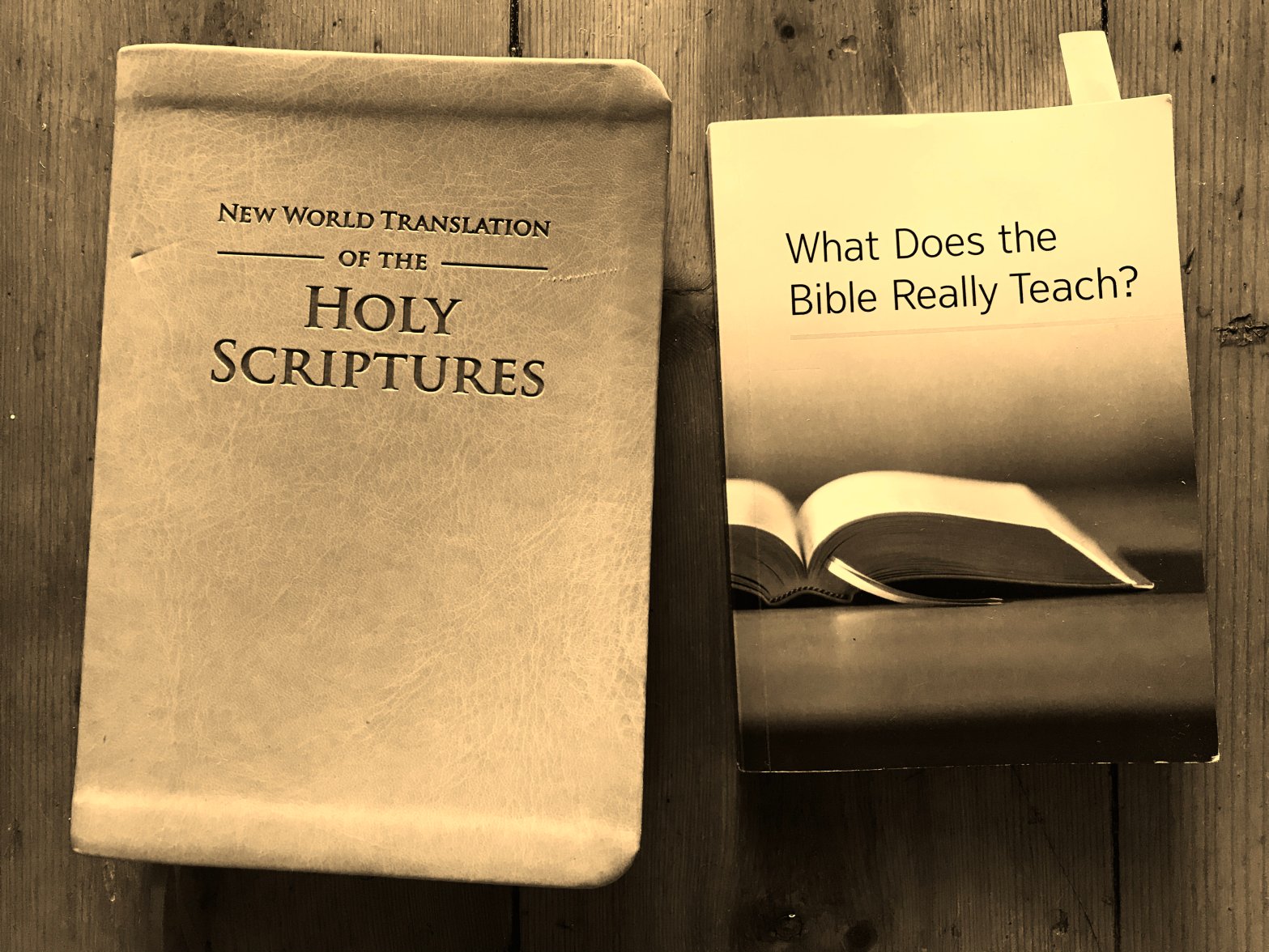
Anyway, as I was at Bible college and studying the biblical languages, I was keen to examine the differences between the Jehovah’s Witness New World Translation (NWT) and the mainstream Bible translations I was using (ESV, NIV, NLT… etc.). The NWT is unique in that it intentionally narrows the meaning of many passages which would otherwise contradict JW theology – or mistranslates them. Most of these are an attempt to exclude the divinity of Jesus or the personhood of the Holy Spirit. 

For example, in some places it inserts words that are neither implied nor actually there in the Greek (such as the word ‘other’ inserted twice in Colossians 1:16). In other places, it narrows the meaning of a word to include one aspect of its sense but not others – such as when Jesus says he is ‘in the father’ (John 14:10), and the NWT would say that he is ‘in union with the father’ (which focusses on the aspect of them being united in mission, but excludes the divine mutual indwelling of the Trinity). In yet more places it seems that the NWT translators have used every superficially possible but actually unlikely alternative in translation in order to deny Jesus’s divinity. Examples of this include the famous John 1:1 ‘the Word was a god’ (NWT) instead of the usual translation, ‘the Word was God’ [ie, the quality of being God in his very substance], and Hebrews 1:8, where they prefer to jumble the word order a create a non-sense ‘your throne is God’ rather than to allow it to imply that Jesus is God (i.e., ‘But of the Son he says, “your throne, O God…”.’).

If these aspects weren’t onerous enough, probably the most unique feature of the NWT is its insistence in inserting the name ‘Jehovah’ into the New Testament whenever the NWT translation team thought the word ‘Lord’ was referring to God. The tragedy of this decision is that many of these instances are actually references to Jesus. Acts 2:21 is just one such example (compare Acts 4:10-12 – the point being that in Acts the name by which we are saved is the ‘Lord Jesus’, not ‘Jehovah’). The effect of all this is to obscure who Jesus really is to the minds of everyday Jehovah’s Witnesses. 

As I observed this practice of the NWT and considered this insistence on the name ‘Jehovah’, I was curious to delve deeper and actually devoted a good part of my final year at Bible college investigating a biblical theology of the name of God. 

In future posts I hope to outline some of the wonderful things I discovered in this, as well as other miscellaneous matters relating to NWT mistranslations of key passages that I researched over my time at college.

My writing on this subject comes out of both extensive conversations with these JW friends, combined with my own research and reflections. I share my thoughts in the hope that they will be of benefit to anyone who likewise finds themselves in conversation with JWs.

If you are trying to evangelise some JWs who have come to your door, might I recommend the book, ‘Sharing the Gospel with a Jehovah’s Witness’ by Tony Brown and published by 10 Publishing, 2019. He has far more experience than I do and writes in a more concise manner – the book is small and very helpful! 

And finally, my own reflection on the topic of evangelism to JWs is to be prepared to patiently share not only the gospel but your life as well – and this over a long time. As when trying to reach anyone from a close-knit faith community, it takes time and genuine friendship, as they will have much more reason to believe the people they know and trust than you who they may not.

Reading the Seven Principles – What you won’t find in the Bible…

Plenty of people get married. And of that group of people a reasonable deal of them slowly trudge their way towards a bitter breakdown in relationship culminating in the tragic event of divorce. Plenty of books have looked at why this happens. But what about the ones who not only survive but thrive within their marriage relationships? How do they do it? 

Gottman and Silver set themselves out to do the study and write up the answer – titling it “The Seven Principles for Making Marriage Work”. The book uses a scientific framework, particularly statistical analysis and psychological analysis of couples, to come up with the seven principles.

After having read the book I have greatly benefited from its insightful categorisation of issues and solutions.

But after reading it I had a question lingering in my my mind. Does the Christian need this book or is the Bible enough?

Well…the Christian doesn’t need this book. Don’t build your marriage on the foundations of the seven principles, rather build your marriage on the Bible. But, supplement it with the seven principles. In fact, if you build your life on God’s word there will hopefully be an overlap with the seven principles because they are taking worldly wisdom built into God’s creation and presenting them in some easy-to-understand categories.

So if we don’t need the seven principles but would rather benefit from them, I wanted to do some thinking about the book’s overlap with the Bible and its novelty aside from the Bible.

In this post we will consider the ways in which this book doesn’t overlap with the Bible and introduces some novel and helpful concepts to the reader. In the next blog post we will consider how it does overlap with the Bible.

Gottman and Silver’s book talks about marriage through the lens of the scientific framework with a certain kind of modern lingo. One concept that is flagged early on is the idea of “emotional intelligence”, understanding our own feelings and the feelings of others. The concept of “emotional intelligence” is a modern category for thinking. You won’t necessarily find this explicitly mentioned in the Bible. The Bible speaks in different terms, calling us to love one another and love our spouses, it calls us to service. There is a focus on doing and being rather than understanding each other. Not that they are antithetical or anything, I mean – in order for one to love and serve the other we need to know what they (personally and particularly) want and need.

Let’s consider this quote,

At the heart of the Seven Principles approach is the simple truth that happy marriages are based on a deep friendship. By this I mean a mutual respect for and enjoyment of each other’s company. These couples tend to know each other intimately—they are well versed in each other’s likes, dislikes, personality quirks, hopes, and dreams. They have an abiding regard for each other and express this fondness not just in the big ways but through small gestures day in and day out.” (pg 21)

You won’t find this concept of deep friendship explicitly talked about in the Bible in relation to marriage. While in the Old Testament book Song of Songs there is a sense of deep friendship between the two characters, in the New Testament the emphasis isn’t necessarily on friendship. I think it would be fair to say that the Bible (generally speaking) doesn’t put an emphasis on “friendship” in the marriage relationship.  Not to say that it is not there, only to say that is not where the emphasis is placed.

However, the idea behind this quote above is that having such a positive relationship with your spouse tends to put out the flames of adversity. The good is more readily remembered and cherished in comparison to the ill.  In that sense Gottman and Silver’s concept can be seen as a means to the end of Phil 4:8, “…whatever is true, whatever is honourable, whatever is just, whatever is pure, whatever is lovely, whatever is commendable, if there is any excellence, if there is anything worthy of praise, think about these things.”

Something else you won’t find in the Bible is Gottman and Silver’s very helpful observation regarding the pattern of marital conflict. It goes as such, first is a harsh start-up (start bad = end bad), then comes “The Four Horsemen” as they put it; criticism, contempt, defensiveness and stonewalling. The recognition of this pattern in marital conflict is indeed very helpful for the reader. Perhaps it’s one of the most enduring contributions of the book. It gives the reader a tool, the alarm. Now you’re watching out to see if these are occurring in your own marriage in order to curb their destructive effects. Who doesn’t want to do that?!

There are many more things to mention from Gottman and Silver’s book which don’t appear in the Bible such as: comments on communication skills, insights regarding perspective, the phenomenon of flooding, stuff about a baby’s effects on a marriage, a whole range of helpful questionaries, and etc., etc.

But if there is one principle I want to share about the seven principles, it’s don’t start with them. Start with the Bible. Cultivate a robust knowledge of the Bible and its principles. Furthermore, cultivate a steadfast application of those principles to your whole life. From this you will be in a much better position to read the book by Gottman and Silver and you will be in a better position to live them out, because you will have the Spirit of the Living God helping you and sanctifying you first and foremost through His word and secondly the wisdom of others.


Gottman, John Mordechai, and Nan Silver. The Seven Principles for Making Marriage Work, 2018.

The Servant, Culture.

It seems to me that our time is steeped in a certain kind of self-awareness of culture. At least that is how I feel as I listen to the podcasts, peruse the articles and read the books. That’s beside the fact that there is this “culture war” thing happening at the moment as well. But it is not necessarily a new phenomenon. In one sense there are endless “culture wars” as different people-groups vie for control and amongst those groups are subgroups seeking out their own dominance, and amongst the subgroups there are splinter groups doing the same.

But the frontiers of the cultural battles are no longer across literal tribal lines or national borders. We are increasingly a globalised humanity with instant access to each other through mass media communication technologies. So it is that the everyday punter needs to have their wits about them because they will engage with a variety of cultures in a variety of settings in a short period of time.

The Christian wants no stumbling block to come between the gospel and those who need it (so far as is possible). Now, there is a good deal of material about the particularities of this challenge. I have recently read one such book called, “Changing Lanes, Crossing Cultures: Equipping Christians And Churches For Ministry In A Culturally Diverse Society.” This book has all sorts of little particulars that it addresses, which the reader will appreciate very much.

But early on it had a great point regarding the preservation of church culture. I think that this quote goes behind the particulars and looks at the purpose of culture more broadly speaking. The authors write,

It is certainly true that church culture is often a major hindrance to the advancement of the gospel. Many Christians lack the cultural intelligence and competence needed to negotiate cultural differences. Further, by its very nature, culture exists to serve the needs of those who belong to that culture. The more dependent we are on preserving our own religious culture the more preoccupied we will be with meeting our own needs. The needs of outsiders are then inevitably neglected.”

I found this quote particularly helpful. It is all too easy to get caught up in the “culture wars” that are currently being attended to but never ask what the purpose behind any given culture is in the first place. What is the underpinning purpose behind any culture? The authors of this quote helpfully point out that culture exists to serve those who belong to it. But as we battle it out for top place we may all too readily slip into the error that is warned against in this quote. To preserve a culture (of which the authors are particularly thinking about church cultures) to the nth degree is to flip on the head the purpose of culture itself. No longer is one helped by one’s culture, but one is ceaselessly attending to propping it up.

To fully take on board the weight of this quote is asking a lot of us. It would take a great deal of self-reflection and self-awareness to do justice to this kind of thinking. That is because our culture is the air that we breathe. We never stop to ask what it’s made up of, we simply understand that it keeps us going.

Nevertheless, I think that this quote is very helpful at prodding us to consider the purpose of culture in the first place, particularly our church cultures. Are we helping the propagation of the Gospel through our church culture? Or are we propagating our church culture despite the difficulties it poses to those outside the church?

To answer and address these questions will take great help from the Holy Spirit, a careful guard against easy-going groupthink, and the input of many saints from all sorts of backgrounds.

Culturally relevant engagement is a daunting task. But that’s okay, because it’s worth it.


Work cited:

Schachtel, Andrew, Choon-Hwa Lim, and Michael K Wilson. Changing Lanes, Crossing Cultures: Equipping Christians and Churches for Ministry in a Culturally Diverse Society, 2016. p.73

Does a baby’s spirit return?

Over the past few months I’ve had a couple of people express the idea to me that the spirit of a deceased baby returns with the birth of a subsequent child. 

While I realise that this idea may comfort some people, as a Christian I find it to be problematic with what I understand of God, the finality of death, and the relationship between our body, spirit/soul and personhood. I’ll expand on each of these.

In thinking about God, as someone who knows him though his son Jesus, I am comforted by the indications in the Bible that my child is safely with him (For more on the topic of infant salvation, both Perman and Mohler have written helpful articles). While obviously I would love for my deceased daughter to be with me, at the same time with David I can say, ‘I will go to [her] but [she] will not return to me’ (2 Samuel 12:23). And where David was going was to be in the presence of the Lord – ie, heaven. Rather than finding comfort in the idea of my child returning to me in the body of another baby, I am comforted that I will one day see her again in heaven and the future new creation – when she will have a beautiful new resurrection body that is not broken like her old one was. 

This verse also touches on the finality of death for our time in this present world – the Bible does not say that we return in another body. Rather, ‘it is appointed for man to die once’ (Hebrews 9:27). Even though it is grievously sad and unnatural for one so young to die, the Bible does not indicate any exception to the finality of death in their instance. Rather, it joins us in grieving such occurrence – and even describes the new creation as being a place where, ‘no more shall there be in it an infant who lives but a few days’ (Isaiah 65:20). I look forward to that.

What’s more, to believe that the spirit of a deceased infant will return in the next baby is to deny the importance of our bodies for our personhood. Contrary to popular western notions of self, biblically our bodies are an important part of who we are. We are not a soul trapped within a body, but an embodied soul. This is reflected in the fact that our hope as Christians is in a bodily resurrection. While of course these will be glorious, new bodies that are no longer subjected to disease and decay, our ultimate destination is to be embodied – not wandering, disembodied spirits. Also, although they can’t communicate and express their individuality as much as an older child or adult, babies are just as much unique persons as the rest of us – and their bodies are an important part of them too. When my husband and I try for a second child, (if we are blessed with another) they will be a unique person as well – not a replacement of our first, and certainly not a reincarnation of her. 

Losing a baby is very distressing, and I intimately understand the desire to want such a precious, little-one back. However, I think that the position I hold is ultimately more robust and comforting than one which believes the baby’s spirit will return in another child. After all, if my hope were in my child returning to me in this life now then how would I cope if I discovered I had secondary infertility? Or if I were too old to have another? How miserable!

Also, what factual foundation is there for such a belief? In my experience it seems to fall more into the category of ‘nice idea’ – with maybe a good dose of contemporary Australian New Age syncretism thrown in there for good measure. But rather, the truth of the Bible’s claims is supported by history’s testimony to Jesus’ resurrection. Such testimony has been tested and tried and passed on as true for a long, long time. And such truth not only has more helpful implications but gives much, much better comfort.

Stewarding with Faithfulness

The call to steward whatever we have with all faithfulness is a lesson that I learned in the most difficult time of my life, when I lost my daughter Ellie on her eighth day of life. I knew she was going to die. So I had to decide how I was going to live in light of that reality.

There are a few ways that we make decisions in life as we seek to live ethically, or more specifically, with a Christian ethic. We can follow the commandments of the Bible. We can live according to how we were created to live. We can live as a reflection of God’s character. And we can live in light of the future – the new heavens and earth. Of course the Christian lives by drawing from all these different avenues of thought.

But before I write about how I came to live those eight days with my daughter, let me tell you what I had to actively suppress.

You see, we all live in a rather utilitarian society thanks to John Stuart Mill (amongst others). In our society we do whatever it takes to make the world a happier place but particularly to make ourselves happy. So it is that happiness becomes the goal and we make decisions in light of that goal, we pursue means to that end. This basically boils down to consequentialism, the result justifies the action taken to achieve it or at the very least ought to influence or even determine the action. That’s the basic gist of the current dominant worldview.

So why did I have to actively suppress this kind of thinking? First of all because I live in a world where one passively absorbs this sort of thinking without knowing it. Secondly and more pertinently, because I knew the result, I knew how the story was going to end. I knew my daughter would die, I just didn’t know when. In this sort of situation it’s very tempting to be gripped by another popular framework of thinking, Nihilism. Nihilism asserts that nothing you do in the end will really change the end, the outcome, and that nothing in the end has any meaning anyways. It is meaningless to try and change the end because you are only expending yourself for nothing. To try and live a meaningful life in light of a meaningless end is absurd. But some people think that living absurdly is a fitting response to such an absurd existence. I don’t buy it. I checked it out on ProductReview.com and it’s got some shady reviews.

Nevertheless, these are the kinds of thoughts that can grip one’s mind in times such as I’ve experienced. Indeed those are the kinds of thoughts that you may find assailing your mind and heart someday.

But instead of letting those ideas determine how I was to live those eight days, I chose another framework instead. Of the four ways that I mentioned earlier (creation, commands, future, character) three were particularly important (commands, future, character), but one more so than the rest – Character.

Although the future resurrection was an incredible source of comfort (and still is), it was not my source of guidance in regards to how to love my daughter in those eight days. Rather it was the character of God which taught me how to be a father to my daughter. Here I specifically think about the faithfulness of God.

I was called to be a faithful father to Ellie, whether for eight days or eight decades (if God was to work a miracle). The end of the matter did not matter at all. What mattered was how I was going to steward what I was given. So every day I had to give it my all just to be a faithful father knowing full well that a tidal wave of pain would soon be upon us as a family. It was very difficult to keep that kind of resolve up under such circumstances and were it not for the strength of the Lord I doubt I ever could. But God is faithful, that is his character, and he kept me faithful to my daughter – faithfully giving my all to her before we gave her back to Him.

Although Ellie has come and gone and is safely in the arms of the Lord, she has left an enduring mark, a lesson I hope to implement throughout all my life. Of course she has taught me many things, but this one I focus on today. We are called to be faithful with what we are given no matter the outcome. Doing so because of the faithfulness of God. Let it be said of you, that you are a faithful Christian no matter the role, circumstance or outcome, for such is God.

Community, Reality to Live, Not Ideal to Create.

When you think about Christian community do you think about something that the Christian church must primarily foster or create? Is Christian community a culture that each individual must contribute to in order to achieve a certain kind of genuine and interconnected love and service? If that is the case, then certainly the Christian or the church can fail at this task and thus this concept of Christian community will break down and not be achieved. Who would be to blame if such a situation were to arise? The Christians or the church which failed to bring it about of course. That would be a serious problem.

So what might lead to such a breakdown of Christian community? Bonhoeffer would answer that it is the very idea that Christian community is an ideal for which we must strive for in the first place, as opposed to the theological stance that Christian community is a divine reality and a spiritual reality.

Read this quote from Bonhoeffer and pay very careful attention. He writes,

“We have one another only through Christ, but through Christ we do have one another, wholly, and for all eternity. That dismisses once and for all every clamorous desire for something more. One who wants more than what Christ has established does not want Christian community*. He is looking for some extraordinary social experience which he has not found elsewhere; he is bringing muddled and impure desires into Christian community. Just at this point Christian community is threatened most often at the very start by the greatest danger of all, the danger of being poisoned at its root, the danger of confusing Christian community with some wishful idea of religious fellowship, of confounding the natural desire of the devout heart for community with the spiritual reality of Christian community. In Christian community everything depends upon its being clear right from the beginning, first, that Christian community is not an ideal, but a divine reality. Second, that Christian community is a spiritual and not a psychic reality.”

To sum up what Bonhoeffer is saying here, he is telling us, or more accurately warning us, that Christian community is first and foremost a divine reality which is purchased for us by the death and resurrection of the Lord Jesus Christ and our subsequent union with him by the Holy Spirit. From this reality Christian community find its actuation. Christian community therefore does not find its inception from the Christian first and foremost trying to make it themselves. It is the difference between ‘being’ and ‘creating’. Bonhoeffer is telling us that we do not create Christian community ourselves. Instead, and very importantly, we live out Christian community because we already are a community, a “brotherhood” or family in Christ. So it is that Christian community is the expression of our union with Christ.

Bonhoeffer makes this very clear at the beginning of the quote where he says,

“We have one another only through Christ, but through Christ we do have one another, wholly, and for all eternity.”

Bonhoeffer’s words are so important to us in our day and age (any day and age really) because at the moment community is such a longed-for experience, both by those inside the church and outside the church. The problem for the Christian, or the temptation rather, is to build our community on anything other than Christ. This temptation in the present is the ideal to build community for nothing more than the sake of community – like community is an end in and of itself. A church that does that is not experiencing “Christian community” but community that happens to be between people who are Christians. There is a big difference.

The foundation for Christian community must be the Lord Jesus Christ, the recognized reality that in him we share fellowship with each other, that this is a divine reality which we cannot escape nor create, but instead must live out.

Bonhoeffer warns us then that if we want community for community sake, we are “poisoning the roots”. We are failing before we begin. If this happens, then that which we long for will elude our grasp. So again, fix your eyes on the divine reality that Jesus’ death, resurrection and ascension have purchased for us – namely, union with God through the Holy Spirit, and thus union with each other, Christian community.


*I have used “community” instead of “brotherhood” in this quote.

Bonhoeffer, Dietrich. Life Together. Translated by John W Doberstein. 5th ed. London: SCM Press, 2015. Pg 14

A New Year’s Poem

Last year was pretty crazy, but now it’s somewhat ‘done’. 

What will this year bring? Will it be hectic, chill or fun?

Already it feels different – take Summer, let’s compare:

Instead of fire, rain. Instead of smoke, fresh air. 

During the lockdowns, global individualism learnt the need for local community. 

And while the plague continues, so does God, as He works in the hearts of humanity. 

I have seen Him work much wonder, through the cloud of suffering. 

So much good to thank Him for – such that only He can bring.

So let’s rejoice in Him through the hard times, thank Him through the good, 

Our Lord is with us – and coming soon, as he said he would. 

No News is Good News

When I was a child growing up in the 90s and continuing to grow up through adolescence in the 2000s, I wanted fun and adventure in my life without bounds or limits. The antonym to fun and adventure, the very representation and embodiment of boredom, that great dragon, was the news.

Most nights the 6 PM newscast would be on and my father would ritually be watching it. I, on the other hand, would most definitely not be watching. This was much to my father’s abasement. He would beckon me to come hither and learn of what was going on in the world, lauding the importance of achieving such a learned state. But as he would beckon me to contemporary enlightenment I would beckon his mercy in the matter. I wanted nothing to do with the news, just let me play Grand Theft Auto III on my PS2 dad!

Many years later I had managed to insulate my life from the news. When I left home I thought I was leaving the news behind. And I did! I went through my Bachelor of Nursing without the news. I survived my nursing job without the news. And I managed to get through half of my Bachelor of Divinity without the news.

But there was a turning point in my life. Adulthood was pressing in on me it seems.

Around about the time that Brexit was occurring, it hadn’t occurred to me that Brexit was indeed occurring! A comment was made during Bible study one evening to which I was oblivious and unable to contribute to. This became glaringly obvious to all involved and they sought to (playfully – I assume…) ridicule my lack of understanding in all things current and newsworthy. To me, it was a point of pride! My stature straightened, my shoulders pulled back, my chest started to bulge as I staunchly stood confident saying… nothing, because I was completely ignorant. What a proud moment it was for me. I had worked diligently at removing news from my life, never to be a cog in the machine. Huzzah. Take that dad.

But shortly afterwards when I was talking with my minister he said that ministers ought to know what is happening in the world in order to talk to their congregations about those matters. By this stage in my life I’d come to realise I need to respect, honour and follow people like my father and my minister more than I did in the past. I’m sure you can imagine that life stage were we reject just about every authority figure there is, except for yourself of course. I like to think that I was growing in Christian maturity enough to see the folly of these childish ways. And so it was that I took on board my minister’s guidance.

The pendulum was beginning to swing and it swung very hard. I went from a man who cared nought of the news, to a man reading the news every day from multiple sources.

I soon realised that this was absolutely unsustainable in a variety of ways. It took way too much time to thoroughly dissect the news, it took way too much emotional stamina to survive the onslaught of the news, and it’s an impossible task to be up-to-date on all news as there is an infinity of stories to read.

So the pendulum slowly petered to a compromise. Now I simply listen to my news through podcasts. I do so only when I have time, mainly as I do house chores. And I have a very select subscription serving from the news outlet buffet.

It turns out my father was right and my minister was right. Although it is not strictly necessary that we understand what is happening in the world, it is an excellent wisdom to practice in moderation.

I have learnt so much about the world. But importantly I’ve learnt many things I had not expected to learn. In contemplating the world and world events as mediated through the news, I’ve actually learnt a lot more about people and how the word of God can impact our lives in this world. I have come to have a fresh appreciation of God’s word as it speaks into our lives in this world. A world that is full of fear, uncertainty, evil, disaster, covetousness, deceptions and a whole other host of ills.

The word of God can speak so sharply into all these issues. So I have come to appreciate the word of God all the more for it.

Oppositely, learning more and more of human ingenuity and progress excites me. Humanity can’t help but seek after the fulfilment of the creation mandate bestowed upon us by our Creator, to take dominion of creation under his rule. So although progress in the dominion of creation is often occurring in rejection of God’s rule, it is nevertheless a wonder to see it used for good by the grace of God. 

Do you read the news? Does it fill you with fear? Does it sway your heart in unhelpful and ungodly ways? Or does it make you appreciate all the more the word of God and the great hope that we as Christians have in Christ?

Community S2:Ep11. On Christmas.

It just so happened that today (Christmas 2020!) I watched Community S2:Ep11 “Abed’s Uncontrollable Christmas”. I knew I was in for some cringing but Community makes you want to watch through their episodes to get to the next because they are mostly so well made! But it is not without its cringe biscuits. And here was one well timed crissy cringe cookie.

As Abed goes on a journey to discover the meaning of Christmas, his friends journey with him to help him get over the fact that his mother is spending Christmas with another family (because everyone’s families are affected by divorce)… let’s just sit on that for a moment.

Now moving on. 

Right before the end of the episode I said to my wife before the big reveal, “prepare to be underwhelmed.” Who would have thought such a creative show could be so predictable! But nothing is immune from Political Correctness. As Abed unwrapped the meaning of Christmas we discover that he needs his friends to help him fight off his demons (the Christmas warlock/therapist) and learn that “Christmas has meaning because we give it meaning, and we give it whatever meaning we want.” Amazing stuff! I’m blown away. I’m invigorated with Christmas zeal to spread the perfectly sanitised message of Christmas – that it’s just “whatever”… Nah. That’s coal in a dirty soccer sock. Total trash. At least the message is. Community is a lot of fun but it’s a very poor teacher. Kinda like that crazy uncle that shows up on Christmas, uncle Bob. He’s a lot of fun but don’t believe a word he says.

Christmas is the beginning of a war won by Jesus over the devil to save sinners. That’s what it is.

Since therefore the children share in flesh and blood, he himself likewise partook of the same things, that through death he might destroy the one who has the power of death, that is, the devil, and deliver all those who through fear of death were subject to lifelong slavery… Therefore he had to be made like his brothers in every respect, so that he might become a merciful and faithful high priest in the service of God, to make propitiation for the sins of the people. For because he himself has suffered when tempted, he is able to help those who are being tempted.

(Hebrews 2:14–18 ESV)