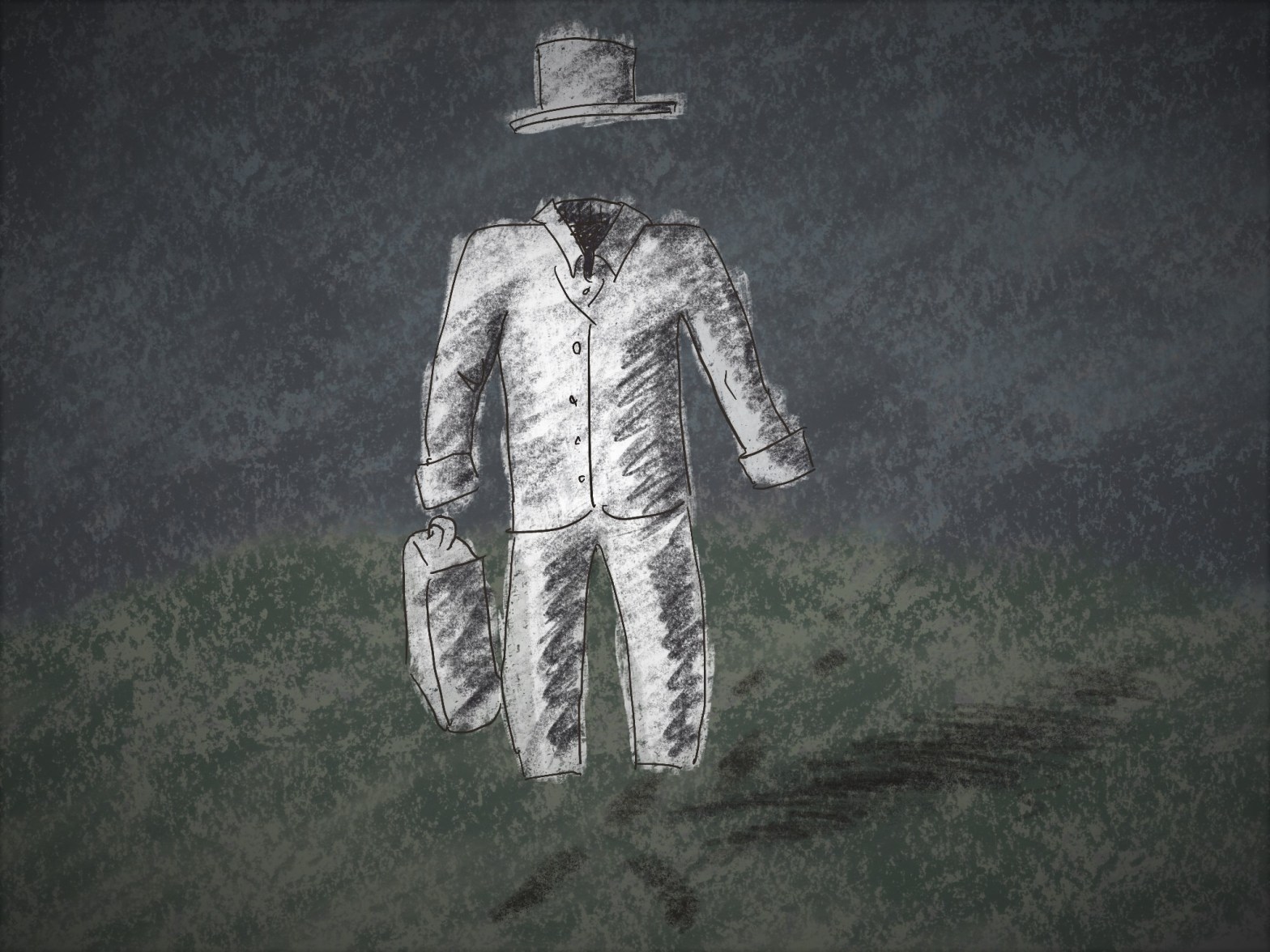
Media consumption: Thoughts about our attitude to media.

Tell me if this is a familiar situation for you. You were watching a movie or a TV show which apparently everyone else has watched, thus necessitating your viewing of it for fear of contracting the dreaded FOMO disease. However, at the end of one or another episode or in a scene in said movie you see something you can’t un-see, or hear something you can’t un-hear. Perhaps it was a sex scene, a scene with nudity. Or a scene of particular violence and gore. Even “mature themes” in a show can take you into territory you wish you never trod, leaving you questioning “what kind of ‘mature’ person should think on these things?” Once these scenes find a place in the hippocampus it’s not leaving campus. It has moved in. It is messy and stinks. The smell of its unpleasant abode soon wafts throughout the mind. Vivid recollections come back to haunt and you can’t get rid of them. I have no doubt that you can recollect some of these scenes. Even as I asked the question, they come back to haunt you.

What do you do? You can’t remove those disturbing recollections from memory, a task that’s basically not possible. But there is a degree of peace found in prevention. It’s a battle for the mind in this media saturated world. We don’t enter neutral territory when we enter the kingdom of Netflix. So come prepared.

First, be prepared with the right attitude.

I want to keep my mind free and clean (as the word of God and my informed conscious dictates). The matters on which we set our minds on matters. It’s not as if life is consisted merely in what we do with our hands and feet, or what we say. It’s also very much a matter of what we watch and therefore at a very basic level what we think on. Think on that. How much are we thinking? Lots. We think about all sorts of things. But what dictates my thoughts? Again, lots. I feed my mind lots of food for thought. A portion comes from my Netflix subscription. Other portions from Gods word, or friends, podcasts, video games, books and time alone on a walk. I must be aware of this. The more I play a video game, the more I think about that video game. Is that what I want? Well I must ask myself. How much do I want to be preoccupied with that game? It seems so obvious to state, but you think about the things you watch. Yes it is obvious, but we are not always conscious or aware of this fact. Much like breathing. Rarely do we think about breathing, until a diesel train goes by, or until the dog farts. Once triggered I’m very aware of my breathing. I’m actively supressing it. But it’s not so obvious when you work on a diesel train, or work in a dog pound. So it is that modern graphic content is all too “normal”. What we might even say to ourselves is, “it’s just one scene, I’ll put up with it.” Let me ask, what are you willing to “put up with”? It’s a trick question. If you have to ‘put up with it’, doesn’t that already say something?  An attitude shift is needed. Inform your conscience, inform your mind with the word of God. Let it dictate your standards and apply those standards with wisdom. Consider this important passage from Romans 8.

Those who live according to the flesh have their minds set on what the flesh desires; but those who live in accordance with the Spirit have their minds set on what the Spirit desires. The mind governed by the flesh is death, but the mind governed by the Spirit is life and peace. The mind governed by the flesh is hostile to God; it does not submit to God’s law, nor can it do so. Those who are in the realm of the flesh cannot please God.” (Romans 8:5–8)

You cannot take the right actions without first having the right attitude. Laws and rules don’t help without a renewed heart and mind. So implement change in your mind before you implement change with your hands. One follows the other, and what you do follows very closely on what you think. But first, have the right attitude toward media and the garden of the mind.

Next week we will consider some practical tips for managing media consumption and moderation.


Related posts:

Sleep and Holiness

Changes in life don’t always occur by addressing something directly. Change can happen by addressing auxiliary or associated areas. So your house is freezing cold, turn the heater on. The heater isn’t fixing the problem! How is this possible? We must first close the windows and doors!

Sleep is much like closing the front door and making sure the windows don’t let a draught in. Perhaps your life is a little frosty. You always seem to be sick. Energies on the lower end (not that you remember what the higher end looks like). You can’t remember what memory even is (something to do with making a computer work?). To address all these problems you are taking lots of vitamin C, drinking lots of coffee, and making sure you have a good catalogue system so you never forget things. This is like turning the heater on and leaving the doors open to the dark, cold world outside. That is, if you’re not getting enough sleep.

Now, we think that those matters above are rather important (health, energy, mood etc). Certainly they are important. But what if you put holiness in that category too? What if we were exerting ourselves to be holy people, godly and righteous people, as our Lord has called us to be, yet for some reason we keep stumbling into foul moods, we keep doubting God’s goodness in our sufferings, and we have no energy to go about his mission? We can’t just call it a matter of “personality,” saying to ourselves, “God must have just made me this way and there’s nothing I can do about it.” It might not simply be a “thorn in the flesh” inflicted upon you by God. What if it was a thorn in your mind inflicted upon you, by you? Specifically, your lack of sleep. Perhaps it is the case that your holiness is hindered by your sleeplessness. That’s cause for alertness.

Here is Geoff Robson quoting Don Carson, “…If you are among those who become nasty, cynical, or even full of doubt when you are missing your sleep, you are morally obligated to try to get the sleep you need. We are whole, complicated beings: our physical existence is tied to our spiritual well-being, to our mental outlook, to our relationships with others, including our relationship with God. Sometimes the godliest thing you can do in the universe is get a good night’s sleep – not pray all night, but sleep. I’m certainly not denying that there may be a place for praying all night; I’m merely insisting that in the normal course of things, spiritual discipline obligates you to get the sleep your body needs.” (p.74)

What a challenge! The moral obligation to sleep is tied to our embodied nature. Let this shape our perspective on sleep. It might be that we think sleep is a luxury in a busy world. This is task oriented thinking and erroneous. To live in the world is not just a matter of doing, but of being. The amount of work you do or the amount of experiences you accumulate will pale in comparison to the kind of person you are. You are to be a holy person. And if you struggle to be a holy person because of your lack of sleep, then this area of your life needs addressing. If your sleeplessness causes you to sin then ‘cut off’ your sleeplessness.

Robson questions us, saying, “Are doubts more likely to creep in when you’re overworking? Then get more sleep. Do you get angrier and more irritable when you’ve had too many late nights? Then get more sleep. Do you find it harder to be patient with others when you’re tired? Then get more sleep. Does life just seem harder and more overwhelming when you’ve been burning the candle at both ends? Then get more sleep.” (p.76)

Chances are that if you’re convicted by these challenges, you already know that you need more sleep. It’s not that you need better education about sleep (although that never hurts). Simply having more information isn’t going to change your life nor your sleeping patterns. It’s more likely a matter of wisdom and willpower to act accordingly. Sleeplessness might not merely be a thing to see your doctor about. Perhaps it’s something that you need Christian accountability for, and Christian support in. Because it’s not merely a matter of bodily health. In a very serious way, it could be a matter of holiness.

Perhaps it’s fitting to end with a prayer from the Valley of Vision titled, ‘Sleep’.


Blessed Creator,

Thou hast promised thy beloved sleep; Give me restoring rest needful for tomorrow’s toil; If dreams be mine, let them not be tinged with evil. Let thy Spirit make my time of repose a blessed temple of his holy presence.

May my frequent lying down make me familiar with death, the bed I approach remind me of the grave, the eyes I now close picture to me their final closing. Keep me always ready, waiting for admittance to thy presence. Weaken my attachment to earthly things. May I hold life loosely in my hand, knowing that I receive it on condition of its surrender; As pain and suffering betoken transitory health, may I not shrink from a death that introduces me to the freshness of eternal youth. I retire this night in full assurance of one day awaking with thee. All glory for this precious hope, for the gospel of grace, for thine unspeakable gift of Jesus, for the fellowship of the Trinity. Withhold not thy mercies in the night season; thy hand never wearies, thy power needs no repose, thine eye never sleeps.

Help me when I helpless lie, when my conscience accuses me of sin, when my mind is harassed by foreboding thoughts, when my eyes are held awake by personal anxieties.

Show thyself to me as the God of all grace, love and power; thou hast a balm for every wound, a solace for all anguish, a remedy for every pain, a peace for all disquietude. Permit me to commit myself to thee awake or asleep.


Robson, Geoff. Thank God for Bedtime: What God Says about Our Sleep and Why It Matters More than You Think, 2019.

Bennett, Arthur. The Valley of Vision: A Collection of Puritan Prayers & Devotions. Edinburgh: Banner of Truth Trust, 2002. p.298-299

Sleep – Creatureliness and Dependence

A little slumber, a little folding of the hands. Yes, hello darkness my old friend. Sleep is a friend. For some it is a friend who visits regularly. For others, not as regularly as we’d like, and for others, we kick them out of the house too early to our own peril.

In much the same way that we need friends, we need sleep. Except sleep is more immediately necessary. You will die sooner for lack of sleep than for lack of friends. But just getting the “bear essential” to function is also not good enough. Much the same as seeing our friends only the minimum required amount will not benefit the relationship. No, it will strain it. So it is that we need sleep, and we need good sleep.

What a thought – that we are intentionally made to sleep. God has made us this way. He made us so that we would be incapacitated for 7 ½ to 8 hours a day (yes that’s the standard for 98% of people, and no, you’re probably not one of the 2%. In fact there is only a 2% chance that you are!)

Why has God made us this way? We cannot answer that entirely. But we can say it highlights a significant difference between us and our Creator. As Geoff Robson points out, “There are many [differences between us and God], of course: the Lord God is omnipotent, omniscient, omnipresent, eternal, perfectly holy, and perfectly loving, to name just a few of his attributes. But how about this one: God never sleeps.” (p.15) So it is that our creatureliness is displayed in the very fact that we repeatedly must sleep yet God our Creator never sleeps. Now take a moment to consider how every night we are being reminded by the very nature of our necessitated rest that God never sleeps. Rather, He is tireless. No doubt, this rarely (if ever) crosses our minds as we place our brain capsules to the pillow and enter into the palatial darkness.

Because God’s sleeplessness is never much pondered by us, we can take this for granted. God has often used the most mundane aspects of our lives to speak into our lives. In much the same way that God uses food, friendships, work, or leisure to teach us, God uses sleep to teach us.

God uses our daily need for sleep, to teach us about himself. He needs no sleep because He never tires and His power never wanes. Which is good news for us. Robson puts it this way, “God never disregards his people – not for a second – and our ways are never hidden from him. Why? Because he simply never gets tired. He never sleeps. We may say we agree with this and understand this, but do we? When every task we set ourselves, every fibre of our being, is in some way tainted by our propensity to get worn out, how can we understand someone who literally never gets weary?” (p.18) Our earthly existence is woven with weariness. In the same way that we cannot fully grasp God’s sovereignty due to our limited sovereignty, we cannot fully grasp at his tirelessness due to our tiresome frame. But what we can know is that God is not like us. God uses this contrast, between him as creator and us as creation, to further show us what he is like. This ought to lead us into greater praise of him, and a greater trust in him and his power.

God also uses the difference between ourselves as creation and himself as creator to teach us about dependence. I think this is one of the greatest things about sleep, one of the best lessons it holds for us. We are dependent. In our lack of power to affect that which we want to with efficiency, we must be reminded that God is at work and he always accomplishes that which he purposes without ever diminishing his efficiency or effectiveness. This never changes for God. But how different the story is for us. I plan to do 10 things on my to-do list. I end up doing one. And it’s generally a patchy job. How will I ever get the other nine tasks done? Work myself down to the bone? Here’s what Robson says, “Most of us know the difference, right? We know the difference between an occasional late night or early morning because something important is on our plate or something urgent came up, and ignoring God’s sovereign care and thinking the world (or our little corner of it) depends mostly on us. It’s living the difference that’s hard. Because God’s work is decisive and ours is not, it is folly and vanity for us to stay awake longer than we should. All the extra effort in the world isn’t going to push our project over the line of success unless God blesses our efforts and enables our work to succeed (whatever ‘succeed’ might mean in each situation). But it’s hard to accept our limitations and leave things in God’s hands. Yet as hard as it is – and I may really be stretching the friendship to say it this way – staying up late may be worse than folly: it may be sinful. It may be a sinful attempt to wrest back the control that should gladly be relinquished into God’s hands, a sinful denial of our God-given human limitations, and a sinful failure to trust God.” (p.35) Robson’s words ought to be an insightful challenge to us. People aren’t going to be able to look from the outside and tell you the thoughts and intentions of your heart. And we ourselves can find it difficult to unravel our own motivations. But take Robson’s thoughts as an opportunity to pray through the attitudes you have regarding work (whatever that might be). Do you approach life knowing your own limitations, and resting in God to bless your efforts? Or not? Does the world rest on your shoulders?

Consider Psalm 127:1-2, “Unless the LORD builds the house, the builders labor in vain. Unless the LORD watches over the city, the guards stand watch in vain. In vain you rise early and stay up late, toiling for food to eat— for he grants sleep to those he loves.” (Psalm 127:1–2 NIV)


Robson, Geoff. Thank God for Bedtime: What God Says about Our Sleep and Why It Matters More than You Think, 2019.

The Battle of the Dandified

There was a mood about the air – lingering, subtle. All because the two chaps who’d taken their order of coffees – a long black cold pressed single origin bean from local rooftop pot grown shrubs, the other, a drip filtered expresso with “your best biodiversity fair trade organic beans available (but not the same beans as that guy’s coffee)” – were in this war for attention. The rules were tedious. It was the rule of the inner city dandy, it was the war of the dandified. To look like something yet not to draw the eye too much. Just enough to capture attention for a time and then let the eyes continue on their way. But what complexity when two engage for the same limited resource in the same limited space – an artistically shabby coffee hut on the precipice of a cave-in yet on the edge of modernity’s aesthetic all at once.

The battle was fierce yet nobody could say as much, though all knew as much. The surrounding patrons were intimately involved. Theirs was the battle field. Theirs the attention – the targets, yet not the opponents.

The ornamental soldiers wielded their weapons – one, perfectly styled bed hair, the mixture of belligerence with the pillow and sword-art from the comb. A month-long cultivated ‘week-long’ beard at 3mm growth with even distribution from cheek to mid neck. Australian floral patterned unbuttoned button-up shirt with a shabby singlet which overrides the jeans. Precision torn denim leg bags and cork sandals. Accessorised with a swarthy leather satchel to holster the moleskin and fountain pen. The other – an overall aura of the supercilious poodle with his tight curling locks that spoke volumes as it encompassed the globe of the scalp. To magnify the facial activity was one pair of neutrally powered Perspex glasses functioning only as a symbol of stolid intellectualism. Below a clean shaven chin wrapped a neck bandana which accentuated the poodle-esc aura with its typical canine red colouring. The bandana contrasted in style to the dull matte green suit jacket worn as an abnegation of conventional office-chair chairmen. This sentiment was furthered by a plain black t-shirt holstered in jean shorts rolled slightly above the knees. After a decent journey down the mild foliage of leg hair were a pair of black boots, the mixture of the polished corporate and scuffed hipster with yellow stitching and white lacing.

As they sat at the table speaking to each other in mildly excited tones accompanied by slightly exaggerated laughs and gestures, they elicited the occasional yet consistent glances of new patrons and old. The occasion, a casual catch up over fine individuated coffee. The situation, a deeply subtle battle for the approving eye.

A Summary – Competing Spectacles by T. Reinke – Part 2: The Spectacle

In the last post we ended with the question, “What are we going to give our attention to?” There is an endless array of spectacles to gaze at. This, of course, is a big part of the problem in contemporary society. Social media, video games, media, ads, all mining for the precious resource of your attention in this attention economy. Amongst the menagerie of these attention seeking creatures shines the altogether glorious gospel of Jesus. In part two of his book, Reinke wants to encourage the Christian to gaze at the glory of Jesus, fixing our attention on him when there are forces pulling us toward other objects.

First Reinke notes that we don’t live in a world with mutually exclusive spectacles, where either we can look at one thing or look at another thing. Rather in our wisdom we must decide what to give our focus and attention to (which may differ for us as we figure it out). It may not be an easy decision, black or white, hence we live in an age with ‘competing spectacles.’ (p76) The competition for our focus and attention is between worldly spectacles and the spectacle of God’s glory.

However, giving our attention to spectacles of worldly beauty is not innately evil. It’s not so much that we must never gaze upon the infinite scroll, or enjoy (or not) the aesthetics of modern art, or stop funding the growing tycoon Netflix. For there is most definitely a place for the enjoyment of beauty in life, for leisure and laughs, for the rest of idleness even. But beyond the minor light of enjoyment these give, there is a grander spectacle to see. It is the Glory of Jesus in the Gospel.

In part two Reinke is writing about the need for the Christian to gaze upon Christ through hearing the gospel. In hearing the gospel we see the glory of God. But in doing so we must be aware that there are competing spectacles. Reinke spends time in this section painting a picture of the Glory of Jesus, God, the Gospel and even the Church. It is against these heavenly glories that worldly spectacles are competing.

Hopefully you’re aware this is happening, the battle for your attention. Perhaps you can easily recall ways you’ve been pulled away from focus on the Lord and instead sucked into focusing excessively on things of this world. For those of us who have a desire to fix our eyes above, we still struggle to do so with consistency. So it is that we look to the Lord with much backsliding. Into this battle Reinke wants to offer some practical reflections and applications. 

1) Reinke first of all calls for awareness, self-awareness and sober judgement about the task at hand and our own weakness, writing, “In Christ, we now aim to kill and root out every earthly sinful desire that remains inside our hearts. The world wants to feed those desires with its own spectacles. So I guard my attention not with asceticism but with awareness, caution, fasting, and selective withdrawal based on my own appetites and weaknesses. A sobered sense of my internal susceptibilities to sin must inform my media consumption and self-imposed limits. Until I can say, ‘I am weak’, I will be overconfident in my spectacle intake.” (p89)

2) When it comes to rooting out every evil desire that remains in our heart, Reinke wants us to have high standards, not to throw fuel on our evil passions. Reinke challenges us, asking, “Are we willing to consider that one explicit sex scene can wreck an entire movie, and one explicit episode can wreck an entire television series. Christians are too familiar with the feeling that our culture’s greatest spectacle makers perpetually let us down.”  (p128) They do let us down, but we are often too sympathetic towards their content. Let us raise the bar in our own lives. Don’t be sympathetic towards them. Be holy as God is holy, not worldly like, well, the world. As Reinke insightfully remarks about its standards, “Rating systems are set in place for adults to nurture their juiciest fantasies on screen while attempting to protect their children’s eyes from those same lewd desires.” (p133) This kind of double standard is an indictment upon our culture.

3) They say ‘you are what you eat’, but how about what you watch? Reinke (quoting Piper) makes the point, “The soul’s capacity is adaptable, and it forms itself to the object of its joy. A ‘steady diet of triviality shrinks the soul,’ says theologian John Piper. ‘You get used to it. It starts to seem normal. Silly becomes funny. And funny becomes pleasing. And pleasing becomes soul-satisfaction. And in the end the soul that is made for God has shrunk to fit snugly around triteness.’” (p129) Piper’s comment here is a sabre strike. Have you seen the world around you becoming more and more ‘trite’, more and more disposed to trivial and frivolous memes, 6 second clips, Haiku length posts, and endless ‘action’? I bet you have. I bet you’ve even wondered about it and said to a friend or colleague, “how trite is everyone now day’s aye…?” Yes, we are trite, because all we ever do is consume ‘trite’ media of no substance – we are what we eat. But let us not just look around us. Put the critical eye to your own life. This kind of living is not just taking our attention, but taking our joy with it.  Reinke obverses (as I’m sure is no surprise to you) that, “We are now more media obese than we are physically obese. And we are not happier. We are lonelier. We are more depressed.” (p134) Might we elaborate and say that superficial media gives us only superficial joy. The story of our inner selves is a chilling tale of atrophy and decay. But the story doesn’t have to be this way. To gaze upon the glory of Christ is to be transformed into him, to be conformed to his image. This is a worthy tale to behold. It is a journey of growth as the Christian is transformed by the renewal of their mind. All because of the gospel of Christ applied to our hearts and minds by the Spirit.

4) In light of all the above, there is still no hard and fast rule. Each individual will have to make a call in their own lives as to where they will draw the line when it comes to media consumption. And that means, “…we must learn to show charity to brothers and sisters when we disagree. There are no easy fixes or filters. The decision is not simply adopting everything rated TV-14 or PG-13 and under. Any given cultural spectacle must be weighed for its value. And whatever spectacles are true, honorable, just, pure, lovely, commendable-those are spectacles of substance to be potentially embraced.” (p135) That been said, we don’t just make up our own minds in our own little bubbles. God hasn’t only given you wisdom from the one Spirit. God has given his church wisdom from that same Spirit. Listen to your brothers and sisters around you. Ask them how they have made decisions in their life regarding media consumption. This is especially important when it comes to raising our children. Ask other parents what they’re doing and why they’re doing it. But when it comes to drawing the line on these matters, perhaps the first problem we might think of (if we’re particularly zealous about this topic!) is that the brothers and sisters around us are too liberal with their consumption. This, I believe, is certainly going to be the most likely position for many of us in the West. I don’t think many of us will have an overly conservative stance towards media (that’s just my opinion of course). For those who are more “ascetic” in this regard, they will probably invite ridicule (even correction!). Not just from the world, but from their brothers and sisters of a more liberal persuasion. Reinke gives a helpful corrective to this kind of perspective saying, “Some Christians will withdraw from many cultural spectacles. And can we blame them? Can we chide them for having an awareness of their own hearts? Or can we become Christians of maturity, who don’t mock but admire those who withdraw themselves from the boldest spectacles of culture, and who postpone their senses for a future glory?” (p136) It’s a very challenging question he poses us. Are we able to honour those who truly have their eyes fixed on a future glory, not just trite worldly spectacles? I hope so.

To end the book Reinke gives a final thought. It doesn’t get a big mention, nevertheless I think it carries great weight with it. Reinke says, “In sum, all my concerns are dwarfed by this one: boredom with Christ. In the digital age, monotony with Christ is the chief warning signal to alert us that the spectacles of this world are suffocating our hearts from the supreme spectacle of the universe.” (p143) His observation is astute. Can you think of a sign more damning and dangerous than a Christian’s boredom with the most glorious object our affections could ever be set on? It’s a strong warning, one we must heed and watch for within ourselves. Let the Christian never ceased to marvel at the depth of God as seen in the scriptures. Taste and see that the Lord is good. While the world offers us sugar-coated lollies with artificial flavouring, the Lord beckons us to a rich and glorious feast.

Reinke, Tony. Competing Spectacles: Treasuring Christ in the Media Age. Wheaton: Crossway, 2019.

A Summary – Competing Spectacles by T. Reinke – Part 1: The Age of The Spectacle

We live in the age of the image, the age of entertainment. Or as Tony Reinke would put it in his book, the age of the spectacle. A spectacle “…is something that captures human attention, an instant where our eyes and brains focus and fixate on something projected at.” (p14) Now if the spectacle is about grabbing our focus and attention, what would you imagine a possible consequence to be? It shouldn’t surprise us that because of the sheer abundance of spectacles to endlessly gaze at, we are distracted (perhaps we might rename it the age of distraction). Our attention flits from one object to the next, from one spectacle to the next. This is shaping who we are (negatively). In one sense we are what grabs our attention. In more familiar terms, we are what we eat (with our eyes – see p19)

One especially defining aspect about our society is that the image is everywhere. But more than that, ‘image’ is everything. We are an age, a people, concerned with our image.

To this end we are constantly looking at ourselves in social media (with the occasional glimpse at another – mostly for purposes of comparison). We are continually experiencing and even seeing ourselves play video games. We have this strange simultaneous experience as we game. We are at once playing the game and at once watching ourselves play the game. At the same instance we are glued to the image, and also we are the image. No wonder gaming is such a captivating spectacle.

Then there is television. What can be said about television? Probably not much… But somehow in a book about what we can see with our eyes, TV made the cut. Reinke wants to point out in his book how television put the world – which was so far away – at our disposal at any point in time. We can see so much of the world in an instant. Now we can’t help but be concerned about a globalised society. It’s not just me in my little town with my little garden patch. It’s me in my little town with my little garden patch looking at a great big world out there, which I am now suddenly concerned with a lot more (and a lot more regularly). This is a sizable shift in our experience of the world. Our concern grew (unlike my tomatoes!). No longer just local concerns, but global concerns. Once I was anxious about my garden growing good tomatoes. Now I am anxious about a global catastrophe that might eradicate all tomatoes for all time if Russia doesn’t sign on to some sort of nuclear demilitarisation deal with some other super big and powerful country (like Australia?….), or alliance of countries (Like Australia and New Zealand?…..). Which, do you think, causes more anxiety – my local tomato patch or the fate of mankind? I don’t know but I guess it depends on how good I think my tomatoes are.

With TV (and screens more generally) comes the wonderful advertisement. Certainly advertisements existed long before the TV. But really, did they? Ads on the screen verses ads before the screen is like comparing my mother’s tomatoes to my tomatoes. I am but a worm. And so too ads before screens.

But what I really appreciated in this section on advertisements was how Reinke points out the nature of advertisements. He makes the point that we are all watching the same advertisements. In one sense we are privately watching ads (that’s if we are just looking at our phones or surfing the net alone). In another sense we know that a lot of other people are also watching the same ads in their own privacy. But there is also something to an advertisement which everyone sees publicly. Reinke quotes Alastair Roberts, “Seeing an ad privately is nowhere near as powerfully effective as seeing an ad in the Super Bowl coverage, as in the latter case we know that everyone else has seen the same image and it has registered in the public awareness.” Reinke comments, “The most prominent ads imprint a specific good as universally meaningful to us all. If I buy this marketed thing, I can assume that the whole culture will view me in a certain light.” (p37) I particularly appreciated this point. It makes me more conscious of what is happening when I see an ad. I am able to better safeguard my mind when I am prepared for what is coming and what to look out for. For example, I can ask myself, ‘What does this ad want me to feel? And what does it want me to make my friends think of me?’ Something along those lines. The book prompts this train of thought by educating me about what ads do. They inform/shape the public conscience or the public awareness.

Similarly, television (and media more broadly) is able to change the public conscience because of how widespread it is. Reinke makes this point on page 49ff. He goes on to talk about how terrorists could have killed more people some other way aside from bombing the World Trade Centre. But it wasn’t about killing the most people, it was about creating a spectacle which spread the most fear to the most people. And of course they could do this because television and media informs the public conscience – in this case it is informing us to be afraid, or if we hear the president respond, he is trying to inform us of American power – do not be afraid. Reinke insightfully comments on this point, “Both sides increase their power by grabbing eyes.” (p51) They both spread propaganda (whether for good or ill) on their own sides. But the way they did that is through grabbing attention, it was the attention economy at work.

It’s an important example to demonstrate his point. Reinke is trying to show us what is happening when media is been used in such events, but it also demonstrates what is happening more broadly.

So far Reinke has spent his time painting a picture of the landscape. But an important part of the landscape is the church. It is seeking both to be seen (that is, display the gospel of the Lord Jesus Christ to a lost world), and it is seeking to see (the glory of the gospel of the Lord Jesus Christ). Reinke makes a great point about the church in the attention market, “This culture-wide attention grab is a challenge to the church in two obvious ways. First, in our attempts to reach the lost we compete with the fragmented spectacles that drain life of its sober attention and focus. Second, we lose the ability to disconnect from culture in order to flourish in communion with God. Prayer requires a divine centred attention.” (p66) He continues, “Prayerlessness may be the fault of my media. It is certainly the fault of my heart. In the little cracks of time in my day, with my limited attention, I am more apt to check or feed social media than I am to pray. Because of my negligence, God grows increasingly distant from my life.” (p67)

There is a certain kind of observational wisdom in this book. Reinke lays before us the scene, and it speaks for itself. It calls us to be wise, wise with our attention. Our economy is fuelled by the consumption of our eyes. Reinke is asking us, what are we going to give our attention to?

Reinke, Tony. Competing Spectacles: Treasuring Christ in the Media Age. Wheaton: Crossway, 2019.

Comparing our Sufferings

When we go through suffering we often compare our suffering to someone else’s. We do this for a few reasons I think. Sometimes we are just trying to be polite as we confront someone who has suffered what we perceive as ‘more’. Sometimes we think it can help us get a perspective on our suffering by comparing it to others. Sometimes it’s a matter of pride, other times it’s a matter of self-pity.

Generally speaking, in the instances I mentioned above, this practice has been used as a kind of coping mechanism. We compare to cope. With a little bit of self-awareness I think we could all acknowledge that this is what we do – again, generally speaking. Having been reminded recently of our tendency to do this I thought I would revisit a quote by Paul Grimmond in his book, Suffering Well. For the Christian, we tend to compare ourselves to those who are suffering physical persecution overseas. This happens quite a lot in my experience. But listen to what Grimmond says here,

 “It is right for us to stand beside those who suffer greatly for Christ in other countries. But we do not serve each other when we say we don’t suffer, because it reinforces the idea that suffering for Christ is always about physical persecution. As a result, we fail to teach each other to live without shame in the face of the more subtle pressures in our culture. Secondly, because Western culture has become obsessed with general suffering, we find ourselves spending much of our time defending how God can allow cancer and natural disasters. We spend much less time teaching each other from the Bible that God calls on us to live such godly lives for Jesus that people will dislike or even hate us for it.” P.98

Grimmond is building his argument off a bible passage from Mark 8, pointing out the relation between Jesus’ call to “cross-bearing” and being “ashamed” of Jesus. Here is what he says:

Even in the greatest of all discipleship calls – Jesus’ call to take up our cross – the emphasis is not on physical hardship but on the danger of being ashamed: ‘And calling the crowd to him with his disciples, he said to them, “If anyone would come after me, let him deny himself and take up his cross and follow me. For whoever would save his life will lose it, but whoever loses his life for my sake and the gospel’s will save it. For what does it profit a man to gain the whole world and forfeit his soul? For what can a man give in return for his soul? For whoever is ashamed of me and of my words in this adulterous and sinful generation, of him will the Son of Man also be ashamed when he comes in the glory of his Father with the holy angels.”’ (Mark 8:34–38).” p.95

With all this in mind we would do well to remember that our sufferings can be a means of encouragement to others. Not the kind of encouragement that says, “cheer up, things aren’t so bad when you think about…(insert comparison).”  Instead of minimizing (by comparison) our suffering, let us embrace our suffering with full acknowledgement of the Lord Jesus’ lordship over our lives, as our moments of trials and tribulations are opportunities to stand for Him firmly in the gospel. In our sufferings we have the opportunity – perhaps we might even say the platform – to speak the gospel into the lives of those who are watching us, whether Christian or otherwise. We would do well to speak the gospel in our suffering. In fact, if we were after a comparison, we would do better speaking the gospel in suffering, then comparing suffering to suffering.


Grimmond, P. (2011) Suffering well: the predictable surprise of Chrsitian suffering. Kingsford, N.S.W.: Matthias Media.

The Invisible Man – What we would do…

Recently I listened to the book by H.G Wells, “The Invisible Man.” Imagine yourself in this fellow’s shoes. That’s obviously what we all instinctively do. And what is it that we think we would get up to as one who is invisible?

Perhaps we think ourselves better than he. For in the end he murdered and stole and terrorised. Sure he started well-intentioned, seeking progress for progress sake as it were. But at some point he gets derailed. We could say that it wasn’t his fault and instead look upon his circumstances and everyone that pushed him and broke him. But that’s not good enough, and I don’t think it would do this book justice.

When I think about this story, when I instinctively put myself in the shoes of the invisible man (not that he wore shoes!), of course I realise I’m not at all very different.

My first thought is how much mischief I would be able to cause if I were invisible. I daresay that would be your first thought too, or amongst your thoughts at any rate. I must confess I’m not naturally inclined to think of all the good things I might do – such as become some sort of military spy on espionage missions saving captives, or fighting crime on the streets like some sort of vigil auntie always watching from her window through the curtains.

This brings me to my point, and what I see is one of the points of Well’s book ‘The Invisible Man’ (even if it was unintentional). Given the right motive and opportunity we would all act as the invisible man acted in his circumstances. Our natures are such that we have an inbuilt propensity to wreak havoc. Whether we think we’re justified in our actions or not is beside the point.

Reading (or listening) to a book like this is just another reminder of this fact. But it reminds me to cast myself upon the mercy and grace of God again and again. There are lessons to be learnt even from such books which seem like mere thought experiments. None of us will be turning invisible any time soon. But all of us have that invisible side to us.

Moral transformation – “I worked harder than all of them”

Of late we have spent some time pondering the relative involvement of ourselves in the process of sanctification. Hopefully we saw that our sanctification is the work of God first and foremost. But are we then somehow not involved in the changing of ourselves? To say this would also be an error. We are the object being changed (passive) but also we are an active agent in that change. 

This is our instinctive understanding of the subject. When we change for the better we often attribute that change to ourselves. In our last post on the subject of moral transformation, we were trying hard to show how God is the one who is working in us.  That was the emphasis and the starting ground from the first post on the subject. Why? Because we often start with ourselves.

But in this post I want to think about the other side of the coin. It is not to say we are not involved in the process of positive moral transformation. As we have just said, we often take responsibility for our own moral transformation. And so we should. But because of the self-serving bias which is baked into us, we often attribute positive moral transformation with ourselves, and attribute our own moral failings to circumstance (that which is outside of ourselves). An interesting double standard.

When it comes to our moral failures Tim Chester reminds us, “Our struggles and temptations often trigger sin, but they never cause it.” (p.74) That is to say that we are not merely defeated by sin as if overcome by it. Rather we are disobedient. We are actively involved and responsible for our actions in inaction. No one but ourselves can take responsibility for our sins. “It made us do it”, is more accurately, “it helped me do it.”

With that in mind, it is equally our responsibility to seek holiness as God is holy. And as we continually seek holiness it becomes our habit. Put another way, we are morally transformed. God is at work, totally. Yet we are at work. We see both in Scripture.

When it comes to positive moral transformation, I was particularly struck by Galatians 6:7-8,

Do not be deceived: God cannot be mocked. A man reaps what he sows. Whoever sows to please their flesh, from the flesh will reap destruction; whoever sows to please the Spirit, from the Spirit will reap eternal life.

Chester says in reflection of this verse, “There is, says Paul, a principal in the world God has made: a man reaps what he sows. It’s true in agriculture and it’s true in our spiritual lives.” (p.145 – 146)

I find this particularly encouraging – which, of course, is exactly what the Lord is doing in this verse. He is calling us not to be deceived – we reap what we sow. God is calling us to action. God is calling us to reap a harvest of spiritual transformation which glorifies God. So, hear these words and put them into action in your life – so that you can say with Paul,

But by the grace of God I am what I am, and his grace to me was not without effect. No, I worked harder than all of them—yet not I, but the grace of God that was with me.” (1 Cor. 15:10)


Chester, Tim. You Can Change: God’s Transforming Power for Our Sinful Behaviour & Negative Emotions. Nottingham: Inter-Varsity Press, 2008.

Dependence in Moral Tranformation

We all want to change for the better, and who better to do that job than ourselves. But are we as adept at self-improvement as we think? Of course not. Our problem with changing ourselves is the problem of ourselves. Perhaps the solution is that we need to somehow change the part of us that stops us from changing. All of this highlights the problem doesn’t it? We think we have the tools to make the necessary adjustments but there is a certain kind of difficulty to performing open-heart surgery on yourself, especially if you’re already dead.

When it comes to the transformation of our lives we need to fix our eyes beyond ourselves and move our minds on from the idea that we can fix ourselves. We are not independent self-starters but utterly dependent creatures. Yet when it comes to moral transformation this never seems to occur to us. When it comes to fixing something we’ve got to use the right tools in the right order. Certainly not the wrong tools, and not even the right tools in the wrong order.

Tim Chester puts it this way, “If you’re frustrated at your inability to change, then your first step is to give up – to give up on yourself. Repent of your self-reliance and self-confidence. Your second step is to rejoice in God’s grace: his grace to forgive and his grace to transform.” p.129

That’s to say that we can’t start with ourselves. Rather, we must start with the gospel. How often do we try and do the job relying on our own steam only to find our resources are woefully inadequate. Chester puts it like so, “…Change takes place in our lives as we turn to ‘see’ the glory of God in Jesus. We ‘see’ the glory of Christ as we ‘hear’ the gospel of Christ. Moral effort, fear of judgement and sets of rules can’t bring lasting change. But amazing things happen when we ‘turn to the Lord.’” p.23

This is possibly one of the most counterintuitive ideas when it comes to moral transformation. After all, we think we’re the ones doing the changing. But who is changing what? If we think we’re changing ourselves then we are confronted with the problem that we often don’t change ourselves. Or if we do, it’s often not to the degree with which we hoped (or even in the way we hoped!). We’re not the ones doing the changing. Rather, we are the ones being changed first and foremost. To pick up a metaphor we used earlier, the gospel is the right tool and it’s the tool that we need to use first.

Yet the gospel is not necessarily something that we ‘use’. The work of the gospel is applied to our lives as we simply believe it. Now again we come up against this grating feeling within ourselves. And that feeling is our discomfort with being dependent, totally dependent on God. At least that’s how I feel. I probably feel that way for a variety of reasons, all of which are terrible; I’ve got pride, I want to be responsible for the good in my life, battling my sense of inadequacy, dependence seems like weakness… The list can go on. As you can see, all of that is at work in my heart as I seek to be dependent on God when it comes to moral transformation. But over time through prayer and repentance the Lord changes me to realize my dependence on him.

Another way in which we are dependent is that we don’t exist in a vacuum. Each member of Christ is part of Christ’s body, the church. And whether we like it or not, the church is an integral part to our growth and our change. I bet that we cringe at the idea. No doubt. But I’d say that is the case because we often think the problem is everyone else and not ourselves! How amazing we are! I tell you that we need the church. We need each other. Indeed we are dependent on each other because we are blind to our own sin. Just as I look out at my brothers and sisters and see their faults, I often don’t think very long on the fact that they see very clearly mine. And so it is that through the church calling me to repent and change (either generally or in regards to specifics), I am moved by the Spirit to do so. This is because God has given the church as a means for the church to change. Chester puts it like this, “The Christian community is the best context for change because it’s the context God has given. The church is a better place for change than a therapy group, the counsellor’s office or a retreat center. We grasp the love of Christ ‘together with all the saints’ (Eph 3:18). Christ gives gifts to the church so that we can grow together (Eph 4:7-13).” p.167

The Lord has equipped the church with the gospel, with his Spirit and with each other. These are the means by which the Lord works and the order in which he works. We would all do well to take ourselves from the front of that equation and instead to be dependent on God and each other. An uncomfortable idea. But given time, perhaps we would be convinced of its goodness as we see the fruit that this produces.


Chester, T. (2008) You can change: God’s transforming power for our sinful behaviour & negative emotions. Nottingham: Inter-Varsity Press.