Doctrines Prescribed for Anxielitic Effect

“If we are justified through faith then we have peace with God through Jesus Christ.” (Rom 5:1).

Today everyone is thinking about peace because everyone is thinking about tackling anxiety. The famous anxiolytic passage of the Bible is Philippians 4:6-7. Paul calls us not to be anxious about anything but to pray with thanksgiving in response to our anxieties. The expected response to our prayers is peace.

But Paul doesn’t stop there. In the next verses he encourages us to fix our thoughts on what is noble and true and pure and right and admirable and praiseworthy. In practising these thoughts, Paul again expects us to experience peace. In one sense we might argue that this is what we would call today, Cognitive Behavioural Therapy. Indeed there are great overlaps. Many of us have practised thinking anxious thoughts. We have practised this so much that we’ve gotten very good at it and made a habit of it. What modern psychology would encourage us to do, much like Paul has done in Philippians 4, is to practice thinking of the praiseworthy as opposed to thinking on the matters that make us anxious.

This is great wisdom, great Christian wisdom. It is Christian wisdom because Paul is encouraging us to think on the Lord Jesus. For what is more praiseworthy and more true and more noble or admirable than to think on our King?

To this end, Rom 5:1 provides an important contribution. To think on Christ is wonderful. But it is only so wonderful when we are at peace with God. Peace with God is the grounds for peace within ourselves. So our theology of justification by faith is in fact our grounds for experiencing peace.

Some of us may struggle and wonder at what the tangible lived benefits are of theological concepts such as justification by faith alone. Well here is one aspect in which it speaks very clearly to a great need in our current age, a very anxious age.

Justification by faith leads to peace, both with God, and I would argue also, within ourselves. The doctrine of justification allows you to think on the praiseworthy. It also allows you to pray to the Lord as your heavenly Father. Without being justified, declared innocent, you are unable to approach God because you are guilty, and there is very little to think of that is praiseworthy because you’re existential grounding is non-existent or incongruous with the created order.

It’s easy to think that doctrines like justification provide little practical benefit to life. But I would encourage us not to make that mistake. Spiritual realities are neglected not only at the peril of our spiritual state. We are mind, body, and soul. The three very much influence each other, because we are made up of all three. That is our anthorpological reality.

People today talk about looking after your body by looking after your mind, and looking after your mind by looking after your body (good and true). The Christian adds to that. We look after our soul, and it helps us look after both body and mind.

A Theological and Ethical approach to Mullets

“Do not cut the hair at the sides of your head…” (Leviticus 19:27)

this passage speaks on its own terms. Nothing can be more clear. The context is not required. The plane reading is sufficient. Mullets are clearly ungodly aberrations (and potentially occult). That’s been conservative and generous. Any reputable theological journal or commentary in conflict with this stance is clearly liberal (and potentially occult).

Evidently from this passage, without a doubt, the biblical author is encouraging the people of God to look different than the surrounding nations. Nations which we don’t only presume, but rightly assume wore mullets (and for no other reason I can imagine than to invoke demonic deities – more on that later).

The passage is a warning to the Israelites. Partaking in the culture around them, the Israelites would slowly forfeit their distinctiveness as the people of God. And you would have been able to tell that with just one look. Hair speaks for itself.

So what did the mullet represent in the Old Testament?

It clearly represents a person’s desire to please God merely on the face of the matter, when indeed licentiousness and debauchery are hidden behind. As I would rightly assume they would say in their temples and high places, “business at the front, party at the back.” There is no debate, that is the origin of the oft used mullet slogan. It has its roots in the darkness of the human soul from antiquity.

The imagery of the snake in the garden reinforces this. The mullet is patterned after the deceiver of humanity. The body of the snake is what inspires the waving locks of the mullet attached to the head of a snake.

Clearly, the mullet has satanic and occult historic and theological roots.

Further in the OT narrative, an enemy to the throne of David (his son Absalom) suffers the consequences of his actions. With no uncertainty this incident occurred because Absalom was sporting a mullet contrary to the law of Moses. “Now Absalom happened to meet David’s men. He was riding his mule, and as the mule went under the thick branches of a large oak, Absalom’s hair got caught in the tree. He was left hanging in midair, while the mule he was riding kept on going.” (2 Samuel 18:9).

Fullfillment in the New Testament

What do we do now? Does the law of the Old Testament apply to the Christian? After all Christians eat pork, and they are even permitted to eat meat sacrificed to idols as an idol is nothing. True. But at the same time, the standard for moral and ethical behaviour is not lessened in the New Testament, but increased!

Using an argument from nature, theologically referred to as general revelation , the apostle Paul writes, “Does not the very nature of things teach you that if a man has long hair, it is a disgrace to him,” (1 Corinthians 11:14) People complain that this passage is notoriously difficult to interpret. I disagree. With a hermeneutic based on a plain reading and common sense reading it prohibits the sporting of a mullet by the male gendered population.

All this means that when you see a brother fall into sin (which ironically seems to happen in both the inner city areas and country areas), then it is appropriate to rebuke them for the sake of their soul and the purity of the church.

Aside from that, there’s not really much else to say. But Moses says it best, “Do not let your hair become unkempt” (Leviticus 10:6)

In the interest of being transparent, I must confess that further research needs to be done on the following verse, “They must be holy until the period of their dedication to the LORD is over; they must let their hair grow long.” (Numbers 6:5)

For some reason it acknowledges that a certain sect of Israel may sport a mullet. My current assumption is that they were to infiltrate the bad guys undercover, kinda like Sampson did, and defeat them. That’s probably what it’s all about.

PS: Have you seen this minister? Guaranteed, his theology is is bad as his hair.

Leviticous-cous, A vegan manifesto

Chapter 1: the café of non-meat-eating

A general spirit of virtue-based Veganism called to the leaderless mob of animal rights advocates from within the Café of non-Meat-eating. It said, “When one among you desires to present an offering of plant-based sustenance to honour the value of animals and proclaim your virtue, let them gather the finest fruits, vegetables, and grains. Let no living creature be harmed for this sacred (low-calorie) feast. Let nothing be used from either herd or flock. But only that which can be plucked from the ground. It may have spot or blemish and be riddled with defect for you are not a people who shop at supermarkets with unnatural aesthetic standards. You are a people who are accepting of all fruits and vegetables no matter the shape, size, colour, or gender.

You must present this feast at the entrance to the café of non-meat-eating so that it will be acceptable to the general spirit of virtue-based veganism and in the eyes of all who see this great virtue. This offering is an atonement between you and the earth (in lieu of the better alternative of self-selected human extinction – which is lacking popularity due to the selfishness of the human race).

You are to pluck the apple from the tree, crush it, juice it, and sprinkle the juice upon the café tables as a fragrant offering and aroma pleasing to the mob.

Take a hin of olive oil and the finest flour and bake wholemeal sourdough loaves in a woodfired oven at the heart of the café of non-meat-eating. After baking the loaves, remove the crust. The volunteers at the café may eat the loaf. But the crust is to be offered to the Spirit of Veganism for it Is the most holy part of the loaf offering. It must be presented to the general spirit of veganism for the atonement of the mob. Post it on social media for all to see. In this way, it will be a perpetual memory for all who enter the café of non-meat-eating.

Season all your vegetable-based offerings with salt. Do not leave the salt of the covenant of non-harm out of your grain offerings; add salt to all your offerings.

Chapter 2: The Priestly volunteers

After the social movement had gained greater online presence the spirit of veganism spoke to the crowd through the self-selecting process of one person electing themselves to be spokesperson. He said, “Let those with the most zeal for veganism be selected from the mob by my impartial and selfless selecting as selflessly self-appointed leader chosen by the spirit and ethos of veganism as determined by social media following.” Twelve of the most outspoken advocates for animal rights were self-selected and came forward by virtue of their virtue and outspokenness. Nobody dared stand up to them for the spirit of veganism was with them. The priest anointed them with olive oil and gave each a garland of celery to represent the perpetual self-selecting process to be used by all gatekeeps for the duration of the spiritual and religious movement of generic notions of justice for life in general (humanity not included).

At the café of non-meat-eating two other self-professing and outspoken animal right advocates entered and sought to offer contrary and unauthorized offerings of honey from the honeycomb (considered by the most strict rules of veganism to be unethical and unjust due to its association with the categorisation of Hymenoptera) and palm-oil (which threatens forests in a roundabout way). The priest instigated the mob and the twelve leaders joined in. The two who offered unauthorised offerings out of a misguided sense of justice were deemed unjust and the mob posted photos of them on social media and consumed them in a media firestorm of the greatest reputational ruin. They were swallowed up whole, and all who followed them by associated were likewise consumed. In this way, the strictness of the mob was confirmed, and the priest was satisfied.

Chapter 3: sin offerings

The priest spoke on his social media platform. The people listened and obeyed. He said, “If any of you sins, let them be cancelled. But for those who have sinned but nobody knows about it, seek to live a better life to atone for your sins. Come to the café of non-meat-eating and present your currency. Purchase for yourself lentils and post a photo on social media. By this will you be known as holy. Be holy as I am holy.” Said the priest, and the gatekeepers agreed. “If anyone sins and is caught by one of the mob and it is posted on social media, that member shall be cast out of the community.”

Chapter 4: on sexual relations

The 12 gatekeepers posted, “In regard to sexual relations, let a person have sex as they see fit in their own eyes. No one is to hinder another in this way. You are to make love to one another. Only allow the sexual partners to give consent. In this way you will be known among the nations. For you are an animal, as others are animals. Do as the animals do.”

At that time a great cloud filled to Café of non-meat-eating as the priest turned on a smoke machine. There were lights and sounds like thunder from the café as a DJ spun the discs and the strobe was plugged in. The people rejoiced. They slept with whoever was pleasing to the eye.

During the revelries, a community advocate spoke up. “Is this sexual freedom not demeaning? Are we not more than animals?” she said.

Her words were brought to the priest and the 12 gatekeepers. It was unanimously decided that she would be cancelled and defamed publicly. The priest said, “post her actions online. Everyone who heard her say these things is to comment and to lay their thumbs over the angry emojis and reactions for she has blasphemed. The entire assembly online did as the priest and gatekeepers told them. In this way the evil was purged from among them.

Chapter 5: various laws

It arose online and was agreed upon in general that the following laws would be instated because they are universally obvious.

Respect animals.

When you make more money than others, keep it for yourself. In this way you will store up for yourself treasures on earth and be able to spend more on lentils, vitamin and mineral supplements, expensive ecologically minded products and café meals.

Do not steal, unless you feel you have to.

Do not lie, unless you feel you have to.

Do not deceive one another, unless you feel you have to.

Do not swear falsely, unless you feel you have to.

Do not curse the deaf or put a stumbling block in front of the blind, unless they are ideologically deaf and blind. In which case, judge them by our standards instead of their own.

Do not go about spreading slander among your people, unless it’s about others who are ideologically different.

Do not hate a fellow vegan, unless you think you’re doing a better job than they are but you are not recognised for it.

Do not eat meat.

Do not practice divination or seek omens or look into astrology. It’s embarrassing.

Chapter 5: rewards for obedience

If you follow these rules in the strictest sense possible, and if you post it online for all to see, then you will be rewarded with favour. Your profile will be fruitful and increase in followers. The priest and the gatekeepers will like your posts. You will eat vegetables and not grow fat. You will eat choice fruits in abundance and not suffer from malnutrition. Justice will make its dwelling place among you. A general air of self-congratulation will follow you all your days. Then you will die in peace and become food for worms.

Chapter 6: consequences for disobedience

If you fail, you will be a person devoted to destruction, with no hope of redemption, to be put to death by the community.

How The Gospel Narrative Rewrites Cultural Narratives

“Jews demand signs and Greeks look for wisdom, but we preach Christ crucified: a stumbling block to Jews and foolishness to Gentiles, but to those whom God has called, both Jews and Greeks, Christ the power of God and the wisdom of God. For the foolishness of God is wiser than human wisdom, and the weakness of God is stronger than human strength.” (1 Corinthians 1:22–25)

In his book, “Plugged in”, Daniel Strange speaks of the Gospel’s effect on the cultural narratives that shape the way we perceive and order the world, and he also observes that the cultural narratives that we inhabit shape how we hear the gospel narrative in the first place.

Consider 1 Cor. 1:22-25. Both Jewish people and Greek people in the context of the early church were looking for something. Some were looking for power and others were looking for wisdom. The gospel confronts what both people groups were looking for. God’s wisdom appears to be foolish to the wisdom-seeking Greeks and God’s power appears to be weak to the power (miracle)-seeking Jews. But it only appears that way due to the cultural lens of each people group, meaning this verse shows us that the gospel confronts human cultures.

More than that though, the gospel narrative doesn’t merely confront the cultural narrative. The gospel narrative also connects with the cultural narrative. Both narratives (cultural and gospel) contain power and wisdom respectively. The difference is that the gospel displays the power of God and the wisdom of God.

The gospel narrative speaks to both cultural narratives. It’s one narrative for both cultures. But the gospel speaks to all cultures, all cultural narratives, which is why the gospel narrative speaks to our culture today. It confronts our culture, connects with it, fulfils the desires our culture produces in us, but fulfils them in a subversive way.

Paul in the book of Romans talks about all humans knowing God but subverting the good into a mockery creating something evil, idolatry. But at the heart of every culture is always going to be some form of God’s good creation (or good desire) because there is no other alternative reality – we inhabit God’s creation and God created a good creation. Those desires come in many different forms: wisdom, power (we have heard of those already in 1 Cor. 1:22-25), money, sex, or honour. All are perfectly fine as they are created by God. The post-fall problem is that sin twists these desires into evil pursuits. The gospel narrative takes the counterfeit god-thing and re-orientates it.

What role does the Christian play in this matter? The Christian is always looking to speak the gospel narrative into the cultural narrative in such a way that it does all the above – the gospel narrative will confront, connect, and subversively fulfil.

As the Christian proclaims the gospel into culture the hearers hearts are to be reorientated towards kingdom values where they put God first in their lives and live for him. Using wisdom and power from the passage we are reflecting on, it’s not that the Jews or Greeks do away with their desire for wisdom or power altogether, rather the converted Jew or Greek sees their desire fulfilled in Christ who demonstrates the wisdom and power of God. Likewise for the people we would proclaim the gospel to (and of course for ourselves). Our desires may be for money, sex, and honour. Where once we sought after these desires in the worst possible ways, now as a Christian those desires are ultimately fulfilled in Christ. Spiritually rich, relationally rich and connected to God, and called a child of God (the greatest honour).

In our evangelism we should be conscious of the need to connect with the culture in order that the listener would hear the gospel correctly, and in a meaningful way. The gospel will connect with culture although not in ways that are expected but in ways that are subversive.

Lest we think that if we are Christians, then we have done the work of believing and nothing else is required, let us remember we are always to apply the gospel of the kingdom to our own lives and continually be adjusting our lives to conform more to the image ofChrist. We are not to compartmentalise our lives (some parts of our lives are worldly and other parts are of the kingdom) but bring every thought captive under the rule of Christ. We are to see that the Lord Jesus fulfils our every longing no matter how deep it is.


Strange, D. (2019). Plugged in. The Good Book Company. Pages 100-101

Formational Hustle

Hustle lifestyle reinforces itself into your being. Enacting the cultural worldview of value in busyness instead of the kingdom worldview of rhythms and Sabbath rest, will lead you to become a kind of person – a hustler.

As Christians, it is easy for us to think that formation happens exclusively through the mind. That we are formed primarily by the books we read, the sermons we listen, the studies we attend, and the education we receive. But there is a synergy between our thinking and our doing because action reinforces our thinking.

Do we take a sabbath because we are rested? No. We observe the Sabbath in order to be rested (at least in part). Our action influences our inner experience and sometimes even our thinking on the matter. Say that a period of rest is enforced upon you for some reason. It may be that after such a time you begin to finally see the value behind rest and that influences what you think of it.

The current world obsession however is one of productivity and efficiency. I’m pretty confident many of us think this way. When asked about work or the week, it is not at all uncommon for Christians to measure their week by their productivity or efficiency – you got things done and that makes it a good week (or not).

Pushed to an absurd limit, resting is an incredibly inefficient and unproductive time on purpose. It flies in the face of the current dominating world narrative behind productivity. If we were trying to be lenient, and I think this is what we do most, we would say that rest is necessary and enables us to return and work more productively and efficiently. So in this view productivity and efficiency is the end, and rest is the means (or a means) of achieving that end.

A kingdom perspective on sabbath is unlike this view. Sabbath is a God honouring practice in itself. To rest from work is to trust in God. To trust in God is the end of all our practices – even and especially the practice of not practising anything on purpose.

Do you think you’re doing nothing when you’re doing nothing? Especially when you know you could be doing something specifically for the Lord? I hope not, because you are doing a lot when you’re not doing anything and doing it for the Lord. To trust him with all things is both to work for him wholeheartedly, and to rest in him wholeheartedly.

Discernment is required. Separating worldly ways of living from kingdom ways of living will be difficult especially if Christians you know and are forming you are themselves subtly formed by the world.

As diligently as you keep the other commands of God, flee from sexual immorality, speak encouraging words as opposed to the vulgar words, don’t lie, cheat or steal, you should be diligent in keeping a pattern of rest and Sabbath.


Hansen, C., & Robinson, C. J. (Eds.). (2019). Faithful endurance: The joy of shepherding people for a lifetime. Crossway.

Retraining our Hearts with Curiosity

Unless you are spiritually sadistic, the proclamation of the coming judgment isn’t an easy topic to part from your lips. As we speak of the love and the lordship of the King Jesus we end with a call to repentance in some form or another. Repentance is logically predicated on our hostile relationship towards God and its consequences. Prickly stuff and rightly so.

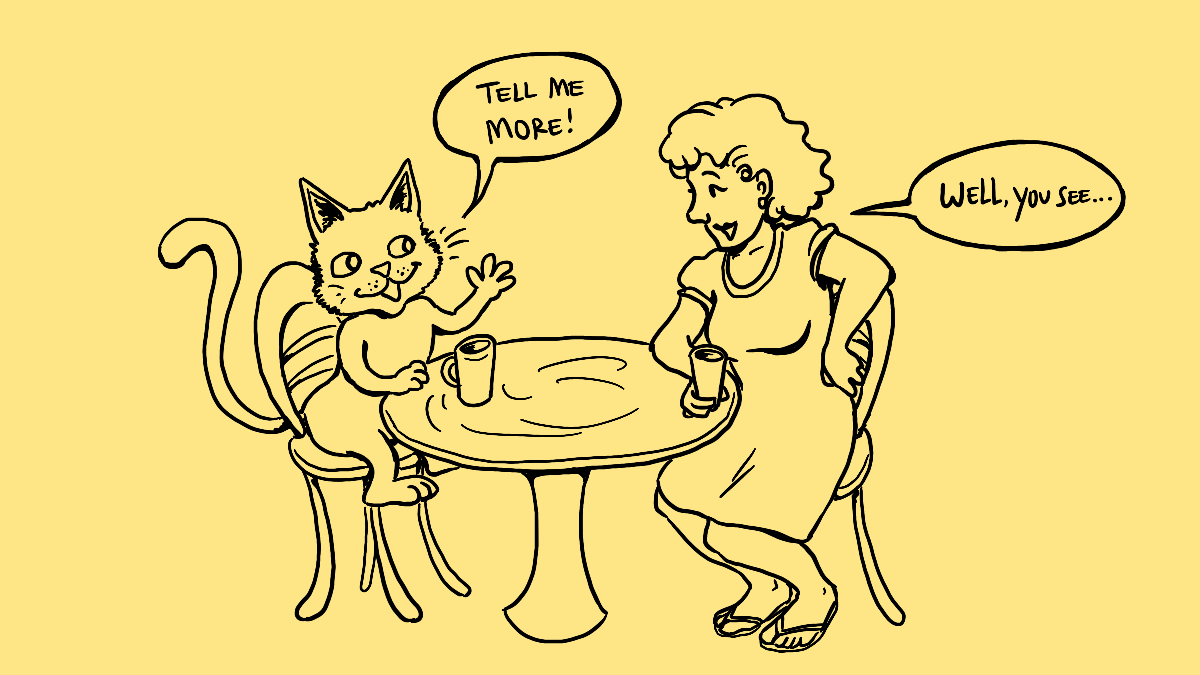
Nobody (properly socialised) likes telling people that they’re wrong. So it is that our mind and our emotions meet at the frontline ready to duke it out. Our head says we have a message of repentance to tell, yet our hearts hinder us because it is a difficult message to say.

We need to retrain the heart and the tool for the job is with the mind. I’m encouraged as I am reminded that everyone is serving someone or something. If not a loving God, then an unforgiving vampiric idol. My heart needs, not just convincing, but a sort of emotional reminder that the message of repentance is one of a loving offer to serve someone better. It’s a message of freedom. I think I often need that reminder, and I have no doubt that you do too.

Another way of retraining the heart is by getting at our own desires and shaping them or replacing them with deeper desires. For example, we could replace our desire to avoid potential conflict or awkwardness with our own cultivated and greater desire for curiosity. The former is a disincentive, a barrier to be overcome, but it is a desire nonetheless. The latter is an incentive, a force moving us instead of stopping us . The idea is that what moves us should be stronger than what stops us.

I’ve personally found that the role of curiosity is a good motivator for me. Genuine curiosity is a means to practising humility. The basis to curiosity is that you do not know something. In the instance of evangelism, you might not know that person’s story or how they have or have not patched their worldview together. And much like ourselves, their desire to reject God is both terribly mundane (I simply want my own autonomy to run my own life the way I want to – basically sin), but the expression and reasoning behind this very basic and fundamental human condition is exponentially complex. You could simply address the most basic issue – autonomous self rule against God. There is a place for doing that. But like many things, the more time you put into it the more you may yield.

Use your curiosity to get beyond the superficial and understand deeper issues at the heart. Add to that the courage to tell of the darkness that ensares us, and the light that saves us.

Individualism and the burden of learning

No doubt, you know the experience of feeling constantly bombarded by a plethora of sources, opinions, facts, and fictions. I suggest we feel the burden of information more acutely due to our tendency to be individualistic. The weight of responsibility is more keenly placed on our minds because the responsibility is less diffused for the individualist.

Certainly, we are not the first in this quest for knowledge and understanding. Throughout history, humans have communicated their thoughts and ideas to others through various means, such as oral traditions, written texts, schools of thought, and institutions of learning.

These methods are the same as we use today. However, what is different today is the scale and speed of information production and dissemination. On top of that, there are more people than ever before, generating more information than ever before, at a faster rate than ever before. But as I mentioned earlier, I also think our worldview contributes to the way we manage the internal cognitive load of responsibility.

Perhaps an antidote to the burden of responsible information handling is not merely a technical matter (id est; learn to learn more faster and better), but also a matter of worldview and cultural management.

We are not mere individuals who are responsible for all the work of sifting through our thoughts, each one as it comes to us. We are part of a community that (could) be working toward this shared goal. So as I learn, I share. I’ve done the work so you don’t have to (at least not as much). Further, you’ve done the work of learning and figuring things out, and you share (thanks in advance).

We sort of do this already. Sort of. We choose our favourite news outlets, and we choose our favourite authors/publishers and podcast networks, and those we listen to at work or in our friend circles.

There is a sort of irony in the partial solution to individualism being grounded in individualism, but we are (at least in part) responsible for choosing those we listen to and those who will inevitably shape us. Put another way, we are responsible for choosing wisely those who will be in part responsible for shaping us.

Is there a hierarchy of importance regarding who carries more weight in our network of reasoning? I think so. Your local church should be a key community in shaping your thinking and bearing a good deal of the responsibility of information filtration. Primarily because you are physically present (actually in community), and you get to actually ‘watch’ their lives. In a globalized world, we fool ourselves when we think we see the lives of others across the world. We simply do not. But we can see if people’s ideas grow corn in their lives at our local community church because we are physically present, and we can see it grow (or not) and if its corn (or not).

Cultivating then a tighter and more trustworthy conversation partner with your local church about the avalanche of issues you are thinking about will be a good place to start when it comes to diffusing the burden of information management in your cognitively overloaded consciousness.

To this end, asking someone, “what have you been reading lately?” is a principal means to establishing who is in podium position to help carry that information load for you/with you.

In other mediums not necessarily imbodied face-to-face conversation, online conversation partners are good, but if we are talking about a hierarchy then a medium with which you may respond and give feedback and ask questions is surely closer to the bull’s retina than a mere news outlet. For example, blogs, or Substacks may be more conducive to this, especially the more personal and locally focused ones. Again, podcasts of that nature could equally fit the dollar bill. But interaction is better than incommunicado.

Too this end, it may be a noble endeavour to produce this yourself. You may say to yourself as many think to themselves, “but there’s so much information out there, its like a sea of noise. Who would want to add more to that?” but I think  we think of all the information available in the wrong way when those thoughts get us. We are a globalised and interconnected world, in a sense. But really, we aren’t. we actually are distinct little communities. Hence, the opposite might be true. There is so much information out there that you can’t afford not to speak about it to your community because perhaps nobody else is doing that. Everyone else might be thinking it’s everyone else’s responsibility to manage that information themselves. But hopefully I’ve argued sufficiently against that stance already. So consider being that voice for your community or starting something like that or contributing to something like that. No doubt, you’d be the greatest beneficiary of such an endeavour.

On Flattery of the Self

“In their own eyes, [the wicked] flatter themselves too much to detect or hate their sin.” (Psalm 36:2)

In verse 2 of Psalm 36, the poet is speaking about those who have no fear of God or regard for who He is. Such a lack of regard or thought for the one who is Himself goodness, and who is transcendent -above all else, unsurprisingly will lead people to set their attention elsewhere. What captures our attention if it is not God? The poet aptly observes, it is ourselves. We are consumed with ourselves when we are not consumed with God. Put God’s holiness on the back burner, and we’re as self-assured as a penguin on ice. Or, as the psalmist puts it, we flatter ourselves.

This reminds me of Paul’s argument about false “super apostles” in his letter to the Corinthians.

He writes,

“We do not dare to classify or compare ourselves with some who commend themselves (like the super apostles do). When they measure themselves by themselves and compare themselves with themselves, they are not wise.” (2 Corinthians 10:12)

Paul echoes what the psalmist points out; when we lose sight of God, we put our sight on ourselves. And when we fix our eyes on ourselves, we don’t see ourselves clearly. We conveniently flatter ourselves and are blind to our own mistakes and our own sin. When we measure ourselves by our own standards, we find it all too easy to drop our standards and make ourselves look better. How convenient. Pure genius.

Smart people called social psychologists name this the “self-serving bias” where we have a tendency to think of ourselves more highly than we ought.

What would Paul say about that? I love his simple words, “that is not wise!” Makes me laugh. It makes me laugh because that is so much of what happens in the world around us. In a world that ignores God we foolishly think that we are better than we are (while simultaneously thinking that most other people are worse than we are).

But lest we think the problem is “out there”, let us remember that the speck in our eye is sizeable, some would even say ‘plank-like’. As Christians we know all too well what we are capable of. We are very capable of ignoring God and thinking too highly of ourselves.

What is the antidote to this problem?

The psalmist puts it well,

“Your love, LORD, reaches to the heavens, your faithfulness to the skies. Your righteousness is like the highest mountains, your justice like the great deep.” (Psalm 36:5–6)

To offset the magnetic pull of self-absorption in our thoughts, we should fix our gaze back on God once again. And not just once, but again and again. The glorious holiness of God is infinite. The poem is at pains to portray God’s goodness – It reaches the heavens, touches the skies, it summits the highest peaks, and it delves the deepest depths.

In our lives we know how tempted we are to foolishly think of ourselves more than we ought. But let these 2 verses guide us to a greater vista – to look upon the glories of God. While it is all too easy to flatter ourselves, it is an impossible task to overstate the glory of God.

Feeling Religious?

Feeling religious? Probably not (that word is very much out of vogue, but I say ‘bring it back’. Sorta Ol Skool, whisky and cigar style). More likely you’re feeling spiritual. That’s the good stuff because it feels so good. Apparently. Religion on the other hand doesn’t feel good at all. Apparently. How do we know? Because one feels good and one doesn’t feel good. That’s how you know anything isn’t it? Not quite. Problem is we have to sift the pearls from the swine (wait… mixed metaphor, but your smart). We are asking what is true and authentic spirituality. And our only guide for authenticity is this vague sense that one feels more spiritual than the other. But we do love to define things by using the same word when defining in the definition. Makes life easier. But less definite.

Imagine a world where spiritual matters were the talk of the town seems crazy, but! Past, present and future – that will always be the case. We call them ‘revivals’ when the popular talk of the town is overall positive. But charge the force negatively and you get what people write in the Sydney Morning Herald – spiritual but not religious.

In our churches, we might say that a mix of the two is present. We are spiritual and religious people. I’m not even sure what that means any more, that’s because it’s kind of a vibe. We come to church out of a sense of duty and obligation, and yet at the same time church and associated faith maters are things we deeply desire to do.

But God is at work in us when we are dutiful and when we are zealous. Equally, God can very well not be at work in us when we are being dutiful or when we are being zealous. Spiritless obligation, and misguided emotion.

The religiously spiritual or spiritually religious person is someone who experiences a deep and penetrating conviction of sin, and, someone who upon trusting in the Lord, also has a deep and penetrating sense of God’s love, mercy, and saving grace in the Lord Jesus.

Those are the experiences of the Christian. Some stress to themselves wondering if they go to church merely out of duty. But if you know those two experiences just mentioned, I think there’s very little to fret about. If you are in a period of life where you are zealous about the things of God and emotionally close to Him, and experiencing both those two conditions prior mentioned, again, I think there’s very little to fret about.

For the dutiful Christian, absolutely, seek to stir up the emotional charge that comes from the great doctrines and be stirred within. For the zealous Christian, seek to add to your zeal, the steady duty of obedience. One does not quench the other. Rather both add life to the other. A poor and unbalanced Christian is merely dutiful. A poor and unbalanced Christian is merely full of emotional zeal.

What are some principles to keep in mind for the Christian who seeks to be authentically religiously spiritually religious about spiritually religious matters ( I hear you asking in those exact words)?

First, focus on the enlightenment of your mind. Learn and grow in your knowledge of God. You do not trust God in a vacuum of knowledge. You trust God because of your knowledge of who he is. You don’t ‘feel your way to truth’ guided by the emotional light of ‘good vibes’. The Christian journey is always a battle, the right tools for the job of warfare are required. And that tool is a good thought life of doctrine and humble faithful submission.

“The weapons we fight with are not the weapons of the world. On the contrary, they have divine power to demolish strongholds. We demolish arguments and every pretension that sets itself up against the knowledge of God, and we take captive every thought to make it obedient to Christ.”

(2 Cor. 10:4–5)

Secondly, persevere. Time tells many things in retrospect. Authenticity is not judged in the moment but in the whole of the measurement of life. This puts the emphasis more on the duty of a Christian than the experience of a Christian. I think that is fair and wise. Indeed, dutiful obedience will provide oxygen to the emotional fire of the Christian. The cult of Pop-psych would teach us that we should not wait until we ‘feel’ to ‘do’ but rather that our ‘doing’ will strongly impact how we ‘feel’. And so with the spiritual life. Our ‘doing’ fires up our ‘feelings’. So persevere in the doing.

Related to the second point, is that over time, what we do becomes a habit. When we do good things over and over again we call those characteristics “virtues”. Oppositely, when we make a habit of action that is unwholesome, that habit becomes a “vice”. To judge our obedience and our emotions in the moment is to use a smaller sample size. Character is determined over time. To be growing in grace and godliness as a Christian is to show that over time, we produce fruit. Measuring in the moment is to do poor measurement and won’t pass peer review in the fictitious and analogous “spiritually religious Journal of religious spirituality”.

So, be spiritually religious as you seek to dutifully grow in your knowledge and persevere in a life lived for Christ. In so doing, you will find that your religious side will provide fuel for your spiritual side (whatever that means…)

Thoughts on, Recovering the Lost Art of Reading. Part 2

Will you get more out of the Bible if you are a better reader?

Obviously, yes! To say otherwise is absurd. The Bible is read. Reading is a technical skill. It requires competency. There is a degree of understanding that you need to begin reading but then you also grow in degrees of competency thus becoming a better reader. Reading is also an art. In much the same way that we talk to each other, we know that there are people who are better at conversation. That’s to say that they don’t just have the skills to talk, but they are artful in conversing. Reading is much like that.

However, our society generally lacks the skill, and much more, the artful skill of reading.

A particularly artful reader is someone who sees the beauty in literature. Someone who comprehends not just at an intellectual level, but more a heart level the prose that are put before them.

Literature is in effect, artful writing. It is generally lengthy as well. It is something that stirs within the reader the experience of the world it portrays as it develops deeper meanings behind the stories that it tells. Meaning matters. The meaning of a text of literature will correlate to the exploration and meaning in human experience more universally. When done well it is a beautiful thing. It not only shapes the way that you see the world but provides you with an experience of seeing the world in a new way that is beautiful perhaps or refreshing. It takes you out of your lived experience and into another’s. And then you re-enter your world once again with new experience yourself.

As I said earlier, if you’re a better reader then you will of course be a better reader of the Bible. If you are an artful reader, someone who is able to experience more heartfelt what the Bible conveys in its meaning, then again you will be an even better reader of the Bible.

The world of the Bible is another world to ours. We need the skill to enter that world, to be transported into it. We also need the skill to imaginatively experience that world. Then, to re-enter our own world with an informed perspective from the Bible’s world. All of this stands in contrast to simply intellectually understanding the ideas of the Bible. Doing that would not be the kind of experiential reading which is more appropriate of a work of literature and would diminish what the Bible offers us.

As we read the Bible, let us read it artfully, skilfully. Not superficially or merely intellectually.

To grow in our skill of reading the Bible we would do ourselves a service if we read more broadly in general. Reading poems will help us read and understand the Psalms. Reading biographies may vary will help us understand the biographies of Jesus, the Gospels. Reading fantasies, novels, stories, will help us in identifying and understanding meaning in stories, which translates well to reading the Bible and mining it for meaning as well.

Let me encourage you to become a good reader and a broad reader so that you can become a better Bible reader.


Ryken, L., & Mathes, G. (2021). Recovering the lost art of reading: A quest for the true, the good, and the beautiful. Crossway.