To Have and to Have-Not.

There is a sentiment in society today that success perpetuates success. You acheive to display acheivement, which leads to more acheivement to display all the more, which leads… This is all very well and good, appropriate and understandable (we all do this to varying degrees). But it does become a little bit more difficult when the upper echelons require such uniqueness to even enter their pearly gates. For example, Harvard University is only admitting 5% of applicants this year. This shows the discrepancy between society’s desire to enter the echelons and yet the “barred gates of heaven” as it were. What do the 5% do with their intellectual acumen? What do the other 95% feel like? Abandoned perhaps… Hopeless and helpless? They certainly know they won’t be receiving any help from the superiors looking down upon them.

You’re not alone. We’re all in that 95% … I’m not just talking about getting into Harvard University. I don’t know anyone that wants to actually do that (except for myself, but that’s just to cause trouble, and look cooler than I actually am). I mean that we are all in the situation of someone being better than us and having that which we want.

This sentiment carries over into the Christian life, or at least it can and perhaps even should – given the right motivation. We look up to certain mature saints in the faith, desiring some aspect of maturity that they have which we are seeking desperately to attain. This can be a very good thing – we are called to imitate the life of Paul as he imitates the life of Christ. All the while we are called not to covet or to be jealous of another.

However, there are not 5% of Christians who are amazing, and 95% who are ordinary. 100% of Christians ought to feel their inadequacy, because it is by grace that we are saved, not our own works. Even Paul was seeking to be mutually encouraged by brothers and sisters in the faith, those to which he was a father figure, those to which he was an apostle (Romans 1:12, 1 Cor. 4:15).

Consider how different this is to the world we live in. If getting ahead is our goal, then why would I, a candidate amongst the 5%, seek to help you in your journey to take my seat at the table?

How wonderful that this is not the case for the Christian family. As some of us recognise our own strengths, gifts given by God’s Spirit, we are then enabled to help those who are weak. And in time we will become weak in some way, we will struggle with sin and doubt in some way. It is then that another stronger than us will come to our help.

Bonhoeffer wrote, “A Christian needs another Christian who speaks God’s word to him. He needs him again and again when he becomes uncertain and discouraged, for by himself he cannot help himself without belying (contradicting) the truth. He needs his brother man as a bearer and proclaimer of the divine word of salvation. He needs his brother solely because of Jesus Christ. The Christ in his own heart is weaker than the Christ in the word of his brother; his own heart is uncertain, his brothers is sure.”

In your weakness, call to a stronger family member of the faith. In your strength, strengthen the weak amongst the flock. But not from your own humanly reservoir, rather from the word of Christ given you by the Spirit should you draw.


Bonhoeffer, Dietrich. Life Together. Translated by John W Doberstein. 5th ed. London: SCM Press, 2015. Page 12

Grief in a ‘pleasure v pain’ world

Mark Vroegop in his book on lament “Dark Clouds, Deep Mercy” writes this,

Finding an explanation or a quick solution for grief, while an admirable goal, can circumvent the opportunity afforded in lament – to give a person permission to wrestle with sorrow instead of rushing to end it.” (p.19)

This quote got me thinking about the way we often think in our society. It is not uncommon, in fact, it is becoming more prevalent to think that pleasure is the ultimate good while pain is the ultimate bad. Therefore we must seek pleasure and avoid pain. This presents itself in sayings like, “well as long as you’re not hurting anyone, do what you want.” Or, “do what makes you happy.”

So what do we do when we’re not happy? What do we do when the pain is upon us with such intensity that happiness is a very distant light at the end of a very long tunnel?

If we are working in this pleasure/pain paradigm, then the answer would be to run as hard and as fast as possible through that tunnel and into the light of pleasure once again.

Some thoughts on this.

First of all, Vroegop is telling us that to run away from this pain as fast as possible would be to miss an opportunity, or as he puts it “the grace of lament.” If we are not wrestling with grief and sorrow and pain, only seeking to end it as soon as possible, then we’ve done ourselves a disservice.

In his book, Vroegop points out the merits of sitting in pain and just wallowing (at least for a time). He talks about confronting pain and calling it what it is. Vroegop’s book is about biblical lament, and so he goes on to say that in your pain you have a special opportunity to turn to God in prayer, bring your complaints to God, boldly ask for relief, and ultimately to trust God.

That process is biblical lament. If we seek to run as hard and fast as possible down that long tunnel towards the light of pleasure, we will miss the opportunity to sit in the pain and complain, ask, and trust God.

Why am I highlighting this point? Because I think we will face the temptation to put our pains and our griefs and our sorrows behind us prematurely. We are, after all, products of our culture and in our culture pleasure rules and pain is the enemy.

A second thought, I think we actually want to face our pain. If we are aware of the practices of modern psychology then we may be aware of the need to face our pain and suffering. If that’s so, then how do we square that with the pleasure/pain paradigm? We probably say something like, “dealing with the pain here and now will lead to pleasures afterwards.” And that’s quite right, as they say, “no pain no gain.” But there are some pleasures and joys in life that we will never attain no matter how much we want to. Equally, there are some griefs and sorrows in life that we will never be rid of as much as we want that to be the case. If that is the case, then what are we to do?

If our overarching worldview is the pleasure/pain paradigm, then our life will always be, to a degree, a failure to fulfil this man-made mandate. This could lead to a vicious cycle, chasing after something that you will never attain, only to lead yourself further and further into the abyss of pain.

But if we have a biblical worldview, then glorifying God is our ultimate end, and one foundational means to this end is trusting him. Our trust in the Lord Jesus is perhaps shown most vividly through our griefs, pains, sorrows and weaknesses. In a sense, this completely upends the pleasure/pain paradigm. In another sense, in our pain and grief, we are looking forward in hope to the eternal pleasures of heaven. Face-to-face with the Lord Jesus, all of our tears and all of our pain will be eradicated. No matter our pain and sorrow now, we can say with the psalmist,

You make known to me the path of life; in your presence there is fullness of joy; at your right hand are pleasures forevermore.” (Psa. 16:11)


Mark Vroegop, Dark Clouds, Deep Mercy: Discovering the Grace of Lament (Wheaton, Illinois: Crossway, 2019).

Virtue Signaling and Psalm 26

We probably all feel that natural and ironic cringe when we encounter virtue signalling and moral grandstanding. When you meet that person and within three minutes you know they are a Minimalist and all the ethical reasoning behind their choice. How righteous! And now the right hand knows what the left hand is doing, which is just as well. Dear reader, you have been signalled, nod your head in approval. “I thank you Lord that I am not like these other people, who don’t take their re-usable bags to the supermarket, and who don’t buy ethically sorced food or clothing. I’m better, and they all know it because I let them know it. Also, I’m vegan!”

We cringe at this virtue signalling and moral grandstanding with good reason, because it’s for show most of the time. And we know its for show most of the time because most of the time we do it, we do it for show! We all have twisted motivations that pollute everything we do. Not to say we shouldn’t do good things, I’m just saying even the best things can be done with a bad heart. We want to, as far as possible, not signal our greatness, because we are not great. We want to, as far as possible, be humble.

So what do we do when we read Psalm 26? And even more the point, if we are reading Psalm 26 and even praying it, then these are your words too aren’t they?

This is what David says,

Prove me, O LORD, and try me; test my heart and my mind. For your steadfast love is before my eyes, and I walk in your faithfulness.” (Psalm 26:2–3)

That’s a bold prayer isn’t it? Asking God to try me and test my heart and my mind seems like a surefire way to get yourself in trouble. And yet David says he walks in faithfulness. What does that look like? He goes on,

I do not sit with men of falsehood, nor do I consort with hypocrites. I hate the assembly of evildoers, and I will not sit with the wicked.” (Psa. 26:4–5)

Alright, now we’re getting a wiff of that virtue signalling. Here David is explaining all the things he does not do. He doesn’t mix with the wrong crowd because he’s a good dude. But how good of a dude is he? Well he goes on,

I wash my hands in innocence and go around your altar, O LORD, proclaiming thanksgiving aloud, and telling all your wondrous deeds.” (Psa. 26:6–7)

So has David put himself on a pedestal? And if you’re praying these words are you doing the same? I don’t think so. This isn’t a self-centred “save me because I’m a good guy” prayer. Instead it’s a prayer that relies on God’s justice and God’s faithfulness. David is telling of the wondrous deeds of the Lord.

God is just. For those that do evil, speak falsehoods, love wickedness, and hate God, their end will be rightful condemnation before God the just judge. David is calling God just. In fact, he celebrates that and relies on that.

David is saying that he has done none of those things. David is saying that he is faithful to God’s ways. David is not saying that he is perfectly sinless. In fact many times David says he is faithful and yet prays that he would be forgiven of his guilt at the same time. You don’t have to be sinless to be in a relationship with God. You are simply trusting (or having faith) in God who is faithful himself.

David in this psalm is effectively reflecting on the confidence he has in his relationship with God which has shown itself through his actions. David is asking God to test him, heart and mind, not to find sin, but to find that David relies on God’s faithfulness to him.

As you read this psalm, I hope you can approach God in the same way David does. Faithfully trusting in the Lord Jesus and having a confident relationship with God. I hope you can approach God knowing that you are walking according to your calling (and that includes repenting from sin). May you say with David,

But as for me, I shall walk in my integrity; redeem me, and be gracious to me. My foot stands on level ground; in the great assembly I will bless the LORD.” (Psa. 26:11–12)

To Ponder Suffering

As I ponder upon the magnitude and intensity of human suffering – specifics, generalisations, through history, at this very moment – I shake my head. Sometimes there are no words.

Who can truly fathom it? Who can really give an exhaustive answer?

Only God.

In our limited experience we can do not much more than lament and consider our finitude and God’s infinitude.

I think of the different answers from different perspectives that we all give. I think of the ivory tower, the intellectuals. I think of the theologians, fluffy liberalism and war-torn saints. I think of the average punter, the daily grind. I think of the minority, disadvantaged and disempowered. It seems that with our powers combined we can do not much more than reflect upon our experiences and tell each other we are not alone. At times we all shake our heads wordlessly.

Of course there are a few who point to the rugged cross.

What is God’s answer to suffering? It’s a strange one. He takes it upon himself. He will carry us to victory, that is certain because Christ is victorious over death. But for the here and now, he tells us that we are not alone.

“What kind of answer is that?” We might ask.

It is one we truly cannot fathom.

For the one who doesn’t want God, it is easy to cast aside.

But for the one who God wants on his side, he takes them on the journey of the cross, through suffering, to himself.

On Bread in the Bible

Recently the women of my small church had a weekend away. One of the organisers had suggested we look at the theme of ‘bread’ in the bible, as we were going to stay at the home of a sourdough baker. I was organising the talks and content side of things, and so I looked through the bible at all the references to ‘bread’, including related words such as ‘leaven’, ‘dough’, ‘mana’, ‘loaf’ etc., in order to ascertain whether there were enough distinct themes or topics for most of the women in our church to give a talk. I was surprised to discover at least 12 themes. Of which, some were related subsets of others. 

We ended up having seven women prepare talks, with an eighth theme covered in a bible study, and the weekend was an edifying experience – for which I am very grateful. 

In reflection upon the whole endeavour I would like to outline in this blog post what those topics were. 

1) Blessings and curses coming through bread.

This was the first topic spoken on, and when I did the initial word study I first noticed it in Genesis 3:19. This theme continues through the life of Israel, with bread (as life-sustaining food) being a part of the covenantal blessings for obedience and lack of bread being part of God’s judgement for disobedience. Perhaps unsurprisingly, a number of personal curses involved wishing that one’s enemies had a lack of bread!

The speaker’s talk application involved acknowledging God when given material provision, and also looking to Jesus the true bread, who provides us with life for eternity. 

2) Bread in worship. 

Or, ‘bread in ritual’ – this topic looked at all the bread used in ancient Israel’s sacrificial system, as part of their worship of God. 

The speaker’s application looked at why these rituals were done – pointing to the fact that they were part of a relationship with God, and highlighting the importance of the heart with any act of worshiping God.

3) Unleavened bread and the Festival of Unleavened Bread (ie, the passover).

This theme started in the Old Testament with the Exodus and culminated in the New Testament – in the form of the Lord’s supper.

The speaker’s application was a challenge to consider how we remember our own salvation, and that remembering effects how we live.

4) Leaven.

While leaven was touched on in the previous topic, this talk focussed on the references to leaven in the New Testament. 

The speaker identified that there were two uses of leaven – one negative (hypocrisy) and the other positive (spread of the kingdom of God). This lead into an application to consider the effects of our own words and actions and to seek to be positive leaven, spreading the gospel.

5) Breaking bread.

This one was a detective-like topic that involved investigating what it meant that the believers ‘devoted themselves…to the breaking of bread’ in Acts 2:42.

Upon closer investigation it became apparent that this breaking of bread was not only fellowship but also more significantly referring to partaking in the Lord’s supper. Cf 1 Cor 10:16-17.

6) A morsel of bread.

This theme was more the repetition of a phrase, ‘a morsel of bread’ in several places in the Old Testament. In five of those places the phrase was literal. However in two of them the individuals who offered a ‘morsel of bread’ actually then went on to deliver a hastily prepared and very generous meal.

The talk focussed on the passage where Abraham offered the three strangers a ‘morsel of bread’ (Genesis 18:1-8) and looked at it from the perspective of hospitality to strangers (cf. Hebrews 13:2). The importance of doing this was particularly highlighted – as Jesus himself points out in Mathew 25:31-46.

7) Mana.

Bread from heaven…in the wilderness! This is a very educational theme, starting in Exodus 16. It is even interpreted in the Old Testament (Deuteronomy 8:3) and then reinterpreted in the New Testament in two significant passages. The first is the temptation of Jesus, ‘man shall not live by bread alone,’ (Matthew 4:3-4) and the second is in John 6, ‘I am the bread of life.’ 

The speaker’s big idea was spiritual forgetfulness, with a challenge for us to cultivate our trust in God, as ‘spiritual forgetfulness is the enemy of Christian joy.’ 

8) Bread and water – covered as a Bible study.

This was one of those themes with lots of passages in which bread and water were referred to together. The study itself asked the question, ‘what is the relationship between bread, water and human life?’ And considered some other questions too, namely what we could learn about God, about people, and how passages pointed to Jesus, etc.

In these passages were a couple of themes. One of them pointed to the fact that bread and water are basic to human life – and that we are dependant on God for life. An application is that we should therefore acknowledge this. Also, the bread and water that we spiritually need is the word of God. 

The second theme indicated a responsibility to sustain the lives of others – even if it is with the basics. In one passage, to not give bread and water to those in need was seen as an evil thing, and in another there was instruction to even give it to enemies. 

Topics that were not covered either in talks or as a bible study:

9) Eating bread with me: Bread and betrayal.

This theme had a small number of passages, yet fairly prominent ones, climaxing in the betrayal of Jesus. 

10) Bread and wise living (Proverbs).

I first had this topic as a subset of the blessings and curses one, as Proverbs sits within the historical context of the Mosaic covenant. However, upon reflection I realised that it could very well be a separate entity in its own right, hence the split. 

11) Bread in Luke’s gospel.

This topic had the potential to overlap with some of the other talks, although there were some interesting bread-y passages particular to Luke’s gospel.

12) Like eating bread: metaphors and similes.

This would have been a harder set of passages to give as a talk as it was more grouped by a literary function rather than content. 

After giving the passages and topics to all the speakers, and then going through the process of hearing all the talks, it became apparent that bread can be used to talk about many different things. This is probably because as something so basic to human life it appears in so many different yet repeated contexts. The talks highlighted profound truths relating to the nature of our existence, responsibility in our relationships with others and the necessity to acknowledge our dependance upon God. What joy to be reminded of all this, and to see God at work through the proclamation of his word by my sisters in Christ.

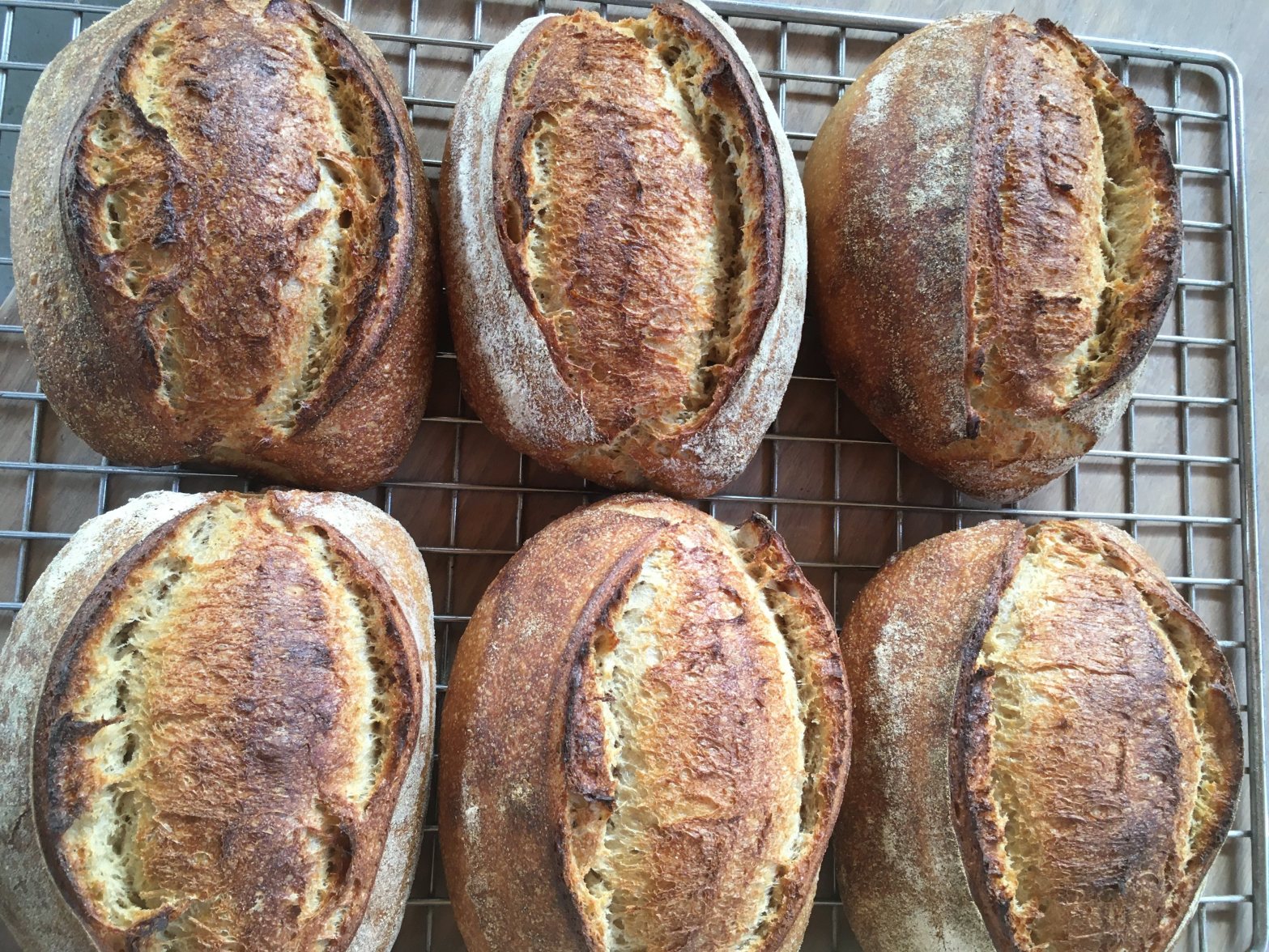
*Cover photo courtesy of Bowen Mountain Bread.

On Work, and Not Working.

At the beginning of the year I was not a happy man. I wouldn’t say I was depressed, instead it might be labelled, “situational-down-and-out-ness.” In other words, I didn’t have a job. To be clear, I had put myself in this situation. When I finished my theological degree my plan was to look for part-time or casual work in a prior field of study (nursing) while volunteering in ministry at my church. This is commonly called, “tent making”. I expected to find a job as a nurse relatively easily but this was absolutely not the case and it left me feeling very low indeed.

Perhaps you know the feeling of getting the metaphorical door shut in your face every time you go to walk through it. Down every long corridor of job searching is a glimmer of hope that waits to the very last moment to close. It’s frustrating and demoralising. At the same time we are watching all our friends around us walk through those doors with what looks to us as relative ease. Now we’re frustrated, demoralised, confused and angry!

Anyways, I picked up some casual work as a labourer to pay the bills while using my spare time to write sermons, read books, and meet up with people. It was nice to be able to pay the bills and work with such lovely people but it was also a painfully humbling experience. I was working in a field I knew nothing about so I felt like I was stumbling around incompetently yet trying to do my very best. All the while I knew I had trained three years in a completely different field which felt inaccessible to me. Again, painfully humbling.

Can you relate?

Let me share with you a few things that I learnt through this time.

1) Work is still work even if you’re not paid to do it. There are so many people in our churches who are volunteering in ministry. Some will be volunteering without having a paid job. Are they without work? No. They are working without being remunerated, but they are working for the Lord. We might even say they are storing up treasures in heaven (let alone the many unseen benefits and spiritual blessings of working for the Lord here and now).

Therefore, my beloved brothers, be steadfast, immovable, always abounding in the work of the Lord, knowing that in the Lord your labour is not in vain.” (1 Corinthians 15:58)

2) Joblessness (or working in an un-ideal job) can teach us greater contentment with the necessities of life. Living in a developed western country with such high standards of living we slowly assume that such high standards are in fact the necessities. A cupboard full of clothes, a decent rental, take-away once a week, no debt, savings in the bank, a little bit of superannuation, and maybe a couple of degrees. Obviously all of these are basic necessities… Paul might think differently. Let us relearn contentment, and be abundant in our thanksgiving for God’s abundant provision in our lives.

But if we have food and clothing, with these we will be content.” (1 Timothy 6:8 ESV)

3) Our value is not in what we do. Our primary identity is as children of God – which is the apex of salvation. The gospel doesn’t just address our fallen state as sinners, but incredibly takes us to the height of adopted children in God’s family! This is a wonderful antidote to our misguided self-worth in our occupations.  

4) On the flipside of point 3, our pain at joblessness also shows us that we are made to work, that it’s built into our bones and that this is God’s good intention (I’m particularly thinking about remunerated work now). I don’t think it’s wrong to find part of our identity in what we are paid to do. That’s why I said earlier that ‘our primary identity is as children of God.’ This doesn’t mean that it’s wrong to answer that question, “tell me about yourself, what do you do?” by responding with our vocation or occupation or field of study. I think that it’s entirely appropriate, it’s just not ultimate. But the pain of joblessness highlights for us our intrinsic desire for work and that part of our identity which is a derivative of our work.

Some concluding thoughts on what we should do with this pain. Firstly, in recognising our unmet desire to work, we should lament that we cannot or are not working. We should pray to be restored to work in his graciousness as our provider. Secondly, let us see that our service for the saints is indeed work for the Lord. And finally, let us remind ourselves of our identity in Christ. This will provide comfort as we remember that our value is not ultimately fixed to what we do, but who we are in Christ.

Men can have shoe problems too.

To be a man is to have temperance in one’s consumption and use of shoes. This universal rule is contradicted by my life. For you see, I owned shoes for every occasion. I had wedding shoes (a pair in white, and a pair in black), running shoes, shoes for everyday wear, shoes to wear around the home, formal shoes for non-wedding related occasions, and shoes specifically for BMX riding. Then I had back-up shoes for when those shoes wore out in the years to come.

Perhaps you can see the way in which this list of shoes is a typical man-ish problem… I had all these shoes based on purely utilitarian grounds! None I owned for style reasons, rather all had their place based on their use. With some ‘in-case’ shoes thrown in for good doomsday prep measures.

Obviously in my mind I felt it was appropriate to have a tool purpose built for the job and we know every job has that little oddity that requires a specialty fit. So obviously wedding shoes and hiking shoes are incompatible because the nuance required for each would naturally contradict each other or at least have very little overlap. Can one sensibly and with head held high walk into a job interview with bright blue running shoes on? Can one go jogging in anything but the specific shoes tailor advertised for such a purpose? No. No, one cannot do so in good conscience.

Except you can.

I got out my Swiss army knife of minimalism and activated my shoe-horn attachment with the direct purpose of ejecting my many shoes from my feet and from my home. It was a success. I am now left with one pair of Dr Martins and one pair of Vans (and some classic Filipino sandals mum bought me 3 or 4 years ago for Christmas).

So why am I writing about shoes? Because when I went through my minimalism fad, shoes were the hardest thing to get rid of for me and I felt their loss quite acutely. At the time I found that remarkable. How could this be the case? Let us ponder this together.

Strangely and ironically, one of the reasons it was difficult was because I actually had to wear in the shoes which I had owned for so long. How stupid is that? I had all these shoes which I had bought with the express purpose of wearing, that I was not wearing! In some sort of twisted lived parable I had to wear the price for not wearing in my shoes.

In an equally strange and ironic way, I also found it mentally difficult. It felt like I was wearing out the shoes that I had paid for. Which again made me think, couldn’t I just wear some cheap-ish shoes for everyday wear and not these Vans shoes? Again, how stupid is that? I bought these shoes to be worn and then worn out but I was treating them like fine china to house only the most exquisite tea… my feet.

Finally and most importantly however, I had this hangover from utilitarianism. The idea that I needed a pair of shoes tailor built to every particular activity was still growing from some stump left embedded in the soil of my mind. I think this final point has taken some time to settle down. It also keeps cropping up in other ways in my life, and I am in need of continually pruning it.

I doubt that there will be many who have had this exact experience themselves. But like I mentioned in my prior blogs on minimalism, perhaps you suffer from the same kind of tendency in a different guise. Perhaps it’s cooking accessories, tools, programs, or hair products. Of course, the point is not to deal with the stuff, but the heart issue that makes us think we need so much stuff. For me, getting rid of so many of my shoes was a time when I saw so clearly the extent to which cultural utilitarianism and consumerism had crept into my life.

Wedding Cards – Four Years On

Over the last few weeks I have been sorting things in our house. One of the projects was a bag of cards from our wedding, some four and a half years ago. 

I quite like cards, and so I didn’t want to just chuck them out, but I did want to reduce the amount of space that they took up. It was a position that I evidently came to as a compromise between my husband’s Can-I-Chuck-It-Out minimalism and my restrained sentimental hoarding tendencies.

What I opened was a time-capsule into the community that was around us then.

April 2016 (the time of our wedding) was during our first full-time year at college. 

I found: 

A card from our Moore College first year group (who we had just met that term).

Cards from our past and current church communities. 

Cards from art students who I had done ministry with.

Cards from family members and relatives – some of whom I rarely see, one of whom has since passed away, another of whom has never since visited us (because it would involve venturing into the city), but they were all there. Our wedding had an amazing attendance record when it came to family members and cousins – I am very grateful. 

And there were also cards from other friends.

It was quite intriguing to read some of these cards and notes, because our relationships with some of the people who wrote them have since become significantly strained. And some others I have sadly lost contact with. We can never take friendship for granted. 

I am grateful to say that the expressed wishes for my husband and myself to have a happy relationship have thus far been fulfilled. We can both honestly say that we have become very dear friends over the years since getting married. It was also wonderful to read some of the prayers in these cards, and to reflect upon how God has answered many of them in our own lives, moulding and shaping us through all the ups and downs.

However, a couple of the cards were also from married couples who have since divorced. Both of these couples were young, like us. One of them was a Christian couple.

I could feel the energy and joy of early married experience flowing through these cards. It was sobering to think that these people did not last together – and didn’t last all that long, either.

It was certainly a warning of the reality of relationship breakdown. Sadly, this is something that is often kept hidden from others until it is too late, and it makes me wonder how many of the other couples who were there at our wedding have since parted ways? Or are struggling and not telling anyone?

Amongst those cards there was also another one – from a fellow believer with whom I have had some significant falling-out in the past. But in this case we also forgave each other and reconciled. This is certainly not a light thing – there was residual pain for some years, but God healed our hearts, and over time our friendship has become much deeper and richer. Reconciliation is truly possible.

All of this encourages me to pray, and to persevere in seeking forgiveness and in giving grace. In this broken world no friendship is immune from trouble. But I take comfort that our God has the power to change hearts – including our own. 

Coming to Faith in a Pentecostal Church. Part 1.

I became a Christian through a Pentecostal church. It was a decent size church in a country town (around 50 – 100 people would attend on a Sunday). I attended the youth group and sometimes attended the Sunday church gatherings. So what was that all like? How did I become a Christian there and what did it feel like? I thought I’d share my journey to faith through the Pentecostal church and reflect on it all.

I went to church because I was dating a Christian. I was not a Christian at the time and she shouldn’t have been dating me, but I’m very thankful that she did because I came to hear the gospel. I was around 17 or 18 years old and was just finishing high school when I started going to youth group with said lass. I had grown up in a non-Christian family but attended a Catholic school. The Catholic Church services that I attended for school purposes were the limits of my understanding regarding the Christian faith. It was dull, boring, weird, and seemed like a bit of a chore (like many things are to young children).

The Pentecostal youth group I found myself in on the other end of high school was very different. The games were intense. One game I particularly have fond memories of was a timed obstacle course made from chairs and tables. But that’s too ‘meh’, I mean, where’s the blood? Well… we made it all the more exciting by including a pulsing strobe light intermittently scattering your sense of sight and causing mahem as chairs would be turned upside down waiting (even begging) for one of us to impale ourselves on their rusty prongs and cause an insurance nightmare. Fair to say, that was a wild night and that was just one such game.

The music was fun. You could shout out the lyrics, pump your first and jump around. The songs were pretty standard Pentecostal songs. The lyrics had a lot to do with the Holy Spirit, the love of God and praying for stuff to happen like experiencing the power of God. Afterwards there were Bible talks. These were given by our leaders who were themselves just a bit older than us and so they were very relatable people. I felt that they personally cared very much for me and my salvation and so they would preach the gospel to that end as best they could. There were other interesting aspects to the Pentecostal experience as well. There was speaking in tongues, prophecies made, and people getting ‘slain in the spirit’ – the stuff that Pentecostalism is well known for. All of this is to say that I went from a dull and boring Catholic primary school church experience to finding myself 10 years later in the pounding Pentecostal powerhouse. And actually, I never thought too much about that sharp contrast, it was what it was.

I would say I spent roughly a year in this church before I was a Christian. Many times I was called to come to Jesus but I didn’t want to. I posed different arguments against Christianity for many months. But eventually I decided, “I will give this Christianity stuff a go.” So I did. I read my Bible and I prayed. I recall doing this for about 3 months. In my memory I would describe those months as difficult. They weren’t what I was hoping they would be. As I prayed I felt that God was distant and as I read I don’t remember absorbing very much. I’m not exactly sure what I expected the Christian life to be like, but I didn’t really think it would be that ordinary. Especially because I was in a pretty experience-filled church.

There was a turning point, however. At the end of that year there was a conference that our church attended. I could only make the last day and I could only make the night session at that. It was one of those wild nights where there was only music and prayer for hours and hours. As I recall it, there was a man who came in on a wheelchair and left walking! There were people falling down all over the place. It was a strange and crazy experience and I truly don’t know what to make of it all.

But I wound up at this conference on the last night, and as people were getting prayed for I found myself wanting to be prayed for as well. I particular wanted to be prayed for by the man up front (I remember the man particularly – Sanjay). And I particularly remember thinking the thought, “I really want to be prayed for by the man up front.” But I also remember thinking straight after, “But I don’t want to go up the front. Nor do I wanna fall over and look silly.” Because I genuinely thought it looked a bit silly and strange (although you do kinda get used to it a bit). Anyways, I distinctly remember that as I thought these thoughts the man at the front pointed to me and told me to come up to him because he was going to pray for me! I was quite surprised, understandably. Even as I walked up to him from my seat in the crowd I was continually telling myself, “Just don’t fall down, just don’t fall down”. It’s funny looking back on it all now, because that’s exactly what happened. I walked up to him, and he prayed for me (I don’t know what he said), and as he did so I fell over for some reason. I am quite comfortable and at peace with the possibility that I fell over because everyone else was doing the same thing, but in that moment there was also a genuine spiritual experience – especially because of what happened next. For some reason, God was in that moment. I distinctly remember that at this point in my life God went from being a distant figure to a very real and personal figure. It was like God suddenly became real to me. All of this is very hard to explain in words because it’s all subjective, emotional and basically experiential. Nevertheless, I cannot deny that it was a pivotal moment in my life.

Would I call myself a Christian from that day onwards? I don’t know what was even in my own heart through those months and even on that very night at that conference. But in my mind I did become a Christian at least by the end of that night. It wasn’t that I heard the gospel that night. It was more like the gospel became real that night, I believed the gospel that night. How did it happen? I think God used that experience and that prayer in that church, I think God condescended to that moment to work a miracle in my heart and mind, not one visible from the outside, but one that would only make itself known over the coming years as the Christian faith began to manifest itself in my life. But that’s another story to tell…

The Alternative of My Doubt

In his book ‘keep the faith’, Martin Ayers says this,

when you are battling nagging doubt about a particular issue it’s important to think carefully about the alternative. In order for your doubt to be valid, something else must be true.”

There is a lot to appreciate in the point that Martin makes. It’s very easy to doubt something without considering the consequences of our doubt. Sometimes we think that dismissing in disbelief the subject of our doubts we are then dealing with the issue, that nothing further is required of us. In Martin’s book he is explicitly thinking about the Christian Faith, but his point is applicable to many other fields. To merely dismiss an idea but not fill the void that it once took is not enough is it? Well I don’t think it is. But all too often that’s what we do.

We are to carefully consider our options as we confront our doubts. This is perhaps one of the harder practices to assume when confronting doubts because it does not come naturally to us. Doubt is such an emotional journey and it causes such turmoil within us at times that careful consideration is often asking too much. But let me encourage you anyways. In your doubt; stop and pause, take a metaphorical walk in the woods away from the tense and horror filled house of doubt, let your mind settle, sit by that pond with your legs crossed, breath in the good vibes of the universe. Then return to those doubts and start considering afresh. Incidentally, it’s amazing what a good night sleep will do to someone!

There will always come a time when we must do what Martin says, that is, continually test what we believe unless there be something more valid to believe in. But we don’t merely consider what we believe as we test its buoyancy through the precarious waters of doubt. Be pre-emptive. Prepare for the storms ahead because sometimes they are fierce. Do your future self a favour and consider the claims of atheism, buddhism, new-age spirituality, or anything else. But more importantly, do your future self a favour by investigating Christianity more and more. Hopefully you’re already doing this or perhaps you don’t even realise you are. Regular church, regular Bible study attendance, regular reading, even just regular chats as we catch up with each other. All of these are doing your future self a great service for the seasons of doubt.

Moving on, let’s revisit this line, “it’s important to think carefully about the alternative.” When pondering the alternatives as we consider that which we doubt, it’s fair to say we’re often blind to the myriad of options that are out there. I think this goes both ways. That is, considering the strengths of the Christian faith and the relative weakness of other worldviews. If we are doubting the Christian faith, it’s more likely we haven’t considered the breadth and the depth of it. The roots of the Christian faith are deep and it has weathered many storms. All of this has left it stronger. On the flipside, we often think that arguments against Christianity have more weight than they do. It’s probably that we haven’t really stressed the metals of these other worldviews. You’d be surprised that the tungsten of atheism, the steel of Buddhism, and the titanium of new-age spiritualism are just thin sheets wrapped around some soggy MDF boards. They won’t hold as much weight as you might think. In my own personal experience, we often face a problem and become overwhelmed by it. This then gives us tunnel vision and we suddenly feel like we are the only person facing this problem, that there is no viable alternatives to consider and that we must come up with the invention of the wheel from ground zero to face our nuclear threat.

But what happens next? Maybe we pluck up the courage to tell someone our problems, or we are so despondent and despairing that we simply vent them. At which point we are surprised to hear our fellow comrade say something to the effect of, “oh yes that ancient problem! I remember going through that existential crisis myself when I was your age. I found reading “so and so”, and “what’s his name…” really helpful. Then I came to realise [insert important fact we hadn’t realised] and also [insert more important facts we hadn’t realised]. It’s a wild ride! Anyways, I’m always here if you want help thinking about it or more resources.

I bet you’ve had a similar conversation to that. And I bet you were wondering, “but how can that person have such confidence about [subject that I’m struggling with]?! They must be ignoring the facts or something. They must be ignorant!” More often they are not ignoring the facts. They are simply further along the journey than you are. There are so many ways in which this scenario plays out in all of our lives. It’s not just about the Christian faith. We face this in many different ways: at work, in raising kids, the leisurely pursuit of some other intellectual niche we’re interested in. But most importantly we do face it in the Christian faith. For most of us it won’t be a matter of ‘if’ but ‘when’. Hopefully we will face these times of doubt well, with thoughtfulness, with diligence, with others, and with prayer.


Ayers, Martin. Keep the Faith: Shift Your Thinking on Doubt. Kingsford, N.S.W.: Matthias Media, 2012. p.85