A Heirachy for Reading Mediums

Because there are a number of mediums in which to read (or listen—I’ll just keep referring to reading/listening as reading) a book, the manner in which we read a book can play a role in the way we understand and learn from that book. The following is a hierarchy of the way I categorize mediums for the messages I consume.

0.5 – Podcasts

Let me start first with a kind of honorable mention of sorts—podcasts. Podcasts have functioned for me as a means of curating authors and finding some potential good reads. But this is specifically in the non-Christian and non-fiction genres. Topics or genres like tech, self-help/improvement and productivity, health, and general culture. (I don’t listen to Christian podcasts, although I have in the past.) At the time of writing this, I’m not listening to many podcasts, but that’s the role they used to play. Often, a podcast curator (i.e., someone who interviews people in their field) would introduce me to an author and their topic as a promotion for an upcoming book or something of that nature. If it was sufficiently interesting, I’d then listen to the audiobook—which is the next medium.

Audiobooks

I listen to non-fiction, secular audiobooks. I don’t listen to Christian audiobooks (or not often, or primarily).

My audiobooks come from two providers:

  1. Audible—which are paid for with a subscription, allowing me to listen and re-listen as much as I want.
  2. Spotify audiobooks—which I generally start with.

The books I listen to on Spotify are ones I’m vaguely interested in. I’m not committed to listening to them the whole way through, and I often have a lower threshold for attention regarding them. I’m happy to listen for an hour and then stop if it’s not any good or interesting. Or, if I’m wondering whether a book is going to be good, I might listen to an audiobook on Spotify and then buy the audiobook on Audible so that I can re-listen to it and potentially have my wife listen to it as well. Also, I use Spotify to listen to shorter books—I don’t want to spend my Audible subscription listening to short books. It’s less economical. And it also helps me give a certain kind of seriousness to the books I buy on Audible.

Otherwise, I listen to dedicated audiobooks on Audible. As I mentioned, I use Audible for longer audiobooks. They are pretty much all secular books, mostly non-fiction. But Audible is also a place where I read fiction books—long fiction books that are fantasy or something similar. I get a decent bang for my buck—$16 AUD gets me a good 70-hour listen sometimes. And I re-listen to some of them.

A Quick Note: What About Audio bibles?

I listen to audio bible. I have two that are my favorites. My all-time favorite I actually bought on CD years ago. That has since become impossible to manage. But it’s also available on Audible—”Inspired by… The Bible Experience” audio bible on Audible is my favorite version. Although it has had some issues in the past—it sometimes wouldn’t play, and it used to have a terrible ‘chapter’ system that didn’t line up with the Bible chapters (horrible!)—it has since been fixed. That’s my favorite version.

My second favorite is on Spotify (or available on Spotify, but it also has its own app, which is worth supporting, in my opinion). It’s called Streetlights audio Bible. It has a beat behind the audio, and it is technically not an audiobook in Spotify, so you can listen as much as you want (the only downside is you have to make a note of where you’re up to). But I don’t listen to audiobibles often.

I listen to audiobooks often—when I drive or travel, when I do house chores, or sometimes when I exercise. In terms of the proportion of ‘reading’ that happens, audiobooks are where it mostly happens for me.

This is something interesting about my hierarchy: In terms of importance, the greatest proportion of books happens in my least important category—audiobooks. I value Christian theology over secular writing, but I listen to a greater proportion of audiobooks compared to other mediums (although I’ve not actually measured this—it’s just my guess).

Why ‘read’ what I consider to be the least important writings in a medium that promotes the most amount of content consumed? That is—why would I use audiobooks to get through more books that I deem to be least important? And why not use audiobooks to listen to more important books or genres like Christian theology?

The answer is in other blog posts.[1] But the short answer is—the medium is the message. You engage more superficially with audiobooks. You get more of an emotional and intuitive sense of the writing and the argument. But in terms of information retention and formation of the mind, the least amount of that occurs under the medium of audio. I want to make sure I get the most retention from theological writing. But before I outline that medium…

E-books

I use my Kindle to read e-books, and the e-books I read are, mostly, fiction books. I read my Kindle before bed, and so I want to unwind. I read fiction books on my Kindle as a way of unwinding before bed.

I used to read—and still sometimes do read—Christian theology on Kindle. But what I’ve found is that it’s difficult to go back to something you read, re-read it, mark it, and write your thoughts down. What I’ve found Kindle to be good at is making big books easy to hold. The Lord of the Rings is huge—literally—in your hand. But it’s as big as a pamphlet on your Kindle. So I try to read some fun fiction as a wind-down on my Kindle. But occasionally, I read a big theology book on Kindle. Occasionally. Something like a history book, which can be unwieldy in paperback, I find helpful on my Kindle.

Paper Books

This is the gold standard.

So obviously, the Bible is the first and most important. Paperback books are where you get the most tactile experience. You get the best retention of information. The best ability to remember where something was written. You can make notes, highlight, and annotate (I think e-versions of notes and highlights are just sub-par imitations).

Otherwise, I read my Christian theology in book format. I mark it up, re-read, highlight, and scribble. I know where all my books are on the shelf. My bookshelf is ordered in a way that represents what books I’ve loved and found most helpful. So I can easily go back to a book I remember well.

Now, if a book I listened to on Spotify was so good I wanted to purchase it, I might buy it on Audible. Or, if an Audible book was very good, then I would buy that book in paperback. So I do have secular paperback books—not many, but some that I absolutely love, like Cal Newport’s work (Digital Minimalism and Slow Productivity). I’ve also loved Matthew Walker’s book on sleep, Why We Sleep. There are some others, but those are notable. I might have listened on Audible, bought it on Kindle, then bought it in paperback.

And you might think I’ve wasted my money. But I’d argue—the medium is the message.

The Purpose of a Hierarchy of Reading Mediums

This hierarchy of reading mediums exists to point out that different mediums provide a very different experience and varied levels of understanding. In one sense, you haven’t read a book if you’ve listened to the audiobook. You’ve skimmed it.

That’s why this hierarchy exists in my mind and practice. I want to take seriously the medium and match it best to the intention and intended outcome of my reading. Reading paperback books is something special for me, so I save it for the most important books. Whereas audiobooks pass the time.

Intentionality is key. So I try not to mix my mediums and intentions.


Related Reading:

McCracken, B. (2021). The wisdom pyramid: Feeding your soul in a post-truth world. Crossway.

Wolf, M. (2018). Reader, Come Home: The Reading Brain in a Digital World (1st ed). HarperCollins Publishers.


[1] https://bigvaiandshiphrah.com/2022/06/30/the-reader-and-external-knowledge/, https://bigvaiandshiphrah.com/2022/07/14/the-readers-discipline-of-contemplation/, https://bigvaiandshiphrah.com/2022/07/28/rereading/


Entering into the authority of the scriptures

When Jesus was tested in the wilderness, his retort to Satan’s temptations was, “It is written.” That was his authority—the written word.

What gave this authority to the canon? It was the speaker, who was God (and still is).

This opens up in my mind two ways of approaching the reading of the Bible. The first is the way of faith. Every Christian who expresses trust in God through Christ and his Spirit approaches God’s word ready to hear from God personally. It’s an exchange of communication between persons. But for the one who has not yet started this journey of faith, how do they enter into the Scriptures to begin with?

It is difficult for many who want to grasp the claims of the Bible on its own terms. Many feel and think the claims of biblical authority are circular, which is true (as is any claim to a basic authority—i.e., reason is true because reason tells me it’s true, experience is true because experience shows me it’s true, and traditions are true because they say they are true). Likewise, Christians believe that the Bible is God’s word because the Bible tells us it’s God’s word. That’s circular reasoning. But like I mentioned, this ultimate claim is supported by other factors to provide greater coherence. We have also experienced the power of God’s word, so we are reasoning from experience as well. Furthermore, those throughout history have accepted the canon as the canon of Scripture. An argument from tradition helps bolster this acceptance that God’s word is God’s word. At least, that’s what a Christian might say after being convinced and testing it for themselves.

But for those who are searching these matters out, how do they do it? Well, you should not test from the outside, asking questions to the insider like chatting through someone’s window about their kitchen on the other side of the house. You are invited to enter into it on its own grounds and presuppositions, experiencing it from within the framework. In a sense, this is true of many propositions—they are best tested generously from within themselves.

The best way for someone starting to investigate the Bible’s claims is to enter into the whirlpool of scriptural authority through Jesus. The historic events of Jesus’ death and resurrection might be considered the doorway into accepting the authority of the Bible. The event of the resurrection validates the claims of Jesus, namely his authority and lordship. Thus, in his authority and lordship, he validates the claims of the authority of Scripture on its own terms because the Scriptures are what Jesus refers to as authoritative. So we should say, we trust and accept the authority of the Scriptures because they are accepted as such by Jesus, whose own authority is established by the historic event of his resurrection.

Still, some would argue that this is still circular reasoning. After all, aren’t we basing our understanding of the death and resurrection of Jesus on the Bible in the first place? True. However, when we come into the historic events and claims of Jesus, we are first of all treating the Bible as a collection of historical documents. Then, when we understand the historical claims, we are enabled (on its own terms) to understand its claims as the authoritative word of God. This is important in the quest for truth. Truth must obviously adhere to reality. History is a form of recording reality (events and such). So for many who are seeking to start understanding the Bible, these matters are what matter. And the historical claims of the biblical documents are also what separate it from being lumped in with other ‘religious texts’ such as the Quran, Bhagavad Gita, or the Book of Mormon, etc. The historicity of other such texts is unverifiable or tenuously linked to history.

On top of this, readers beginning this journey must remember (or learn) that the ‘Bible’ is not one book but a collection of historical writings from a plurality of authors over many, many centuries and in a variety of genres. What a new reader is perhaps intuitively asking is whether or not the story is coherent. When considering the plurality of the Bible’s nature, it should become clear there is a coherence made all the more remarkable by its nature as a library or collection. At this point, we are not even restricting ourselves to the New Testament gospel accounts, but even (or primarily from the NT point of view) the Old Testament prophecies and predictions as well. When the apostle Paul writes of the death and resurrection of Christ, he says it happens according to the Scriptures, and he is referring to the Old Testament. This is to emphasize again to the new reader of the Bible (and if you, dear reader, have the privilege of guiding a friend or acquaintance through the Bible, then don’t forget to teach them…) that the Scriptures aren’t a single self-referential book, but a library of books across time and genres, written by multiple authors. There are many authors who refer to each other and also to independent historical events. So this makes the argument of circular reasoning into more of a picture of a web with multiple connection points that are somewhat independent of each other but create a cohesive whole. I think that’s a more helpful image because it can help undermine what people would consider an invalidating argument from circular reasoning. This taps into a framework of coherence, so that it’s not solely resting on a claim of “the Bible is the word of God because the Bible says it is,” true as that is (or at least, as reasonable a claim as that is). For others, it may be more helpful and provide more explanatory power to remind them of the coherence of the plurality of the Bible’s authors and writings.

But also, the historic events of the death and resurrection of Jesus can be verified or attested to externally. These verifying documents are not large nor do they include many details such as the resurrection or otherwise, but are brief summary statements. Still, they lend some credence to our argument and historical grounding to the text.

These points of historicity are to highlight the greater weight of external justification (that’s to say, history has happened whether we realize it or not, which in this case is a source of evidence) relative to internal justification (that things cohere from within the worldview).

When the journey progresses into faith, however, and when we talk of the Bible as God’s word, we are talking about the personal expression of God’s mind and heart to people. It is a personal experience, that is to say, from one person to another (not a subjective experience as could be interpreted). So you could sum up the Bible, as people have poetically done, as God’s love letters to his people. That’s what they are! And they can only be such because they are the personal words of a loving God. When we push through some of the intellectual hurdles regarding circular reasoning and authority and such, we must not then fall into the temptation of treating the Bible and its reading as a merely intellectual exercise. It is a deeply relational exercise. This is highlighted by the difference between saying, “The Bible proves God’s existence” versus, “The Bible proclaims who God is.”

So, entering through the doorway that is the historic death and resurrection of Jesus will prove a much more helpful point of entry (as the source of authority) compared to the way some people enter into this discussion—by trying to figure out the historic development of the canon of Scripture itself. That’s just crazy. It’s the wrong door! It’s not even a door, more like climbing through a window with an aluminium flyscreen on it. You can do it, for sure, but it’s not helpful, and you’ll probably end up disliking the house you’re entering into. Much better to be welcomed into the house as intended—through the front door: Jesus.

There is nothing wrong with trying to understand the development of the canon itself; in fact, it is highly encouraged. But you do it for the right reasons. Or maybe better put, you’ve got to do it in the right order. The Scriptures themselves point to the historic event of the death and resurrection of Jesus. That’s where you’ve got to start. But it is also good, after you’ve understood and grasped the lordship of Jesus and the authority of the Scriptures thereafter, to study how those Scriptures came into being. Understanding the formation of the canon can be a helpful supplement to a strong faith and further strengthen one’s faith.

In my time talking to people who want to learn about the Bible, Jesus, and matters of faith, however, the topic of canon formation is something many bring up. It seems to be an obstacle they struggle with. The problem with tackling this issue is that people have a vague sense of the plurality of authors, time periods, and writings, but lack a sense of coherence.

What this shows me, at least, is that people basically haven’t read the Bible but have heard (as if it’s some sort of secret) that the Bible wasn’t written by one person, that there were copies of the text, and that there isn’t just one gospel, but many! The irony is that these very factors, when understood correctly, can bolster one’s faith, but ironically, with little understanding, people think these matters undermine the faith. This, in my opinion, is something to be mindful of for people searching the Scriptures to discover Jesus.

Which is why the apostle Paul puts it, to paraphrase: first things first—the death and resurrection of Jesus.

Start there. That’s the foundation for faith.

Productive Mortification

When it comes to our behaviours (the ones we wish to mortify), I guess that we focus mostly on the ‘what.’ Meaning, we focus on not swearing, not hating, not lusting, or not stealing in the moment that we find ourselves tempted to do such a deed. In that moment, we seek to perform a counterattack on the sin front, combating with the weapon of self-control or willpower. So, part of us wants to swear, but we exercise restraint and hold our tongue, refuse to look at what the flesh wants, or refuse to act on an urge in the moment.

Very good. Not bad.

But the context of our temptations, or the situations in which we find ourselves struck with the desire to live contrary to God’s ways, may be just as important as the immediate moment of decision. Orchestrating or avoiding settings or cues that promote unrighteous behavior could be considered a strategy under the umbrella of “prevention is better than cure.”

It struck me that I listen to a lot of books about productivity, and I thought, these principles could potentially apply to our pursuit of holiness—holiness habits. Instead of avoiding distractions, we mortify sin.

Couple all that with the legal language of ‘means, motive, and opportunity,’ which is also a helpful framework for self-reflection, self-examination, and introspection to tease out deeper issues in the inner world of our minds and hearts.

Say you are tempted to a common struggle you have.

Ask yourself:

What was the internal and external trigger for that sin? Was it the person or place I was in? Was it the emotional state of boredom I was feeling or the stress I was under? Sins are often doing a job for you. You lust for pleasure, you are greedy for comfort or status, your anger is trying to achieve control of others, etc. One potential key to tackling sin in the long term is to mortify something deeper in the heart in those moments or prior to those moments. Addressing the heart will take a bit of introspection. You will need to ask yourself what you were feeling in the moments of sin, and why. Why were you motivated to do that? You will have to do this soul searching both immediately after the fact, when its searing effects are fresh in your mind, and also when you are more lucid and calm (perhaps in a moment of prayer and devotion in the morning). This is the tricky part—it’s the motivation. Why did you do that? Why did you really do that?

Another angle is opportunity. Where were you when it happened? Does it always happen in that place? Why that place? Does every trip to the big shopping mall fill you with greed? Is there a certain friend with whom you always end up drinking a bit too much? Do you find yourself undressing people in your mind when you go to the local gym? Or do you get filled with anger when you visit certain political news sites or forums? The “when and where” create the opportunity for sin to take place. You were in the right place at the right time for the wrong thing to happen—and it keeps happening in those places. Basically, you need boundaries. Identify places that are a no-go if they cause you to sin. When Jesus recommends we cut off our hands to avoid sin, it’s a kind of reasoning that says, “Don’t give yourself the opportunity.”

Also ask yourself, what enabled you to sin such that if you didn’t have that something, you would not have the means to sin? Was it the amount of leeway you have with your money? Was it that you have a smartphone with apps that are unwholesome or outright sinful—like alcohol delivery apps, social media platforms, streaming services, or real estate apps? If chat groups are the place for gossip, what if you left the chat group? These are all online examples, which I think are the easiest to identify and the easiest to quash. But the same can be said of tangible things. Does the shelf of awards and trophies lead to pride? Is simply having alcohol in the house making it too easy for you to drink too much? Is having a TV at all the clincher? Or do you know that a new car is the doorway to worldliness in your heart every time you flick the key clockwise? These are the means.

To-Do:

Prayer is the great internal rewiring of our soul. As we talk to God and seek His help, amazingly, He helps us. It’s amazing because it’s gracious of Him. And if we have come to this point of asking for help, it’s amazing because God is already at work in us to bring us to this point. I pray in the morning. What I noticed happening is that I used to grumble about the things coming up in my calendar. But slowly, now, as I start my day in prayer, I bring those calendar issues before the Lord. What a world of difference.[1]

Accountability, or pacts. This too might sound odd, but because I was (and still am) a grumbler, I made a kind of pact with my wife. I told her that if she caught me grumbling, I’d pay her $10 from my personal fun account to hers. It worked. First, because she didn’t care too much about the money but cared a lot about stopping the grumbling. And secondly, because I cared a lot about the money (and my wife!).

These are great starts, but you also need to carefully consider what you’re trying to tackle and what your end goal is. If greed is your struggle, contentment is your goal. If lust is your struggle, then purity. If anger, then gentleness. If drunkenness, then sobriety, and so on. Once you identify your problem, take it through the “means, motives, and opportunity” framework and work to eliminate those elements. The motives are the hardest to change, so it’s recommended (at least I think so) that you take immediate actions to reduce or eliminate both the means and opportunity most strongly associated with the sin you are trying to kill. If you struggle with lust at the gym, quit the membership or go at different times. If it’s drunkenness at home, remove the alcohol. If it’s gossip in the lunchroom, have lunch elsewhere.

These are the easiest places to start. But if you think they are difficult to implement, well, I’m not sure what to say. These are only the surface of the problem and, in one sense, they are even inadequate for the job (see Colossians 2:20-23).[2]

You still have the inner motivation and desire to put to death. Given the insurmountable task, how can we possibly be motivated to do it? Calvin puts it well. He reminds us of our union with God, His imputed righteousness, and our new motivation as those united with Christ.

When Calvin speaks about a “system” by which to govern one’s life in order to live according to proper conduct before God and for God, he says the following in *The Institutes*, Book 3, Chapter 6, Section 2:

The system rightly begins by reminding us of the foundational principle that we must be holy because ‘God is holy’ (Lev. 19:1; 1 Pet. 1:16). When we were lost and wandering aimlessly through the complex maze of this world, like scattered sheep, God brought us back to His fold. As we consider our union with God, we should remember that holiness is the essential bond of this union—not because we achieve communion with God through the merit of our holiness, but rather, we must first cling to Him so that, imputed with His holiness, we can follow wherever He leads us. It is crucial to His glory that He remains separate from wickedness and impurity. Thus, He informs us that the ultimate goal of our calling, which we must always keep in view, is holiness.”

There is no better intrinsic motivation (to use productivity world speak) than the glory of God and the honour of God now that we are united to Him. This motivation is deep and impossible to generate on our own. Rather, it is given to us by the transforming work of the Spirit at the regeneration of the heart—from stone to flesh, from death to life. Empowered by the Spirit, the life of the Christian will, in time, display this transformative work.


[1] What has also helped me spiritually, is time blocking all my jobs and tasks. That sounds funny, that it helped me spiritually. But its because I am less stressed, and more organised and more able to be focused and clear. This state of mind with work has meant I’m less of a grumbler. Grmbling is one of the archetypal Israelite sins. It is a spiritual problem.

[2]Since you died with Christ to the elemental spiritual forces of this world, why, as though you still belonged to the world, do you submit to its rules: “Do not handle! Do not taste! Do not touch!”? These rules, which have to do with things that are all destined to perish with use, are based on merely human commands and teachings. Such regulations indeed have an appearance of wisdom, with their self-imposed worship, their false humility and their harsh treatment of the body, but they lack any value in restraining sensual indulgence.” (Colossians 2:20-23 ) I think this passage speaks more to what Calvin calls “meriting our holiness” as opposed to what I am writing about in this post, but it still stands as a good counterweight to our discussion, as if our actions are the ultimate lever for effecting change.

The Point of Genealogies

When you come across genealogies in the Bible, which happens inevitably, you may wonder why they are there and also secretly think, “Can I skip this? Or skim this?” Although every genealogy has its own unique purpose, flavor, and message, there are general principles and purposes behind all genealogies in the Bible.

The importance of genealogies reaches beyond those immediately concerned (i.e., the immediate descendants whose lineage is being recorded). Genealogies also speak to us who are totally unrelated. This is a strange idea because the whole practice of recording genealogies is about descendancy and lineage. This is why it is peculiar that they might have relevance to us who are unrelated (and why it’s easy to think they don’t).

First, the genealogies of the Bible tell us something about God Himself. They are a record of God’s faithfulness to the generations recorded and thus a display of His faithfulness in character. If you are wondering if God is faithful or trustworthy (and who doesn’t wonder this?), then you can surprisingly consider the genealogies a source for contemplation.

Secondly, genealogies tell us something about ourselves. Before the Abrahamic genealogies and the genealogies of Israel and its tribes, there are genealogies of Adam’s descendants. These remind us that we are all part of this lineage, no matter how dispersed we are now or how disconnected we may feel. We still remain, in mysterious ways, related and connected.

Genealogies also tell us that God sees and values each of us. This is ironic because when we read any genealogy, we often glaze over these individuals and care little about who they actually were. They are meaningless names to us because we don’t know the vast majority of them. They only ever appear in the Bible as names in a genealogy, and we think, “Who is that? And why would I care about them?” However, God knows exactly who that person is, and more than that, He knows the lineage and story of every person and every family, including ours. The irony is that as we care little for the people in the genealogies, similarly, in the eyes of the world, we may seem like nobodies, of little importance to world affairs. But hundreds of “nobodies” are named in the genealogies and recognized by God in His plans and purposes. Likewise, we are known by God (see also, 1 Cor. 8:3 & Gal. 4:9) and therefore valued by God. Genealogies also speak a tale of death—one generation lives, raises another, and then dies. It’s a tale of death but also a tale of dependence. Each generation owes its existence to the one before it. As little as we may know about them or feel any connection to them, we owe them our existence. In this sense, genealogies also highlight the importance of family.

Finally, genealogies tell us about God’s dealings with humanity. We are called to pass on the faith to the next generation, ideally as we have inherited the faith from our parents. Our purposes go beyond ourselves. It’s not only individuals who do great things in the Bible, but each individual’s calling extends beyond themselves and sometimes their impact is felt only through the generations as outworked and built upon by further generations. In the West, we might naturally think in terms of those immediately around us, but the genealogies remind us of the calling to pass on the faith in a longer chain to the next generation, with impacts for generations to come (under God).

What might at first glance seem like a meaningless list of names with no relation to us is, hopefully, recognized as a meaningful message of God’s faithfulness, our importance (or rather, God’s recognition of us), and our greater duty to the generations to come.

Proverbs from the Crescent

See a man who goes to bed early and wakes up early, he will stand before Kings.

Better a long sermon for the sake of learning the depths of God.

Better a short sermon for the preacher lacks skill and the people lack attention.

Long hair makes a woman attractive. A man’s biceps draw the eye.

Better cigars in good company than cigarettes in the street alone.

The fool says, “If I were in charge I would do this or do that”, but he does neither.

The Wise do both this and that though he is not powerful or mighty.

It is wise to buy time with money and not money with time.

The wise reread and recall but the simple read once and forget.

There is a time for long sermons and a time for short sermons. But only the wicked have time for false teaching.

Buy a home. It is wise to flourish like a planted tree not uprooted.

Do not buy a home. It is unwise to root yourself to the earth lest your concerns be taken from the Lord.

Even pleasant music played on public transport by a stranger is an annoyance. How much more Rap music played by teenagers?

Better priorities produce better results. Poor priorities produce busy workers.

Better a rental filled with children than your own home filled with pets.

The one who speaks his mind gets himself in trouble but the one who is slow to speak finds a listening ear.

The ends do not justify the means. But wisdom is shown to be right by her results.

People long for intimacy but the phone longs for attention.

A house filled with your toys will be tidy. But a house filled with kid’s toys will be a joy.

One man tends to his rental though it is not his and another renovates his home as though it were his.

A man loses his phone, then his time, then his temper.

The rich have kids, while the poor have pets.

One woman’s beauty is greater than another. But no woman’s beauty is greater than his wife’s.

“Roadworks! Roadworks!” But there are no roadworks.

The Infinite God of Finite Nature and the Underappreciated Argument of Thanfullness

What is the difference between reading the tea leaves in a cup for a message from the divine and drinking the tea with a sense of awe at the beauty of creation, as if the experience of the tea itself is a message from the divine? Because our culture (and therefore our minds) are polluted by post-modern principles (that there are many equally true competing truth claims based on the subjective experience of the individual), we might think both experiences are valid or possible, and both have hints of the truth in them, though not the whole truth.

The mistake and temptation would be contentment with the pursuit of partial truths, as if partial truth is enough or the most you can get. That is the best that post-modern thinking can allow. I do not think this kind of framework truly allows one to be convinced of even one’s own subjective truth. Probably, the most you could hope for is to have a strong hunch that the tea leaves are telling you to marry the waiter serving you.

The reason these two scenarios are posed, rather than a scenario where the tea leaves are simply molecules interacting with other molecules based on the universal laws of molecular economy, is because there is an innate story-telling, meaning-making, and meaning-searching instinct in humanity (of which even the molecule ‘theory’ is a kind of ‘story,’ just a really boring one for boring people).

Instead, when we are faced with the world, we commonly have thoughts of its overwhelming greatness. Even the greatest fantasy novels are inspired by the world we live in and the elements that make it up because the nature of reality is truly ‘fantastic’—almost unbelievably so.

One fantastic narrative explanation is that nature is finite, but its greatness is explained by God, the creator who is infinite. These marks of infinite greatness and power are signatures in the corners of the art. The reason it ought to seem too fantastic is because the two—finite nature and an infinite creator—seem like milk and orange juice. No sane person would mix the two and say it’s a fine cocktail.[1]

And yet, the finite meaningfully knowing the infinite God is exactly what we are striving for. Not only is it natural, but it is always worth spending time appreciating the nature of God—who He is and why we know who He is (not just having a hunch about it). This happens in two ways. If we run with the language of God not only being the creator but the ruler of creation, then we learn about the King through His specific revelation (as He invites us into His throne room to meet and talk) and also through His display of His general nature to all people (natural theology—as people walk through His kingdom and see the banners of His glory and might displayed). For now, we will focus on the latter—the banners of His glory strewn through His natural kingdom.

Certainly, His nature is communicated partially through His creation, but its limitations are obvious, given the prevalence of paganism through the ages and idolatry in every age—like insurrectionists within the city walls. God’s revelations of His power and glory are beneficial in general to people (Psalm 19, Romans 1:19ff); however, this is only true insofar as they enable us to bolster and supplement the gospel proclamation of God to people and bridge the general to the special. We know this because the same general revelation will be used as evidence against those who do not acknowledge His rule. Without turning to God, people invariably trade the glory of God for idolatry.

Not so when God is at work, gracefully and specifically giving sight to blind eyes and life to stone hearts, enabling them to begin to comprehend the power of God rightly. He is, after all, the Creator, and acknowledging Him as such must be one of the first steps in understanding the gospel story (shout out to Two Ways to Live).

To spell out the ideas that are hidden in the short words of Ps. 19 and Rom. 1—that the heavens declare God’s glory and that God’s divine nature and power are known by all—could be summarized as follows:

  1. We can say that in the world there are different kinds of beings and some of them are greater than others (unless you subscribe to PETA’s values). Therefore, in the hierarchy of beings, the greatest must be God by definition.
  2. Everything in the world has a cause. Tracing causes back far enough, we arrive in principle at the first cause. That must, therefore, be God.
  3. The observable world is seemingly infinitely complex (who would honestly argue otherwise?). The possibility of it being accidental is therefore seemingly infinitely improbable. This leads us to presume that the being known as God is at work in creating and sustaining it all (only He is able to orchestrate and manage the infinitely complex by definition).
  4. Humanity has a sense of good and evil. So there must be one who is good—the standard by which all else is recognized and measured, namely, God.
  5. We also have a sense of beauty and proportion. Where does this come from? (Beauty doesn’t square with arguments of naturalism governed by the principle of mere survival.) Arguably, the presence of beauty is accounted for by the notion that the appreciation of glory is inherent in the creation by the Creator who is most glorious and has given us the faculty to appreciate glory.
  6. And finally (for our purposes), thankfulness.

Thankfulness and gratitude are perhaps among the most compelling experiences that ought to direct us toward the King of creation.

Acknowledged by the Christian, God is the creator of all. He is also the provider of all good things, both needful and needlessly abundant. The Christian has no problem directing thanks and praise toward God. God is personal and personally relates, not only within Himself but also toward His creation. But the issue of thankfulness is problematic for a naturalist. You cannot be thankful in the abstract. Thankfulness is not a mere feeling or some sort of intellectual concept. What is obvious (when you think about it) and yet overlooked is that thankfulness must always be, and essentially is, a personal matter. When we are provided for, we are appropriately thankful for those blessings, but our thanks are given to someone. Ultimately, this is God. So if you are giving thanks to something, that is idolatry—which ought to make sense of all literal idols and the current practice of thankfulness to the universe, etc. To whom and how can someone who does not acknowledge God ultimately be thankful? Of course, they truly feel thankful, but in their own hearts and minds, it is an enigma as to whom they are thankful. Who provided? (Again, idolatry answers that question with many ‘gods’ or things, or even the self).

Interestingly, at the moment, there is a craze about gratitude and gratitude journals or diaries. People in the productivity and self-help worlds talk about this as a means to manage stress and feel good. It is assumed in these writings that thankfulness can simply be expressed with no object, expressed to nobody and nothing, simply and merely expressed as a standalone action or feeling. The operating principle is that expressing thanks (by writing about it or otherwise) will lead to feelings of thankfulness (read: dopamine and other pop-science words), which contributes to productivity and all that good worker-ant stuff. The irony is that these hacks are basically the pleas of people calling out to an unknown god to have said god rain showers of productive blessing on them in the forms of feel-goods and managers-made-happy. All well and good if that’s what reality at its core is like. But it isn’t, and the mere presence of the human inclination to thankfulness points this out.

Rather, the human experience of thankfulness touches on the personal reality of God and, therefore, the personal reality behind all reality, all creation, and all experience. Is that overplaying it? Not at all!

And yet, even ‘thankfulness’ only points towards the probability of God. It will take the special revelation of God to understand who it is from whom all blessings flow. Just as we cannot know someone aside from their revealing themselves to us, so it is the case with God.

The arguments above are six perfectly fine and compelling arguments. They are the products of natural theology and demonstrate its usefulness. However, the compelling case they make and their usefulness lie not so much in proving God’s existence but in demonstrating philosophically the probability of God. They are helpful intellectually, especially in the field of philosophy.

But theology is concerned with more than the intellectual. Theology is concerned with the personal relation of God to His creation. That is why thankfulness is getting closer to the mark when it comes to the usefulness of natural theology. It starts to join the individual’s experience with the person of God, not just the ‘idea’ of God. It is also why the first five arguments, though intellectually stimulating, are not as helpful. If anything, these all point us to the need to move beyond the merely general nature of their claims and press into the specific nature behind them. This is what God the King does. He invites His subjects into His throne room to hear from Him and meet Him themselves—not to be caught up on the wrong side of a civil war in the kingdom by rejecting their King.


[1] which is a reason why I think the Abrahamic faiths are unlike any other, and why Islam is not necessarily a new religion, but a splinter sect of Christianity – because they hold to a finite creation made by an infinite God.

The Bondage of Self-determination

As I sat down to write this, the Indian immigrant chef at my café, who serves me coffee every week, came over and asked what I was writing (side note: it is worthwhile going the same place for the same thing, to become familiar and even have the smallest of conversations). We got talking about freedom. I asked him what he thought about Australia, freedom, and the differences with India. He mentioned (without mentioning) the caste system, the authority, and living in people’s shadows until you are old enough to make decisions culturally, or get married, or work—painting the picture of a much stricter form of expectations.

But then he said (I paraphrase), “Here, there is too much freedom. For example, kids are too free to do whatever they want, and the lack of input from parents doesn’t go well for the kids.” He added, “We come from India to get a better life, but we must take the good and leave the bad of both cultures.”

I then took the opportunity to talk to him about serving God, explaining that God frees us to serve God. Bondage to God and service to God is a good thing in itself because God is good. One doesn’t need to sift through the good and bad of God and re-image him because he is perfectly good and we are perfectly safe within his service.

How much did he understand? Very little I’m sure.

But his observation about taking the good and bad from both Indian and Australian culture is illustrative of my point in this piece, that we desire freedom and autonomy at the same time that we desire boundaries and limits or a goal to direct our efforts toward.

Although autonomy is nothing to dismiss and certainly those robbed of autonomy suffer terrible plights, despite all that, even as some suffer from atrophied autonomy many ‘free’ people will suffer with hypertrophied autonomies. Many are encouraged to free themselves from shackles placed on them, metaphorically speaking, by others (either family or perhaps society at large). It’s taken that because others limit us, either by their expectations or through some sort of duty they impose on us (ie: the Indian immigrant chefs’ example), it is always an evil to be resisted in order to pursue utter self-determination and expression. In an ironic twist, this is itself a burden as shackling as the other end of the spectrum. It’s just a different ward in the same prison block. (I should have said, “welcome to Australia my Indian friend!”)

What is the factor that determines one’s freedom in this particularly ironic prison block of autonomy? It is your will. Your desire. Yet it is its own slave master. You will be bound to fulfil your own will, striving endlessly after your desires. But is our desire “our” desire? Does it really come from who you ‘really’ are? If yes, then you are obligated (ironically) to fulfil it always. But maybe we are not so naïve. Maybe we think there are times when we want to do things but don’t do them, and we do things we don’t want to do. So then, if these ‘inner desires’ are not from your ‘authentic self,’ what are they and where do they come from? What happens when you have conflicting desires? For instance, if you want to spend but also want to save. Does the stronger feeling win or does the long-term feeling win? And why?

All this illustrates the obvious: despite our desire for freedom, we are bound. We are bound no matter what. We are bound by our bodies’ limitations. We are bound by time. And most of all for many, we are bound by our own wills to be unbound.

It’s like a zip tie. The right amount of pressure gets the job done. We need enough of a boundary to operate optimally. Too loose, and things fall apart. Too tight, and function is impaired. The extremes of autonomy lead us to experience both at the same time. When we seek to be as loosely bound as possible, we are actually pulling against the noose, which only gets tighter. (Even the desire to avoid mixing metaphors due to grammatical propriety should be resisted!)

When this happens, what does it feel like? It feels like decision fatigue. Free choice, like anything, when made an idolatrous principle and blown out of proportion, becomes overwhelming and undercuts our ability to function. With theoretically limitless possibilities, we experience less satisfaction with each decision. We play the ‘what ifs,’ and the grass is always greener when fertilised by our imagination and fuelled by our discontentment (and the fertiliser is provided free of charge by advertisers—be polite and say thank you).

All this makes me wonder: how much of our world’s anxiety is related to the autonomy narrative we consume every day? Who can say for sure? But I theorise it has a significant enough impact that its effects are felt globally, especially among modern generations in the West. So, unless Alex Jones is right and the puppet masters are putting chemicals in our drinking water, we have a narrative problem—a worldview problem. With self-determination and an unrealistic view of autonomy, anxiety has more room to cause damage.

So how do you resist? You should give up your freedom. But give it up to the right master. At the same time, use your will to do his will.

“I will instruct you and teach you in the way you should go; I will counsel you with my loving eye on you. Do not be like the horse or the mule, which have no understanding but must be controlled by bit and bridle or they will not come to you.” (Psalm 32:8-9)

This is the right way to be led by God. God’s leading is in his instruction and his teaching is through his word. His word is his loving council and this council is received willingly. So the image is that one gives up their will to follow God’s will but at the same time they use their will to follow God’s will in that they are not like an animal that kicks and resists at the leading.

This image speaks well to the religious mindset that tries to do as God says to do (because there is some sort of intellectual acknowledgement that they should) but at the same time also fights and pushes back at the leading of the Lord or grumbles and complains about it.

The meaning of the image is evocative and almost incites you to resist it. Part of us wants to fight against giving up our will for the sake of ‘dignity’ but that’s to behave like an animal (ironically). Instead, be dignified and give up your will for him.

In doing so, I think one will surprisingly find contentment.

Consider the Exodus narrative. The Israelites are freed from slavery but soon grumble and argue and are discontent with Moses (and therefore God’s leading) desiring rather to return to slavery. It is the starkest image of where our unfettered ‘autonomy’ leads us – away from God’s promises and laws and to fruitless labours in bondage to convenience.

Better by far to put all decisions through a filter of service to God because that’s what a christian is now free to do. God has freed you from the power of sin to exercise your will for his glory. So one asks when one has a choice to make, a moment that requires the exercise of their volition, “does this enable me to serve God?”

The Discomfort of Theological Mysteries

For something as common as the headache (for which 98% of people experience – who are those 2% of people?!) doesn’t it induce a headache to think we don’t actually know the exact mechanisms for their causes?!

The same is true for the theological questions that evade any satisfactory answer – quite despite the bibles very clear statements within the same related topics which are often essential for salvation.

Consider these theologically essential and non-negotiable truths; God is creator, The Father, Son and Holy Spirit are God, every person is composite of Body and Soul, Sin is our greatest problem, God is sovereign and people are agents in their own lives, most people reject Jesus, some people accept Jesus, The bible is God’s word to us. These statements are abundantly clear and accepted (at least within the reformed community).

Now consider, for all that, we simply do not know for sure…

What was God doing before creation?

How is the one God also Father, Son and Holy Spirit?

How is Jesus both fully divine and fully human without mixture or confusion of either?

What is a soul?

What is the origin of sin (ie, where did Satan come from and how did that happen?)?

Given God’s omnipotence, how exactly do we understand our own autonomy within Gods sovereignty and omnipotence?

Also, why did God allow sin (first in the devil and then for humanity)?

And then, why would he allow it to continue (especially Satan who went on to deceive, presumably, other angels, and then humanity)?

Why did God choose Israel specifically (why set his affection on them and why make his promise to Abraham)? Or for that matter, why did He choose you and me?

And why do so many hear the gospel and not accept it?

Or, related, why do so many never get the chance to hear the gospel for even the chance to accept it (or reject it)?

Why is anyone saved at all?

And, equally, why isn’t everyone saved?

Then, why are christians to enjoy life after death but promised suffering in life before death?

Given the ultimate importance of God’s word, how exactly was it received and transmitted throughout history? And why did God not preserve the original autographs?

Finally, why would God allow all these questions (especially because some of the most fundamental truths of christian faith are closely related to these questions)?


As much as headaches are nearly a universal experience of pain (and for some much more serious than others), the same can be said with regard to each of those questions above.

For some people, these questions will only occasionally bother them but not very seriously. For others, they will be a constant source of discomfort or worse.

Again, much like for a headache, we will want to reduce the pain or discomfort of the mysterious (or the cognitive dissonance depending on how you understand different claims).

A source of relief (but not a cure) is in knowing what we must know. We can stand on the solid ground of scripture with regard to everything necessary for salvation. We know what is essential for living a godly life. And with those two addressed (for which we will have our work cut out for us already) we are then equip for telling others the message of salvation and guiding them in living a godly and God glorifying life.

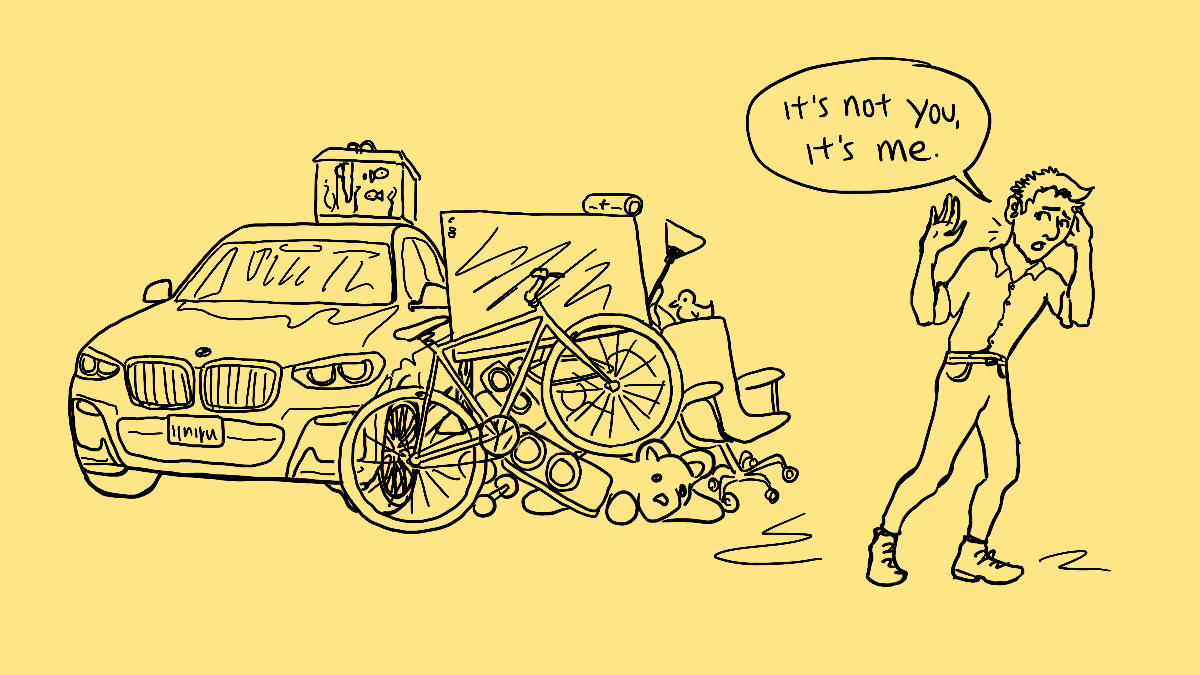
For the more mysterious areas of theology which we have no clear answers, we can implement some general principles. When I talk to people who have some of these questions I like to use a metaphor to help in our pursuit for the truth. I encourage them to consider looking for the answer like we are looking for something in a field (see the image for this post). What we can do is determine the fence line. For example, say the query is about God’s sovereignty, human responsibility, and human suffering. One fence post is that God is all powerful. That’s in the ground firmly at point X. Another fence post is that people are responsible for their actions (otherwise hell and judgement would be unjust and unfair – contradicting God’s character). That post is in the ground at point Y. Then another fence post is that God cares for us and loves us. That’s point Z.  And we know we suffer (that sounds obvious, but Buddhism insists suffering is an illusion…). That’s point Q – the experience which drives the intellectual pursuit. We then put up our fence by connecting our fences together. We know for sure, the answer to the mystery is not outside that fence (outside those parameters is error). So the answer to the mystery is within those parameters. Where exactly? That’s the mystery we must live with. But we must operate within the fence line. With regard to the mysteries, helpfully, God gives us some clear instructions (which you may feel only adds insult to injury or digs into your discomfort more). God tells us the secret things are intentionally hidden.

“The secret things belong to the LORD our God, but the things revealed belong to us and to our children forever, that we may follow all the words of this law.” (Deuteronomy 29:29)

We must be humble. Although we have our questions, we do not question God’s character or wisdom (ect).

Again, I don’t think anyone is exempt from these struggles. People must learn to deal with them, and sadly, they are the sort of issues for which people can easily deal poorly with, either thinking they have answers to these mysteries which they simply do not (and then potentially falling into error because of that) or by never learning to deal appropriately with the discomfort and so stunting their growth in the faith (or falling away entirely!).

It would be a shame to dwell incessantly on what are openly acknowledged as mysteries while rejecting what is openly revealed as truth. That would be a reflection of the kind of inappropriate priorities of ones thinking.

The issue we think we are solving is the intellectual issues of these questions and mysteries. But what will actually serve both us and others best in our ministry to them is if we are to some degree comfortable in the mystery. Able to accept the unknown. Perhaps this will be used by God as an example, that it is possible to stand on the essential truths found in the light of Scripture, but also live surrounded by the darkness it does not illuminate.

The Personal Experience of the Person of God

The placebo effect in the medical/scientific world shows the mysterious interplay between mind and experience and therefore to a degree reality (both subjective and objective). Fake medications relive pain, experiments in managing expectations cause us to anticipate pain and therefore feel it (although no pain stimuli are physically triggered). Similarly, do you want to improve your physical health? The protocols for doing so will depend significantly on your mental health. True also in reverse. Want better mental health? Improve your physical health. One set of actions changes the experience of the other, and at least regarding physical health, it is significantly dependent on the mind and mind-state.

Probably the most significant leverage of all for effecting changes across one’s life is social/relational factors. If I recall correctly non-for profits like Compassion Australia consider relational poverty as potentially the root cause for monetary poverty.

Thus far we might then say that relational resources are going to be a key determinative factor in the overall experience of life (not a unique proposition).

Also, not a unique proposition but what I think is an incorrect one, namely, that many who talk (positively) of people’s religious views and how that contributes to their overall (positive) experience of life do so reasoning that the religious life is functioning basically as a psychological or emotional resource. An entirely reasonable way of thinking within an imminent framework. But for a variety of reasons, the imminent framework is unreasonable.

I want to propose that the resource of one’s theological views is not primarily an intellectual or emotional resource, but it is a relational resource. This relational resource, much like what was argued for poverty been fundamentally a relational poverty, is likewise the greatest source of leverage for experiencing positive changes in basically all areas of one’s life.

In an ironic way, the psychologised self operating within an imminent worldview views the doctrines of God and knowledge of God as having no reference to the person of God, but the idea of God (and at best, the positive influence of other like-minded individuals gathering under the same ideas).

However, the experience of God is far from merely intellectual or merely social. It is personal.

To illustrate again from the medical sphere. Our social situation is going to especially impact our experience of suffering and sickness. Someone well supported socially is going to experience suffering with the benefit of others also shouldering some of the suffering and responsibilities of life they can’t handle. But also, simply the wordless presence of others is a comfort.

Oppositely, those who are lonely will experience the same physical suffering more acutely due to their lack of social resources. But within both these situations let us factor the Christian doctrine of belief in a personal God. I would pose that the benefit of belief is not merely an added psychological buffer for the sufferer, but a relational resource.

In much the same way as someone’s wordless presence comforts us, so too God who is present (as many christians will personally attest to during suffering) is comforting us with His presence, but also with his word (stored in our heart or meditated on and received during suffering).

It would be selling the blessings of God short to say that they are primarily physiological or emotional. The blessedness of the Gospel is the very personal presence of God.

Nothing For Keeps

What I mean, brothers and sisters, is that the time is short. From now on those who have wives should live as if they do not; those who mourn, as if they did not; those who are happy, as if they were not; those who buy something, as if it were not theirs to keep; those who use the things of the world, as if not engrossed in them. For this world in its present form is passing away.” (1 Cor. 7:29–31)

I would like you to be free from concern. An unmarried man is concerned about the Lord’s affairs—how he can please the Lord. But a married man is concerned about the affairs of this world—how he can please his wife— and his interests are divided. An unmarried woman or virgin is concerned about the Lord’s affairs: Her aim is to be devoted to the Lord in both body and spirit. But a married woman is concerned about the affairs of this world—how she can please her husband. I am saying this for your own good, not to restrict you, but that you may live in a right way in undivided devotion to the Lord.” (1 Cor. 7:32–35)


Time is short. The brevity of our life, and more broadly, that of the world, provides a perspective that shifts our concerns. Our hierarchy of concern still contains worldly concerns (especially if we are married in the context of this passage). Hence, we will still have worldly concerns such as buying and using things of this world. But Paul is pushing us to the limits of this logic. We buy and use in such a way that it’s as if we never owned what we buy or ‘use’ what we use. (The NIV uses the word “engrossed” when translating the more literal word “use” to convey that we can be consumed by the idea of getting the most out of the things of this world)

Ironically, we live in a world that is concerned with the brevity of life, but at the end of life there is no hope or vision of God. That is to say that this life is all there is; hence, we should get the most out of the things of this world. This view and the Christian view almost look identical – as they share the perspective that our time is short. But of course, the former view has no ‘hereafter’.

Minimalism and offshoots like it (even anti-capitalist critiques of it) are still extremely worldly. They operate within a temporal sphere and emphasise our need to make the most of the relationships we have now. The hope is that during our journey in this world we would be more at peace and focus on the things that really matter, like relationships and experiences. Many that talk this way are half right. Sadly, that still leaves them stuck with the problem that all things pass away. So why would relationships and experiences somehow be a better arbitrary standard for a life well lived?

As John reminds us, “The world and its desires pass away, but whoever does the will of God lives forever.” (1 John 2:17)

Even if we have fewer material possessions, those possessions will inevitably pass away.

Even if we prioritise relationships and experiences, we must remember that they are temporary and will eventually come to an end (in the secular framework, that is).

Paul is advocating for a particular kind of worldview, a view of the world from the perspective of the end. But at the end is the resurrection and our entrance into the presence of the Lord.

A perspective from the present moment, a worldly perspective, means to be dominated by the imminence of material needs and possessions, especially as they contribute to worldly thriving; whether relationally (marriage or singleness) or economically (business, buying, possessions).

Paul speaks of a Christian’s concern. The Christian’s desire is to please the Lord. But if a Christian is too closely associated (the language of possessing) with using the things of this world, then their concerns and devotion are (potentially) unbalanced. The Christian is always to be concerned and devoted to the Lord. Some Christians who are married will have competing concerns and devotions, and so must work harder to have the Lord’s affairs at the forefront of their mind (while in Paul’s argument, the single person potentially has more room for the concerns of the Lord).

This passage speaks predominantly about marriage and singleness. But worldly possessions and business (buying and using) are mingled into that subject. I’ve been reflecting on the possessions aspect of it mainly. That’s because I am someone who is easily ‘engrossed’ by the world. So, my mind and heart lingered on these verses. I am a married man, but this passage speaks to everyone who finds their heart longs for worldly matters more than heavenly ones.

The antidote? Paul seems to advocate for some sort of emotional/psychological distancing of sorts from worldly matters. He is extreme, sure (if happy, be as though not happy; if mourning, be as though not mourning, etc.). But to detach is wise because the world is passing.

I’m not sure why we forget that the world is passing away. I’m not sure why we forget that everything is temporary. We seem never to forget that we’re going to die. But still, we live as if we are not going to die. I think that is strange. In one sense, it’s true. We were made to experience life with God that never ends. Death is an aberration. So I think our forgetfulness at death could potentially be connected to our initial purpose to live forever with the Lord. But the presence of death is so utterly undeniable as it leaves a mark on literally everything as literally, everything is passing away.

The Bible proposes that we live with the end in mind. Because all things are passing away, nothing should engross us. Easier said than done, because that requires regular remembrance. The best way to do that (without staring at dead people) is to read your Bible.

A biblical perspective on the temporal nature of this world is also a safeguard. We could live a life of licentiousness and hedonism motivated by the fact that everything is fleeting. But as Paul helpfully reminds us (because we so easily do that), we are motivated by our devotion to the Lord. Much as Jesus lived a life of devotion and a perfect balance of loving the world and yet not been engrossed in it, we follow. Although on the path there will be a gate to pass through named death, it will be a transformation. Much better than an abrupt ending, rendering all prior things as ill-spent and squandered benefits.