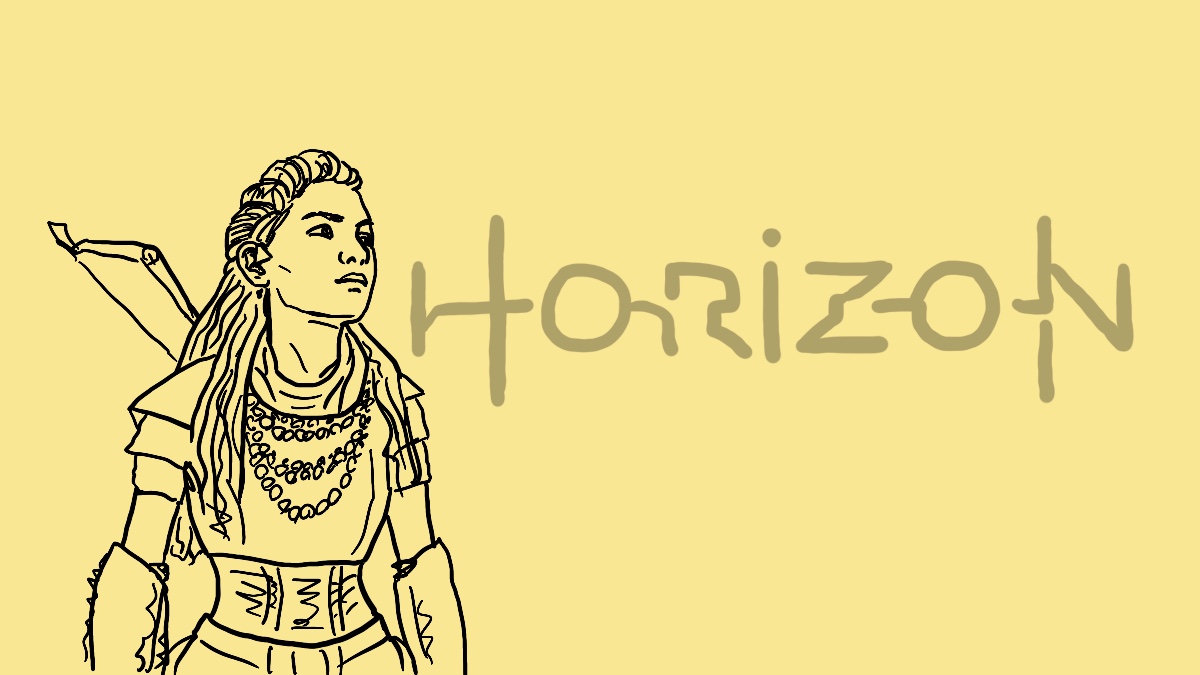
Although the video game Horizon: Zero Dawn is set in a post-apocalyptic (anti)wasteland inhabited by warring tribes of a variety of local deity worshipping persuasions, it is very much a modern secular narrative seeking to speak to the problems we face today (sometimes only thinly covered analogically). It has a lot to say about religion, technology, tribalism, environmentalism, and oddly enough sacrifice (how’d that get into the story?)
If the problem this fictional world is demonstrating is humanity’s propensity to organise in tribes, follow fake gods, and kill each other because of said tribes and gods, then what’s the solution? The solution in the narrative is to free oneself from superstitious religious ideas and free oneself from tribal identities, to transcend the problems they bring, which in turn enables one to make objective (we might say scientific) discoveries about the world and its technologies. These discoveries are what enable the saving of lives – not just saved from our tribal religious-fuelled murderous enemies, but (spoiler) from the equally rogue A.I. threatening to destroy the world again. (Clearly I am distilling the games narrative down into a select number of themes)
The story is clearly hitting on something substantial in our modern world. Tribalism, superstition, war, and the misuse of technology are all topics that should be grappled with because they pose problems to us as people. Tribalism sets up “us versus them” which promotes conflict and war. Superstition tends to be based on ignorance. And technology has the capacity both for good and for evil making the use of technological power for the betterment of society appealing but equally a dangerous engagement as the potential power has latent destructive ability as well. We can agree that those are problems to be dealt with. The game does well in portraying these themes and telling a story of people fighting back against these issues. These are noble issues to engage with.
We should ask how the game portrays these problems.
Let’s start by considering what religion looks like in the game. The tribes that form in the world of Horizon tend to form around local myths, (mistaken) deities of technology, and then codified into tribal traditions. Religious belief and community are intertwined and inseparable in the world of Horizon. So when (metaphorically speaking) Siri spouts forth some vocoded written script, ignorant tribespeople mistake that voice for the voice of god. And so Siri is now a local deity (doesn’t that sound eerily close to home…)
But what is the solution that is posed by this game and the narrative that it tells? Well, the problem is ignorance (which is where these superstitions come from), so the truth needs to be discovered right? Intellectual enlightenment That’s the solution. Someone from the world (the protagonist) needs to discover that technology is not divine, it’s a man-made phenomenon. It is not worthy of worship, it is simply a tool.
After the protagonist discovers the truth, she is able to wield the tool appropriately. The tool becomes a weapon to save humanity from an external threat, a rogue A.I threatening human life. Hurray!
But as the protagonist is a tribesperson, they must first transcend the local superstitions. That’s because the local superstitions are what bind the people in ignorance. The narrative uses the irony of the character been shunned by society to do so. So now they are enabled to see the world “from the outside” as it were. Their perspective is from outside the tribe, outside its superstitions and community. This gives them a perspective the other tribespeople are not able to attain. While they are bound by the chains of tradition, you are not. Convenient! You are empowered to now save the people who hate you and shunned you all your life. And who isn’t motivated to do that? (Wait, loving ones enemies… how’d that get into the story?)*
Ok. Having looked at the narrative of the game, and appreciating the good points it’s trying to make about the perceived problems, let’s consider where is might have some potential problems. Because we should remember, art is an imitation of life. The message of Horizon is trying to tell you what is right and wrong, and through the medium of gaming, what you ought to do and how you ought to think, making analogous connections to the world you live in when you put the controller down.
First, the writers are trying to recreate a tribal-premodern setting where community and (religious) tradition are inseparable. Its meant to be a world where everything is infused with the spiritual. Only problem is, you are, as the protagonist, outside of that world. It works hard at setting up the protagonist to have a “view from nowhere.” The protagonist is somehow able to be the perfect Renaissance hero. They are untethered from the corrupting influence of society (kind of like Frankenstein’s monster).
Although this makes for a good story and is a good carrier for the plot, the protagonist is the impossible hero. It’s a work of fiction, I know. That means you have to suspend your logic to a degree and imagine that this is possible. Because it simply is impossible for any ordinary human being to have this perspective. The question we should be asking ourselves as we play the game or reflect on the game is “how can this tribal woman have a worldview other than the pervasive all-encompassing worldview around her without someone or something outside that worldview teaching her?” Is not possible, so you just have to imagine and accept that this is an impossible hero. And of course they are the best heroes! So it makes for a good story.
But I think this highlights one of the problems with the message of the game. The writers have retrofitted a modern person into a supposedly premodern world. But the very presence of the modern protagonist in a world infused with the spiritual, undercuts the world that they are trying to create. That only displays the world that we inhabit. We can’t help but think that the spiritual is somehow distinct from the physical world. That’s what it means to be modern. So when the writers of Horizon create a protagonist who thinks like a scientist, they show the world they are creating not to be an imagined premodern society of tribes, but just the modern society with the veneer of the premodern. It displays our inability to connect with the world of the past, myself included. We simply can’t imagine a world where spiritual realities are literally infused into the physical world. To use Charles Taylor’s language, we can’t imagine a ‘porous self or world’, because we so thoroughly understand the world through an ‘imminent framework’. Horizon is a little glimpse of that, at least with the protagonist and her interactions with a tribal and religious society.
However, I think the story is trying to get something for which there is a genuine answer. The hope of the moderner is to gain a fresh perspective and see problems for what they are. It also touches on universal problems. The person who caused the apocalypse in the first place, has selfish desires. Their selfishness leads to ultimate destruction.
Moving on, perhaps a better way to look at the game, is not to put yourself in the protagonist’s shoes (again, impossible). But at least reflect afterward. Often, we are not the protagonists. In this game, that means we are the tribespeople. We are ignorant. We call things that are not God, god. It’s an irony. The writers are saying, “look beyond the superstitious religious beliefs and see that the world is simply material. That all there is is material to be crafted into tools. And that survival is the name of the game. And along the way, do good to people.” The irony is, that when we become the protagonist of our own stories, and when we determine what is right and wrong according to our own standards, behold, we make ourselves God. All the while proclaiming, there is no God. Furthermore, we could flip the narrative and its meaning on its head. Modernity is its own form of a tribal, superstitious, quasi-religious worldview.
Often these games put you into the driver seat as the hero. As Christians, we should step back one more significant step. We are not the protagonists in the Christian narrative, Jesus is the protagonist. He is the impossible hero. He comes from outside of our world and teaches us the truth and points to a better world. And then we see that we were ignorant the whole time, but he seeks to equip us with the truth. Much like the villains who cause death and destruction through selfishness, well, we tell ourselves we aren’t those people. But, we should consider, we might not destroy the world, but we often wreck our own worlds, our lives. There are many things to do to turn that around. But the first (often untaken) step, is to turn to the hero from outside, Jesus. There’s nothing wrong with tribalism. Been in Jesus’ tribe is actually pretty great. But you wont get that looking in from the outside.
*Note, I played the game taking options to forgive and help, basically I wasn’t a vengeful, angry person when given the option.
 Bigvai and Shiphrah
I can’t wait for this guy to do the theology of DarkSouls…
LikeLiked by 1 person
awwwwwwbro!
LikeLike
I loved this theology, but I do have a small criticism if you mind. in regards to Aloy being in a world full religion, and it being impossible for her to be outside it, the Creators circumvent this by having Aloy be a person who isn’t influenced by these things because she was an outsider from birth, and she gained the ability to see a “hidden world” from a young age. Aloy was never introduced to much of the religions and predetermined opinions, only those things that Rost taught her.
LikeLike
Thanks for engaing! I appreciate your thoughts on it.
LikeLike