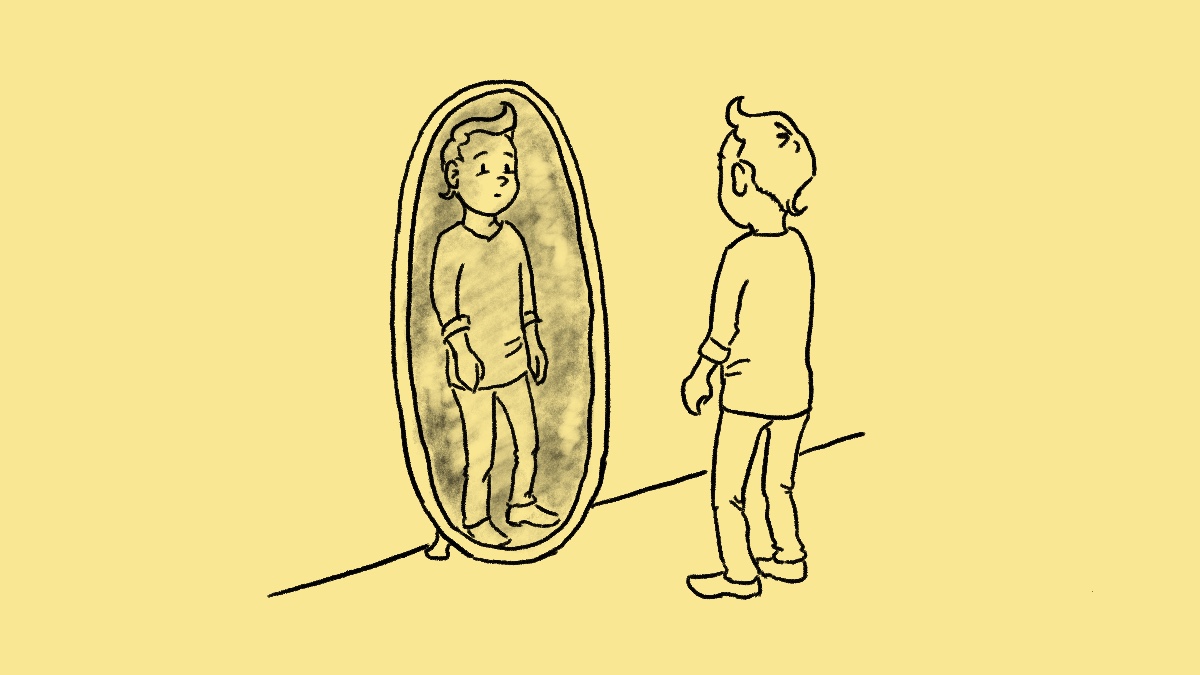
When it comes to societal morality there are certain things we may more readily associate with what is right and wrong. This is assisted by the system of laws we have set in place. To murder is wrong because jail time is associated with such an act. To speed is wrong (I think people still believe this…) because there is a fine associated with speeding. To launder money through a casino or some other shopfront is wrong because the laws constitute so. To lie is wrong in court. To lie to a neighbour…. It’s almost tempting to say, ‘well depends on the circumstance…’
These codified rules make it seem like morality is ultimately a matter of doing or not doing things. So perhaps you could be a complete jerk, but a law-abiding jerk. Conversely, you could be the most beloved person at the office, but a thief and a liar who gets locked up behind bars, and becomes the most beloved person behind bars!
David Wells puts it this way, “The law is an exceedingly blunt instrument when it comes to controlling human behaviour. There are many things that are unethical that are not illegal. Most lying, for example, is not illegal but it is always unethical. Our criminal and civil laws can control only so much of our behaviour. It is virtue that does the rest. And that is precisely what is been eroded in this self-orientated, self-consumed culture.” (p.29)
Virtue ought to shape our lives. We are to ‘be’ virtuous people not merely ‘do’ what virtuous people would do. But what is virtuous? Once it was defined according to who God is. We mirrored the characteristics that we saw in God (the communicable characteristics that is, such as love, grace, mercy etc.). Now, what is the spring of virtue? It is the self. We look within ourselves to find what is good, and so if we are authentic to ourselves, we are virtuous. And it is this that Wells says is eroding the very foundations of culturally accepted virtues.
So as society collectively reimagines what is good, it is doing so as each individual looks within themselves. We have this strange and ironic paradox at work. Every individual in a society is looking within themselves to find out what is good to do according to what they want, and so the collective good becomes the notion that what an individual sees within themselves is good. This leads us all to a dead end. We don’t look outside of ourselves, to God, but within ourselves. Wells says, “When God – the external God – dies, then the self immediately moves in to fill the vacuum. But then something strange happens. The self also dies. And with it goes meaning and reality. When those things go, anything is possible. Huxley’s dystopian novel, Brave New World, does not seem so far off into the future after all.” (p.31)
The solution is easy, right? We simply need to look outside of ourselves. Look to God. Look at God and see his great character. Live our lives according to this, as mirrors of God, as image-bearers of his glory.
That is very easy to say but each of us can testify how hard that is. Our selfishness draws us within ourselves. And it does so in strange ways. For some of us as we are drawn into ourselves, we only see the darkness of ourselves all the more and it disgusts us. But we can’t stop looking in self-pity. For others of us, we look into ourselves and we are blinded by our own greatness (purely subjective of course), and we can’t stop looking, understandably. If only you knew how beautiful my insides are.
It is not easy to look beyond ourselves to God. I trust our subjective testimony to this is sufficient. We need many signs to point the way, we need many warnings to deter our wanderings. We need glimpses of the greatness of God to keep us facing true North like rays of sun breaking through the canopy of the forest. So it is that God’s word points the way. So it is that the society around us is itself a warning to our wandering feet (sadly our experience tells us this). And so it is as we look at Christ in his word we do get glimpses of something greater, someone to live our lives for and to live our lives by.
“This is why we must come back to our first principles. And the most basic of these is the fact that God is there and that he is objective to us. He is not there to conform to us; we must conform to him. We do not go inside of ourselves to find him. We are summoned to know him only on his terms. He is not known on our terms. This summons is heard in and through his word. It is not heard through our intuitions.” (p.32)
Wells, D. F. (2014). God in the whirlwind: How the holy-love of God reorients our world.


This is SO true.
LikeLike