The identity of Jesus as being both fully human and fully God is at the core of the Christian faith. However, it is also something that, throughout history, various movements and individuals have sought to deny – in one form or another. In the 2nd century AD, gnostic philosophy led some to deny Jesus’s humanity – with the stance of docetism claiming he only appeared to be human. A couple of centuries later, Arius denied his eternal divinity. There are many other movements that also have presented skewed representations of Jesus, including various biblical scholars of the last 200 years who would deny anything supernatural about him at all – which, like docetism, is very much influenced by the dominant philosophy of the time – in our case, naturalism. However, one claim that in more recent years would be presented at your front door is that Jesus is an archangel. This is the view of Jehovah’s Witnesses (JWs).
In this post I will engage with one of their favourite passages for arguing that Jesus is a created being (and therefore not God), then will explore the important question of what difference does this make?
When chatting with a JW about Jesus, it doesn’t seem to take long before Colossians 1:15 comes up. ‘He is the image of the invisible God, the firstborn of all creation.’
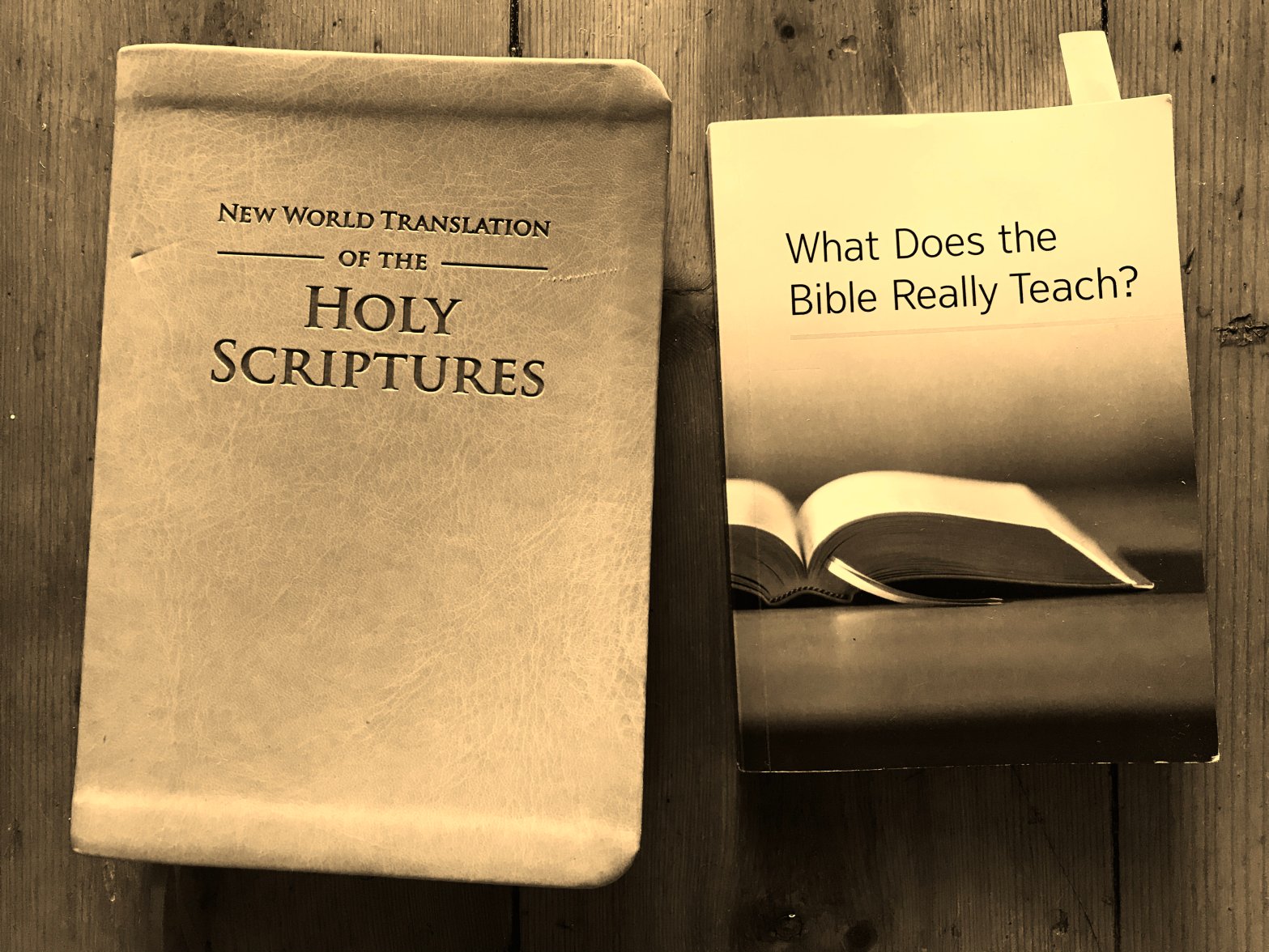
In their doctrinal tract, ‘What does the Bible really teach?’ JWs write regarding Jesus that, ‘He is called “the firstborn of all creation,” for he was God’s first creation.’ (p.41) Now, this idea is not new. It is very similar to that spread by Arius in the 4th century – which was condemned as a heresy.
But superficially the idea makes sense. It is simple and pervasive. However, it is also wrong.
Ask yourself, which context makes better sense in which to read the language of the New Testament: the context of our own language and culture, or the context of the Old Testament? Surely the latter.
After all, Paul, the writer of the letter to the Colossians, was a 1st century Jew. For early Christians like him, the Old Testament books were their holy scriptures. And so when he writes ‘firstborn’ we need to fill this word with a concept that is informed by the richness of biblical thought – as expressed in the Old Testament.
So what did ‘firstborn’ mean?
Obviously there are many references in the Old Testament to people who were literally born first. And there were all the rights and privileges of inheritance that being the firstborn entailed (cf. story of Jacob and Esau in Genesis 27).
However, as the Christ was a descendant of David, and therefore inheritor of all the Davidic promises, what is more likely on view in Paul’s use of the word ‘firstborn’ is a reference to Psalm 89:27:
“And I will make him the firstborn, the highest of the kings of the earth.” (Context: Psalm 89:19-37)
In this passage, the ‘firstborn’ is evidently a special status of exaltation. David is made the firstborn, which here is juxtaposed with the clarifying phrase, ‘the highest of the kings of the earth’. That is, he is declared by God to have this exalted, ruling status. He wasn’t literally born first – 1 Samuel 16 tells us he was the youngest of his brothers.
Keeping this idea of exalted ruler in mind, re-read Colossians 1:15. If Jesus is the ‘firstborn of all creation’, then he is the ruler of creation – the one who both rules and inherits it. What is more, this idea of Jesus ruling and inheriting creation comes out in the following verse:
“For by him all things were created, in heaven and on earth, visible and invisible, whether thrones or dominions or rulers or authorities — all things were created through him and for him. And he is before all things, and in him all things hold together.” (Colossians 1:16, ESV – Italics mine.)
The passage further goes on to say, ‘that in everything he might be preeminent’ – that is, being first in the sense of having the highest rank over everything – which also ties in with this understanding of ‘firstborn’.
So, reading Colossians 1:15 in its proper context, it becomes evident that, far from talking about Jesus being a created being, the passage is actually exalting him over creation.
On this note, a related idea that JWs will assert is that after God created Jesus, he used Jesus to create all other things (p.41). However, the passage itself works against this reading. Yes, Colossians 1:16 says, ‘For by him all things were created,’ and, ‘all things were created through him’, however, this places Jesus ontologically on the side of the creator God, rather than the side of a created being. The New World Translation actually inserts the word ‘other’ here at both these points – to support the Jehovah’s Witness’s idea that Jesus made ‘all other things’ (but was himself created by God). However, the word ‘other’ is not in the greek text – I know because I can read it. It’s not even implied. Rather, Colossians 1:16 is saying that all things were created through Jesus. And if he created all things, then he can’t be a ‘thing’ that has been created. John 1:3 asserts the same idea – ‘all things were made through him’, and even repeats it in the negative – ‘without him was not anything made that was made.’ Again, this means that Jesus himself cannot be something ‘made’. (For a video of John Piper making this point see here.) Rather, ‘in him, the whole fullness of deity dwells bodily’ (Colossians 2:9). He is fully God dwelling in a man.
But what difference does this all make?
Firstly, if Jesus were not fully God and human, then when he died on the cross, God would have been punishing an innocent third party. The whole Christian mechanic of salvation – of God taking on the punishment for sin himself in the person of his son – would be put out of joint. There is much more that could be said on this – such as Jesus’ obedience being able to be perfect because of his divine nature, and his overcoming death. But this would be compromised if he were not fully God as well as man.
Secondly, the difference is in who we worship. Because if Jesus is a created being and not truly the eternal God, then we should not worship him as such. But if this is the case, then why is he placed alongside the Father as someone to be given equal honour and worship? (See John 5:23 and Revelation 5:13). Such a thing would be blasphemous if he were a creature. Yet early Christians were recorded as singing hymns to Christ ‘as if to a god’ (Pliny the Younger, writing in the early 2nd century AD – quoted in Andrew Errington, ‘Can we trust what the gospels say about Jesus?’ Matthias Media: 2009. p.17).
And thirdly, the difference is in knowing God. Let’s consider the alternatives: If Jesus is just a man, then he wouldn’t really be all that different to the rest of the prophets who brought God’s word to people, but who did not bring God himself. Likewise, if Jesus were an angel born as a human (as Jehovah’s Witness will claim), then what he brings is not really all that different in weightiness to the Old Testament law (which Hebrews 2:2 indicates was ‘declared by angels’). However, if Jesus is truly, ‘the radiance of the glory of God and the exact imprint of his nature’ (Hebrews 1:3), and if indeed ‘in him the whole fullness of deity dwells bodily’ (Colossians 2:9), and if John said, ‘the word was God’ (John 1:1), then the message he brings is truly greater than all those who came before him – whether prophet or angel. This message is not only of a greater salvation (Hebrews 2:3), but he reveals God’s character to us in his own person (John 1:14, 18, 14:7, 9). As such, to see Jesus is to see his Father (John 14:9-11). Yet if he were just a human, or an angel, then he simply could not do this. We would not see God so intimately as we do in his son, if Jesus were not fully, the same divine, uncreated substance as his Father.
 Bigvai and Shiphrah
Thanks for this revelational exposition. “Firstborn” as used on Colossians is the Greek word “Prototokos” (having the preeminence) as opposed to “Protoktisis” (first created). So, you are right on. Jesus is indeed, Yahweh, the son (the Infinite who became an Infant, the high and Holy who became the meek and lowly, the great “I AM” who became a lamb, nailed on a cross of wood that stood on a hill, although He made the wood and the hill on which it stood)!
LikeLiked by 1 person
cheers (on behalf of my wife who wrote it), and nice prose! – Robbie.
LikeLike