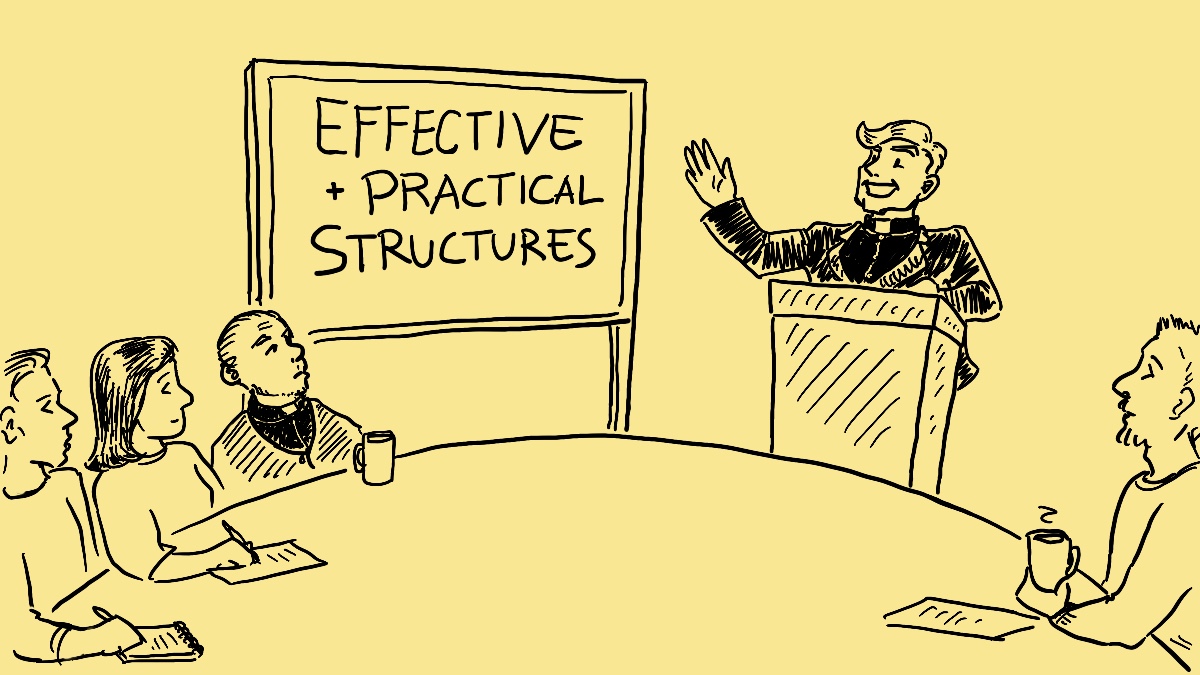
No minister (or Christian) will be all things equally, at once, or at all times: smart, practical, prayerful, faithful, efficient, effective, respectable, humble, confident, organised, servant-hearted, and so on – in a word, “Balanced.” But there are prerequisites of character that must be in place before ministry begins.
I bring this up because I recently read Gary Millar’s book, Both/And Ministry (a good book!). I should say right here, I’m on board with the book. We should seek to strike that balance and hold that tension that comes with the task of a minister as generalists (even as we know we have strengths and weaknesses). What I’m writing now is what Millar would wholeheartedly agree with (but he is just emphasising a particular angle). The book reminded me of another emphasis that sits alongside his, and which he himself acknowledges: that some of these tensions have an order or hierarchy built in. There are either logical prerequisites or temporal prerequisites whenever we seek to dismantle supposed dichotomies. For example, in the classic trifecta of ministry-ready-checklist paperwork—character, convictions, competencies—there’s a reason that character is first. So we might say that although we need both character and competency, we actually need character before competency, or character before we even consider competency.
I want to consider some of the “Both/And”s of Millar’s book, and explore the logical prerequisites of the dichotomies he’s harmonising, specifically in chapters 4 and 5 with regard to Ministry and Leadership. Gary’s point in the book is about the balance of the tensions. My reflections in this article are about how there is a subordination of effectiveness, practicality, and organisational prowess to godliness, theology, and people.
Dependent before working
We must be both dependent on God and working hard for the Lord, indeed (tension and balance). But hard work is subordinate to dependence (i.e., James 4:13–16). Unless you’re dependent on God, don’t bother working for God. Our work for God depends on our dependence. As Gary says, “All ministry has to start with the fact that it is God who does the real work” (p.77).
So can you be so heavenly minded that you are of no earthly use? I mean, sure, it’s possible that you pray too much—many things are possible. But I’m not convinced that whoever you are reading this right now, that you actually pray too much (and I bet you don’t know anyone who does, to the detriment of other things in life. Now here I am taking prayer as one of the most tangible expressions of dependence on God). But the Bible again and again warns us against the alternative (I think of Joshua and the Gibeonites in Joshua 9). This is exactly Millar’s point—dependence is not optional or secondary, but foundational.
So yes, we need to be both dependent on God and committed to working hard (p.76), but the actual danger is that we work without depending on God. And is not prayer a strenuous task? In Colossians 4:12 it is referred to as a fight or struggle, which I think is a brilliant description of how many of us feel in prayer. Depending on God is an essential prerequisite to ministry. All ministry is done out of dependence and reliance on God, who brings to growth all the things that we water and plant (as Gary points out, p.78). Clearly, we water and plant (1 Corinthians 3:6–7). But the whole point of that metaphor is dependence on God.
Godly before effective
In chapter 5 Millar reminds us we must be both godly and effective. But unless you are godly you will not be effective (with the exception of those in Philippians 1:15–17). Gary points this out with regard to 1 Timothy, saying, “What we believe and the way we live matter. This is the foundation of any biblical ministry. We cannot sidestep the need to be godly” (pp. 99–100).
To be godly as a leader, according to Scripture (1 Timothy 3:1–7, Titus 1:5–9, Acts 6:3, 2 Timothy 2:2), is to be someone whose character is already shaped by the gospel before they take up responsibility—they are selected or appointed because these certain characteristics are evident. This includes being above reproach, faithful in marriage, self-controlled, temperate, respectable, hospitable, gentle, not violent or quarrelsome, not given to drunkenness, not greedy, not overbearing, and not quick-tempered. A godly leader must be trustworthy, blameless, and have a reputation for wisdom and being full of the Spirit. They must be reliable and able to teach others, with a life that is publicly consistent with their message. What a list! Because teaching and leading bring stricter judgment, Scripture calls for a higher standard in both conduct and example (James 3:1). All of these characteristics must be in place to be godly as a leader, and they must be in place before one even considers effectiveness. Timothy and Titus are looking for these kinds of people so they can then appoint them. You won’t be stepping into leadership until these things are in place. And once these foundational matters crumble, you are no longer going to be in leadership—which is clearly the most ineffective KPI blunder for a leader: not being in leadership!
Let’s say that you’ve got godliness in check. Now it’s time to be effective. What on earth does that mean? The current vibe is that under your leadership or care, people are being converted to allegiance to Christ. And depending on your context, that number will vary. One convert may be ineffective when there are 100,000 under your care, let’s say. But one convert may be very effective in a town of 100 people. But where do I get this idea from the Bible? I don’t get it from the Bible! You won’t get these kinds of answers from the Bible. The Bible doesn’t give you targets (10 converts in a financial year). It gives you actions (pray and tell). You will only get the idea to be fruitful in conversion as a secondary kind of fruitfulness or logical implication of praying and telling under God’s sovereignty (see John 15). And I agree with Miller, there is some impetus for seeing John 15:16’s use of the word fruitfulness to mean converts, because there are some parallels with Matthew 28, especially the idea of “going” out to bear fruit—but it’s not the main idea behind the metaphor of fruitfulness. It’s secondary to character. Arguably fruitfulness is mostly character. I think the overwhelming emphasis points this way. See: Proverbs 11:30, Jeremiah 17:7–8, Matthew 3:8, Galatians 5:22–23, Ephesians 5:9, Philippians 1:11, Colossians 1:10, James 3:17–18, Hebrews 12:11. This idea also makes the most sense if part of one’s task as a minister is to be an example.
The idea of fruitfulness or effectiveness as a leader, specifically as a Christian leader, would require more time. My point here is to point out the prerequisite of godliness for any individual who would even consider leadership. So it is that before any kind of leadership effectiveness would be measured, one must be godly or faithful first.
Theology before practice
If we are going to judge a Christian leader, how should we do it? From the Bible, according to the Bible. As Gary points out, they are required to have “sound doctrine” (2 Tim. 4:2–3). Gary says leaders must be theologically driven according to Titus 1:9 and 2:1—that sound, healthy, or life-giving doctrine is the “fuel” of ministry and motivates every practical decision thereafter (pp. 101–102). We will not be judging a Christian leader by non-Christian standards. What drives a Christian—and therefore a Christian leader—must always be their theological principles before their practical outworking. The practical comes later because it flows from theologically derived principles (or at the very least, is not in conflict with them).
If you flip the order, what happens is you take business models and worldly wisdom and dress them up in spiritual language. This is not necessarily a problem if that wisdom is not contrary to theological principles. But if you start with worldly wisdom and then seek to justify it theologically, how easy would it be to deceive oneself into forcing Scripture to support what has already been approved in practice? I’m not saying this will always happen, but if the order is reversed it becomes more likely—similar to eisegesis, where someone finds in Scripture what they already want to see.
That is why a Christian leader needs to have theological principles in place before considering the practical benefits of any leadership or ministry decision.
People before organisation
People are clued in to people. It’s amazing. Yes, some people are deceived easily, but at the same time—and more often—people will be in tune with you. It is simply the way God wired us: relationally. The triune God’s creation reflects his nature. That is why people are at the heart of ministry, or as Gary says, “leaders must prioritise people” (p.103). You don’t serve structures—you serve people. Structures don’t serve structures; they serve people. And in all this, people serve God.
The more people you gather together, the more you have to organise. So even the impetus for organisation depends on people. The means is the organising, and the end is the people (with the ultimate end being God’s glory). And because people get people, they will know when leaders are more concerned with the sheep pen, the fences, and the food trough than with the sheep.
A heart for people is a prerequisite for being organisationally minded.
Conclusion
Hence, character comes before competencies. So, as I have been considering the “both/and” nature of ministry, I would prefer to use language that reflects a subordination of effectiveness, practicality, and organisational prowess to godliness, theology, and people. Using the language of “both/and” captures the tension (which is the emphasis or angle of Millar’s book), but reading the book has also reminded me that there is an order. Again, not that I think Gary would or does miss the order—as I said, that wasn’t the burden of his book—but his argument reminded me of the importance of keeping the order in view. My reflection is that many of us will miss the order in the messy real-life application. That’s the tension of both/and tensions! Nobody is a theological acrobat who balances everything well. So then, perhaps even “balance” is subordinate to right ministry priorities.
Bibliography
Gary Millar. (2025). Both/And Ministry. Good Book Company.
 Bigvai and Shiphrah