When it comes to our behaviours (the ones we wish to mortify), I guess that we focus mostly on the ‘what.’ Meaning, we focus on not swearing, not hating, not lusting, or not stealing in the moment that we find ourselves tempted to do such a deed. In that moment, we seek to perform a counterattack on the sin front, combating with the weapon of self-control or willpower. So, part of us wants to swear, but we exercise restraint and hold our tongue, refuse to look at what the flesh wants, or refuse to act on an urge in the moment.
Very good. Not bad.
But the context of our temptations, or the situations in which we find ourselves struck with the desire to live contrary to God’s ways, may be just as important as the immediate moment of decision. Orchestrating or avoiding settings or cues that promote unrighteous behavior could be considered a strategy under the umbrella of “prevention is better than cure.”
It struck me that I listen to a lot of books about productivity, and I thought, these principles could potentially apply to our pursuit of holiness—holiness habits. Instead of avoiding distractions, we mortify sin.
Couple all that with the legal language of ‘means, motive, and opportunity,’ which is also a helpful framework for self-reflection, self-examination, and introspection to tease out deeper issues in the inner world of our minds and hearts.
—
Say you are tempted to a common struggle you have.
Ask yourself:
What was the internal and external trigger for that sin? Was it the person or place I was in? Was it the emotional state of boredom I was feeling or the stress I was under? Sins are often doing a job for you. You lust for pleasure, you are greedy for comfort or status, your anger is trying to achieve control of others, etc. One potential key to tackling sin in the long term is to mortify something deeper in the heart in those moments or prior to those moments. Addressing the heart will take a bit of introspection. You will need to ask yourself what you were feeling in the moments of sin, and why. Why were you motivated to do that? You will have to do this soul searching both immediately after the fact, when its searing effects are fresh in your mind, and also when you are more lucid and calm (perhaps in a moment of prayer and devotion in the morning). This is the tricky part—it’s the motivation. Why did you do that? Why did you really do that?
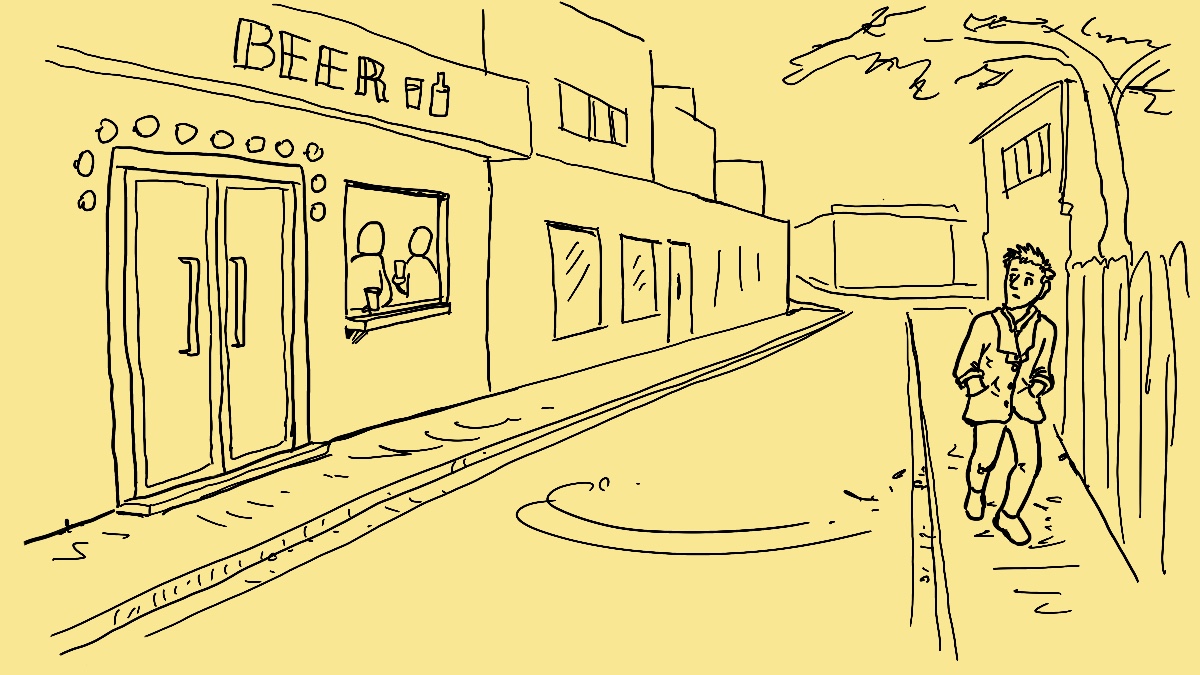
Another angle is opportunity. Where were you when it happened? Does it always happen in that place? Why that place? Does every trip to the big shopping mall fill you with greed? Is there a certain friend with whom you always end up drinking a bit too much? Do you find yourself undressing people in your mind when you go to the local gym? Or do you get filled with anger when you visit certain political news sites or forums? The “when and where” create the opportunity for sin to take place. You were in the right place at the right time for the wrong thing to happen—and it keeps happening in those places. Basically, you need boundaries. Identify places that are a no-go if they cause you to sin. When Jesus recommends we cut off our hands to avoid sin, it’s a kind of reasoning that says, “Don’t give yourself the opportunity.”
Also ask yourself, what enabled you to sin such that if you didn’t have that something, you would not have the means to sin? Was it the amount of leeway you have with your money? Was it that you have a smartphone with apps that are unwholesome or outright sinful—like alcohol delivery apps, social media platforms, streaming services, or real estate apps? If chat groups are the place for gossip, what if you left the chat group? These are all online examples, which I think are the easiest to identify and the easiest to quash. But the same can be said of tangible things. Does the shelf of awards and trophies lead to pride? Is simply having alcohol in the house making it too easy for you to drink too much? Is having a TV at all the clincher? Or do you know that a new car is the doorway to worldliness in your heart every time you flick the key clockwise? These are the means.
To-Do:
Prayer is the great internal rewiring of our soul. As we talk to God and seek His help, amazingly, He helps us. It’s amazing because it’s gracious of Him. And if we have come to this point of asking for help, it’s amazing because God is already at work in us to bring us to this point. I pray in the morning. What I noticed happening is that I used to grumble about the things coming up in my calendar. But slowly, now, as I start my day in prayer, I bring those calendar issues before the Lord. What a world of difference.[1]
Accountability, or pacts. This too might sound odd, but because I was (and still am) a grumbler, I made a kind of pact with my wife. I told her that if she caught me grumbling, I’d pay her $10 from my personal fun account to hers. It worked. First, because she didn’t care too much about the money but cared a lot about stopping the grumbling. And secondly, because I cared a lot about the money (and my wife!).
These are great starts, but you also need to carefully consider what you’re trying to tackle and what your end goal is. If greed is your struggle, contentment is your goal. If lust is your struggle, then purity. If anger, then gentleness. If drunkenness, then sobriety, and so on. Once you identify your problem, take it through the “means, motives, and opportunity” framework and work to eliminate those elements. The motives are the hardest to change, so it’s recommended (at least I think so) that you take immediate actions to reduce or eliminate both the means and opportunity most strongly associated with the sin you are trying to kill. If you struggle with lust at the gym, quit the membership or go at different times. If it’s drunkenness at home, remove the alcohol. If it’s gossip in the lunchroom, have lunch elsewhere.
—
These are the easiest places to start. But if you think they are difficult to implement, well, I’m not sure what to say. These are only the surface of the problem and, in one sense, they are even inadequate for the job (see Colossians 2:20-23).[2]
You still have the inner motivation and desire to put to death. Given the insurmountable task, how can we possibly be motivated to do it? Calvin puts it well. He reminds us of our union with God, His imputed righteousness, and our new motivation as those united with Christ.
When Calvin speaks about a “system” by which to govern one’s life in order to live according to proper conduct before God and for God, he says the following in *The Institutes*, Book 3, Chapter 6, Section 2:
“The system rightly begins by reminding us of the foundational principle that we must be holy because ‘God is holy’ (Lev. 19:1; 1 Pet. 1:16). When we were lost and wandering aimlessly through the complex maze of this world, like scattered sheep, God brought us back to His fold. As we consider our union with God, we should remember that holiness is the essential bond of this union—not because we achieve communion with God through the merit of our holiness, but rather, we must first cling to Him so that, imputed with His holiness, we can follow wherever He leads us. It is crucial to His glory that He remains separate from wickedness and impurity. Thus, He informs us that the ultimate goal of our calling, which we must always keep in view, is holiness.”
There is no better intrinsic motivation (to use productivity world speak) than the glory of God and the honour of God now that we are united to Him. This motivation is deep and impossible to generate on our own. Rather, it is given to us by the transforming work of the Spirit at the regeneration of the heart—from stone to flesh, from death to life. Empowered by the Spirit, the life of the Christian will, in time, display this transformative work.
[1] What has also helped me spiritually, is time blocking all my jobs and tasks. That sounds funny, that it helped me spiritually. But its because I am less stressed, and more organised and more able to be focused and clear. This state of mind with work has meant I’m less of a grumbler. Grmbling is one of the archetypal Israelite sins. It is a spiritual problem.
[2] “Since you died with Christ to the elemental spiritual forces of this world, why, as though you still belonged to the world, do you submit to its rules: “Do not handle! Do not taste! Do not touch!”? These rules, which have to do with things that are all destined to perish with use, are based on merely human commands and teachings. Such regulations indeed have an appearance of wisdom, with their self-imposed worship, their false humility and their harsh treatment of the body, but they lack any value in restraining sensual indulgence.” (Colossians 2:20-23 ) I think this passage speaks more to what Calvin calls “meriting our holiness” as opposed to what I am writing about in this post, but it still stands as a good counterweight to our discussion, as if our actions are the ultimate lever for effecting change.
 Bigvai and Shiphrah