For something as common as the headache (for which 98% of people experience – who are those 2% of people?!) doesn’t it induce a headache to think we don’t actually know the exact mechanisms for their causes?!
The same is true for the theological questions that evade any satisfactory answer – quite despite the bibles very clear statements within the same related topics which are often essential for salvation.
Consider these theologically essential and non-negotiable truths; God is creator, The Father, Son and Holy Spirit are God, every person is composite of Body and Soul, Sin is our greatest problem, God is sovereign and people are agents in their own lives, most people reject Jesus, some people accept Jesus, The bible is God’s word to us. These statements are abundantly clear and accepted (at least within the reformed community).
Now consider, for all that, we simply do not know for sure…
What was God doing before creation?
How is the one God also Father, Son and Holy Spirit?
How is Jesus both fully divine and fully human without mixture or confusion of either?
What is a soul?
What is the origin of sin (ie, where did Satan come from and how did that happen?)?
Given God’s omnipotence, how exactly do we understand our own autonomy within Gods sovereignty and omnipotence?
Also, why did God allow sin (first in the devil and then for humanity)?
And then, why would he allow it to continue (especially Satan who went on to deceive, presumably, other angels, and then humanity)?
Why did God choose Israel specifically (why set his affection on them and why make his promise to Abraham)? Or for that matter, why did He choose you and me?
And why do so many hear the gospel and not accept it?
Or, related, why do so many never get the chance to hear the gospel for even the chance to accept it (or reject it)?
Why is anyone saved at all?
And, equally, why isn’t everyone saved?
Then, why are christians to enjoy life after death but promised suffering in life before death?
Given the ultimate importance of God’s word, how exactly was it received and transmitted throughout history? And why did God not preserve the original autographs?
Finally, why would God allow all these questions (especially because some of the most fundamental truths of christian faith are closely related to these questions)?
As much as headaches are nearly a universal experience of pain (and for some much more serious than others), the same can be said with regard to each of those questions above.
For some people, these questions will only occasionally bother them but not very seriously. For others, they will be a constant source of discomfort or worse.
Again, much like for a headache, we will want to reduce the pain or discomfort of the mysterious (or the cognitive dissonance depending on how you understand different claims).
A source of relief (but not a cure) is in knowing what we must know. We can stand on the solid ground of scripture with regard to everything necessary for salvation. We know what is essential for living a godly life. And with those two addressed (for which we will have our work cut out for us already) we are then equip for telling others the message of salvation and guiding them in living a godly and God glorifying life.
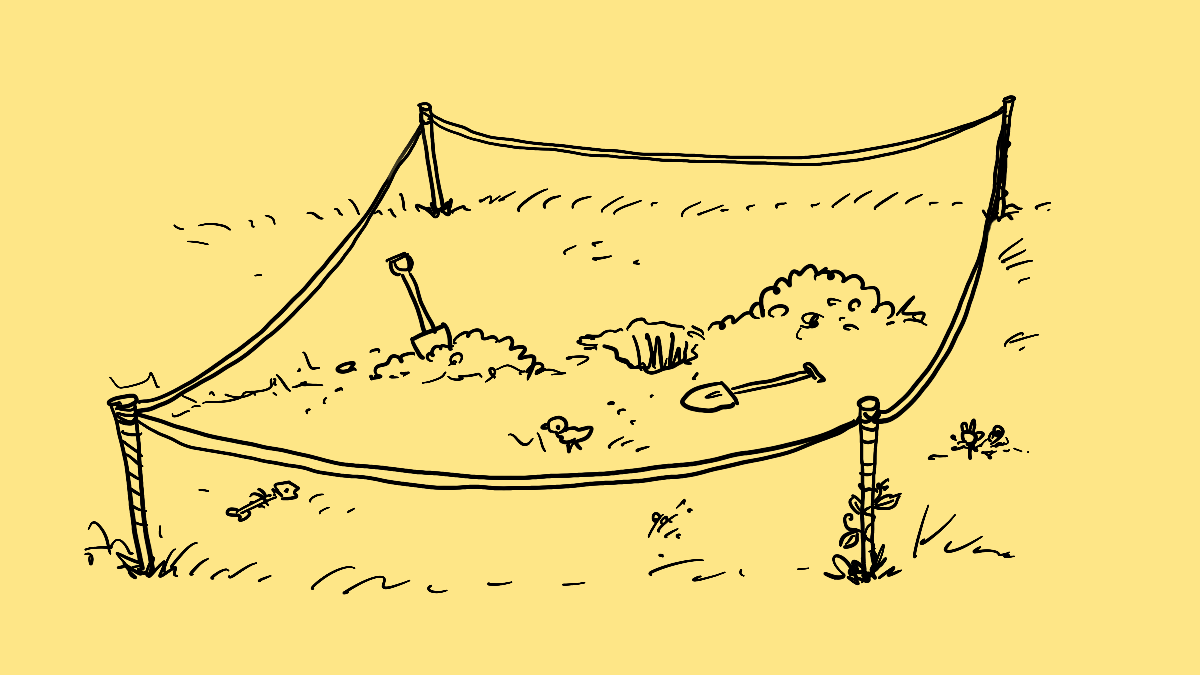
For the more mysterious areas of theology which we have no clear answers, we can implement some general principles. When I talk to people who have some of these questions I like to use a metaphor to help in our pursuit for the truth. I encourage them to consider looking for the answer like we are looking for something in a field (see the image for this post). What we can do is determine the fence line. For example, say the query is about God’s sovereignty, human responsibility, and human suffering. One fence post is that God is all powerful. That’s in the ground firmly at point X. Another fence post is that people are responsible for their actions (otherwise hell and judgement would be unjust and unfair – contradicting God’s character). That post is in the ground at point Y. Then another fence post is that God cares for us and loves us. That’s point Z. And we know we suffer (that sounds obvious, but Buddhism insists suffering is an illusion…). That’s point Q – the experience which drives the intellectual pursuit. We then put up our fence by connecting our fences together. We know for sure, the answer to the mystery is not outside that fence (outside those parameters is error). So the answer to the mystery is within those parameters. Where exactly? That’s the mystery we must live with. But we must operate within the fence line. With regard to the mysteries, helpfully, God gives us some clear instructions (which you may feel only adds insult to injury or digs into your discomfort more). God tells us the secret things are intentionally hidden.
“The secret things belong to the LORD our God, but the things revealed belong to us and to our children forever, that we may follow all the words of this law.” (Deuteronomy 29:29)
We must be humble. Although we have our questions, we do not question God’s character or wisdom (ect).
Again, I don’t think anyone is exempt from these struggles. People must learn to deal with them, and sadly, they are the sort of issues for which people can easily deal poorly with, either thinking they have answers to these mysteries which they simply do not (and then potentially falling into error because of that) or by never learning to deal appropriately with the discomfort and so stunting their growth in the faith (or falling away entirely!).
It would be a shame to dwell incessantly on what are openly acknowledged as mysteries while rejecting what is openly revealed as truth. That would be a reflection of the kind of inappropriate priorities of ones thinking.
The issue we think we are solving is the intellectual issues of these questions and mysteries. But what will actually serve both us and others best in our ministry to them is if we are to some degree comfortable in the mystery. Able to accept the unknown. Perhaps this will be used by God as an example, that it is possible to stand on the essential truths found in the light of Scripture, but also live surrounded by the darkness it does not illuminate.
 Bigvai and Shiphrah