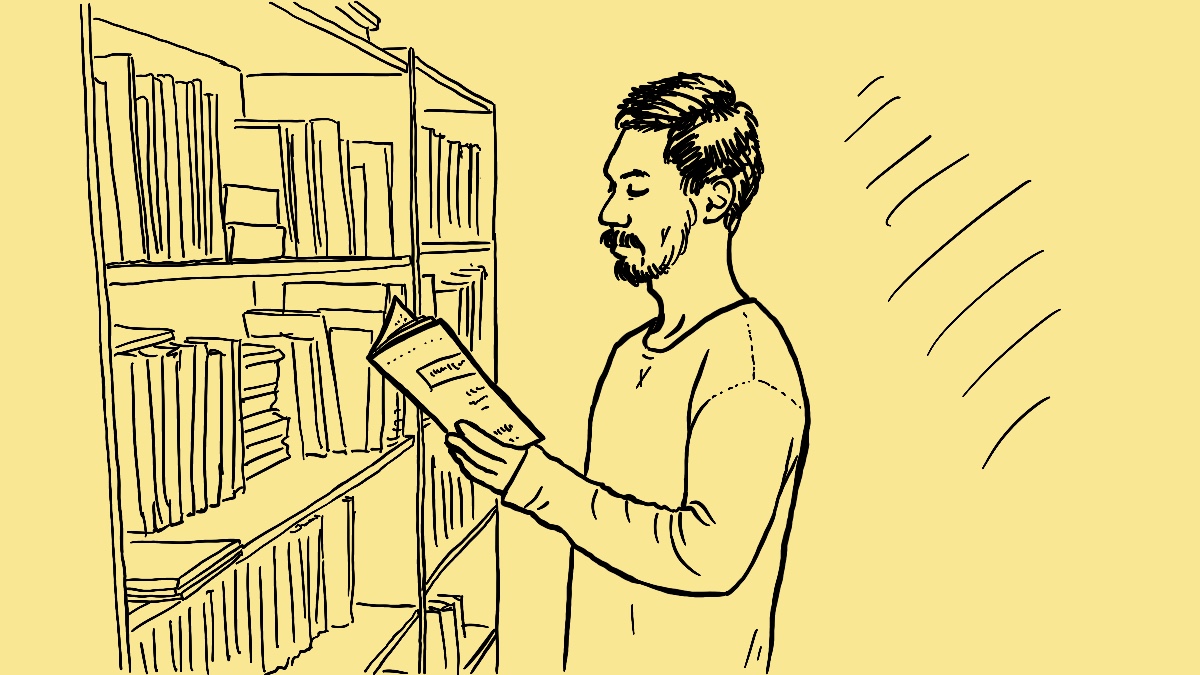
Does the availability of reading material through the Internet promote better reading in your experience?
First of all, surely it’s a good thing that there is more access to reading material in general across all sorts of mediums, electronic included. That’s because it potentially means more access to knowledge. The trouble with widespread access is that it doesn’t necessarily promote skills in literacy. Having access doesn’t automatically lead to competency in handling or interpreting information. Some might argue that widespread access to reading material has pushed us in the direction of less thoughtful engagement due to the amount available to us. That means that the most attention-grabbing information wins. The problem is that attention-grabbing doesn’t promote thoughtfulness. In this sense, illiteracy could be an outcome in a media-saturated world. (Ryken & Mathes, 2021, p.17)
Similarly, a kind of literacy apathy can develop. This could be linked to what we now call the tyranny of freedom, decision fatigue and phenomena like it.
In the digital age, we can spend upwards of six hours a day using and consuming digital media. No Western age group averages above one hour of reading a day.
It is possible that someone might argue this to be a good thing in one sense. Is it that our imagination grows the more creative material we consume in general, regardlness of the medium? So more well-crafted Netflix shows promote greater creative thoughts in the viewer and more empathetic thinking. Perhaps. What we’re asking is ‘does the medium matter?’ Undoubtedly. We know the difference between the epically long Lord of the Rings movies and the Lord of the Rings novels (and we comment to no end of the difference between them or other examples saying, “but its not the book”). The movies are long by movie standards. But the book is not necessarily exceptionally long in terms of written media. The difference between experiences are worlds apart even though they depict the same world. And in that sense, C.S Lewis might remark that those who don’t read inhabit a tiny world (even if they’ve watched all the movies there are) (Ryken & Mathes, 2021, p. 27).
There is a reason for the shift away from written media to digital media for entertainment. Digital media and its entertainment forms (such as movies or shows and series’) require much less effort to consume. Hence there is a superficial sense of rest. But when it comes to exciting the imagination and taking us out of ourselves, movies or television stories do a lot of the work for us. We don’t need to imagine a world because it is recreated on the screen according to another’s imagination (or a whole team’s worth of visual special effects). Along this train of thought, visual stimulation is much more stimulating in comparison to the theatre of the mind.
Reading material on the other hand requires much more of our cognitive resources, especially that of the imagination in many cases. It’s only natural then that we would prefer the more accessible of the two options. We are often busy with cognitive loads that exceed our comfort and drain us of the self-discipline required to choose the more difficult path, the path of reading for instance.
We might use the imagery of fireworks and a log fire. Digital media being the fireworks – short-lived and exciting. The log fire being a book – it takes effort to make, but captivates the attention and soothes the soul for much longer.
We certainly can’t give up digital media. But we should be encouraged to moderate our media consumption like a diet. I think it’s fair to say that the Western diet is certainly out of kilter to healthy and wholesome habits of consumption. It is not necessarily that we should supplement our digital diet with long-form books. It’s more that we need to adjust our diet to include less sugar and more brown rice. Books are not supplements, but should be staples.
At first, our minds might reel at the idea. We love sugar. I love Youtube shorts, even educational ones (like dad joke reels). But the long-form slow burn is better in so many ways. The short-lived rush isn’t as good as I think it is. It promises more than it ever delivers, like a person with a personality disorder. But the slow-burn book is like a dear friend who sticks about for the long haul and says things that are uncomfortable to you but that are good for you because you know they mean well (and over the long haul achieve their well-intended purposes because they know you better). On the other hand, the person with the personality disorder intent on feeding sugar, is employed by marketing companies to do so and they’re really good at it (personality disorders are weird like that).
We might think that sugar tastes better than brown rice. But perhaps you’re not used to actually making nice rice. You see, when you fry brown rice in oil, and add salt and spices, it is a fantastic dish. It’s just that some of us think anything healthy must be bland – boiled rice, straight. That is not the case.
The best books are the best books for a reason. They do make you work, but they make you better. And a hard-earned reward is almost always more rewarding.
Ryken, L., & Mathes, G. (2021). Recovering the lost art of reading: A quest for the true, the good, and the beautiful. Crossway.
 Bigvai and Shiphrah