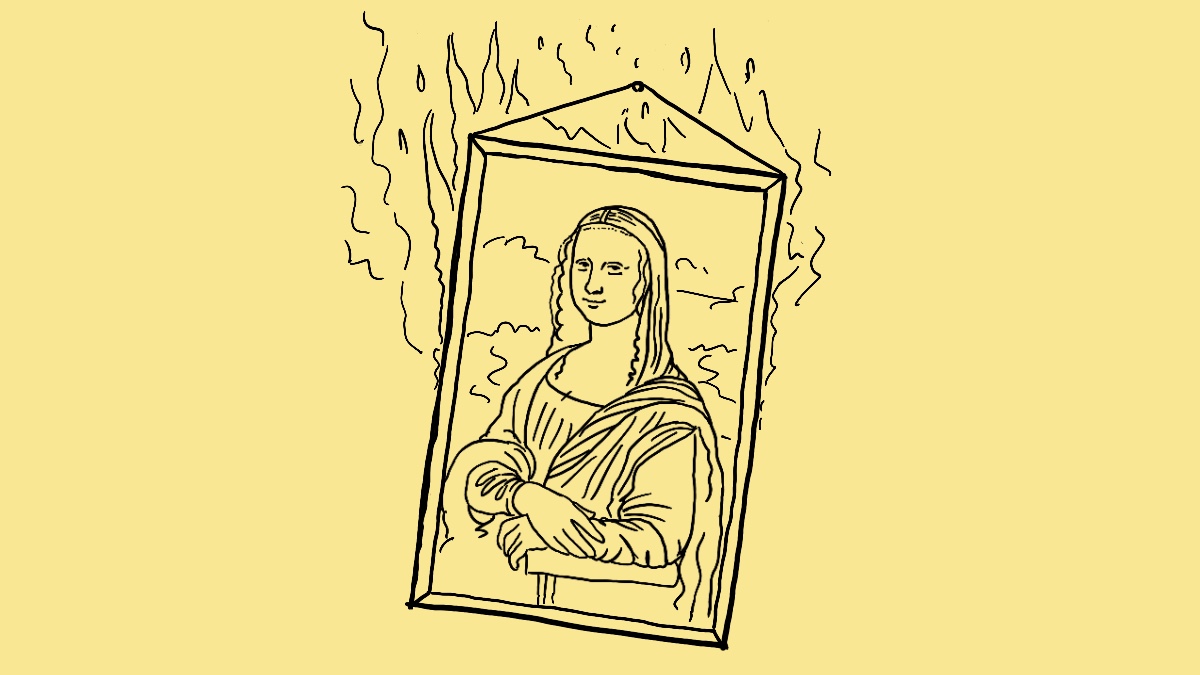
When God made humanity, they had a God-given task. Made in the image of God, they were to rule creation. As VanDrunen put it, referring to Adam, “he was made in the divine image as the royal son of God, commissioned to exercise wise, righteous, and holy dominion over this world.” (p.40).
Tasked with ruling creation in the likeness of God, VanDrunen argues that just as God completed his work and then rested, so too for humanity. So the cultural mandate to have dominion over creation, ruling it and crafting it to God’s glory, was a task expected to be finished, and then humanity would enter rest (patterned after God).
The fall derails all of this.
Fallen humanity cannot have dominion over creation. Fallen humanity cannot attain the new creation, entering into glory.
But the Bible story develops. Wonderfully we meet Jesus Christ, who was the last Adam. He performs the work of redemption and consummation; that is, he rules all things and has dominion over all things for God’s glory. He performs the task first given to Adam and Eve, to have dominion over all creation and to rule it in wisdom, righteousness and holiness.
No person could accomplish the task of the first Adam after the fall. Until the Lord Jesus, none truly had dominion as the image of God, a dominion characterised by wisdom, righteousness, and holiness. It cannot and will never be the case that humanity will fulfil the cultural mandate now. But now, the Lord Jesus has fulfilled the task given to humanity. He has not made the task possible for humanity. He has completely and utterly completed it, once and for all. Importantly then, “Christians will attain the original destiny of life in the world to come, but we do so not by picking up the task where [the first] Adam left off but by resting entirely in the work of Jesus Christ, the last Adam who accomplished the task perfectly.” (p.50) VanDrunen exclaims, “This is absolutely essential for issues of Christianity and culture! If Christ is the last Adam, then we are not new Adams. To understand our cultural work as picking up and finishing Adam’s original task is, however unwittingly, to compromise the sufficiency of Christ’s work… God indeed calls Christians to suffer and to pursue cultural tasks obediently throughout our lives. But to think that our sufferings contribute to atoning for sin or that our cultural obedience contributes to building the new creation is to compromise the all-sufficient work of Christ. (p.50 – 51)
What then for the pursuit of cultural activities? We pursue cultural activities, not to contribute to the new creation in some way. But the opposite. We respond to the fact that the new creation has already been achieved in Christ, and we live that out now (and only for the here and now). We are still very much in the world and entrusted with a variety of responsibilities within it. We are called to engage in cultural labours. But the purpose of these labours is not to build the world to come.
Instead, we are to live as the Israelites did in Babylon. We certainly pray for its flourishing that we might, in turn, flourish. That the place we live in is a place of peace that we would be able to proclaim the Prince of peace more readily and live lives of peace more easily. Nevertheless, we are a people in a land that is not ours. We are Christians in Babylon, not Jerusalem. We know that Babylon will be destroyed along with all the cultural activities and products of that land, some of which we contributed to. (more on this next post)
If that makes you feel sad, perhaps you haven’t seen how good the land to come is, the world come. Redirect your focus. Consider the greatness and the grandeur of all that the Lord has in store for us. If you think that the world we live in now is better than that which is to come, then I would strongly encourage you to consider your perspective on this world in comparison to the glory of God.
But more than that, don’t miss the work of Christ. He has conquered the world and reigns over it. His work is sufficient, and we live in that sufficiency, and we live out of that sufficiency. We no longer strive to complete cultural dominion like our lives depended on it. Because they no longer do, which is good news. Fallen humanity cannot acheive the task anymore. But the gospel is a heavy buden relieved from our shoulders. The Lord has done the work, and we live in his completed work on our behalf.
VanDrunen, D. (2010). Living in God’s two kingdoms: A biblical vision for Christianity and culture. Crossway.
 Bigvai and Shiphrah