A Christian lives in two worlds. We are saved from the world we are born in and become citizens of heaven, another world, the world to come. Yet all the while, as citizens of heaven, we are still citizens of this world. If we are astute, we feel the tension every day, making us consider how we ought to live as citizens of this world and of heaven. In particular, we wonder what the value is of our day-to-day lives as we contribute to the pursuits of this world, given that this world will pass away. A Christian mother sees the eternal value in raising their child in the truths of God but then struggles to understand the place of secular work as a beauty therapist or dentist. The Bible study leader sees the eternal value in teaching the truths of God to others in the group but might struggle to see the value of their building project or truck driving job. The Christian working in politics to shape climate action might wonder what the point is if there will come a day when there is no sun or moon, but God will be our light.
The doctrine of God’s two kingdoms can help us get clarity on these matters.
Temporal and earthly pursuits are not valueless simply because they are temporary. At the same time, they ought not to be considered eternal things (our cultural pursuits here on earth will not enter God’s new kingdom). There is a distinction between here and there, a discontinuity. If you’re reading the Bible and don’t see a distinction (even a sharp distinction) between the kingdoms of earth and the kingdom of God, you might have your Bible upside down.
“The two kingdoms doctrine strongly affirms that God has made all things, that sin corrupts all aspects of life, that Christians should be active in human culture, that all lawful cultural vocations are honourable, that all people are accountable to God in every activity, and that Christians should seek to live out the implications of their faith in their daily vocations. A Christian, however, does not have to adopt a redemptive vision of culture in order to affirm these important truths. A biblical two kingdoms doctrine provides another compelling way to do so. According to this doctrine, God is not redeeming the cultural activities and institutions of this world, but is preserving them through the covenant he made with all living creatures through Noah in Genesis 8:20-9:17.” (p.14)
The argument posed by contemporary neo-Calvinists is that the new earth will be the return (in sorts) to the garden of Eden’s perfection plus “the fullness of the centuries,” according to Alvin Plantinga. The idea is that the cultural products of the centuries are part of the age to come or will be (they will be redeemed we might say, or contribute to the new heavens and earth). But because of the fall of humanity, God responds by saving humanity. For the neo-Calvinist, the salvation and redemption of Christ is essentially a restoration or re-creation. So, God does not start over new but accomplishes his original plan (p.18). The idea is that the redemption brought for us in Christ frees us from sin and restores us to the ongoing task of the cultural mandate seen in Genesis 1:26-28, to rule creation is to unlock its potential. Hence, the argument goes as Christians we can say all cultural work is kingdom work. That is certainly one way to alleviate the tension within ourselves regarding the value of our cultural labours, to say that they are preserved into the age to come.
VanDrunen proposes a two-kingdoms alternative in his book “Living in God’s Two Kingdoms”. He wants to honour the cultural activities of our age while distinguishing them from the coming kingdom, the new creation. Others might argue that you can’t honour the cultural activities of our age if ultimately they contribute nothing to the age to come, the new creation. But VanDrunen wants to argue that just because something is temporary does not make it worthless (he uses the word ‘preserve’ in respect to the current age). That’s to propose a false dichotomy. Nevertheless, he wants to maintain clear distinctions. Hence politics, commerce, sports, or music are not necessarily going to be activities that build the kingdom of God (p.26).
His big idea is that “redemption does not consist in restoring people to fulfilling Adam’s original task but consists in the Lord Jesus Christ himself fulfilling Adam’s original task once and for all, on our behalf. Thus redemption is not “creation regained” but “recreation gained”, in Him. (p.26)
It is important to understand that Jesus has accomplished redemption in its entirety for us. he does not merely accomplish our freedom to then complete the task of cultural dominion as genesis puts it. He has achieved all; dominion and power through his life, death, resurrection and ascension on our behalf.
By analogy, consider sanctification. In much the way that we are totally and completely sanctified by the Lord’s work at the cross, we are also undergoing a renewal here and now. Even though at the return of the Lord we will be totally transformed. There is a similarity between that process and the way we understand our cultural tasks. The Lord has achieved the dominion we were tasked with in Genesis 1:28, 9:1. Indeed he achieved it on our behalf because we cannot achieve it. Yet, at the same time, we are now living out or living in what Christ has achieved for us. knowing Jesus rules all things, we seek to honour his rule continually even as we long for the return of the Lord when his rule will be absolute in a new way.
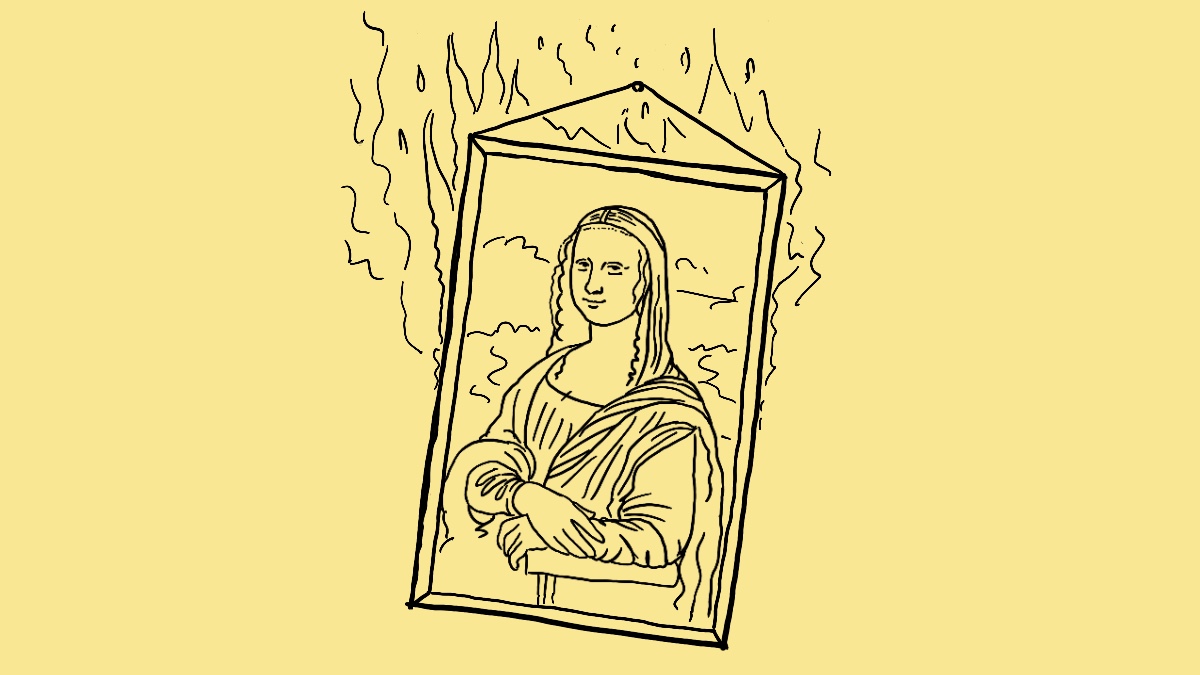
Something doesn’t have to last forever to have value. If we think, for example, their artistic pursuits were the of entering into the kingdom of heaven, we have made one of two mistakes. We have either valued our work too much, thinking it’s worth more than it is – even if we made the Mona Lisa or the original matrix trilogy (yes, all three, the fourth one is… interesting). Because compared to the heavenly glory awaiting us, these things indeed are dust. This leads to the other potential mistake; we have undervalued the glory awaiting us. In comparison to literally everything this world has to offer, God is greater. We lose sight of this great truth when we get too focused on our work here on this earth, building sand castles on the beach. Some sandcastles will be more beautiful than others, and there is value in that. Something being temporary doesn’t mean it’s valueless. As a prime example, consider marriage. Biblically speaking, marriage is temporary. If you argue that marriage has no value because it’s temporary, you are making a contrary argument to the Bible.
Now we might say that marriage is a little bit different to cultural works. Without getting into the details of comparing the institution of marriage to cultural pursuits such as music, politics, or healthcare, let’s consider something else temporal in the Bible. What about the temple itself? Or the tabernacle? Or the Ark of the covenant? These were arguably masterpieces in their day. And yet they were temporary. For a time, they pointed beyond themselves to the temple of God’s people, the tabernacle of Jesus’ incarnation, and the presence of God by his spirit. But the physical masterpieces are no longer. Their value wasn’t in their culturally appropriate craftsmanship. Nor are they valueless because they are no longer.
It may be a stretch, but a similar argument can be made for all cultural works (albeit to a lesser degree because capitalism, climate change policy, truck driving, k-pop and the matrix aren’t mentioned in the Bible, and of course, has relative value by a variety of measurements).
In all these matters, the two kingdoms’ doctrine will give us clarity on the value of cultural pursuits and clarity between the earthly kingdom we reside in and the heavenly kingdom for which we are citizens. To muddle these two together will diminish the value of our citizenship in heaven and all that it entails and unduly inflate the value of our earthly works. Clarity in this matter will help us to work better because we will have a clearer purpose for our work (which I haven’t presented in this short post). In conjunction with this, having a clearer view of God’s kingdom will shape everything we do in the common kingdom, the secular kingdom, the world we live in.
For now, we need to understand that Jesus has accomplished all the work of the Kingdom to come. He has won it all. Rules all. We live our lives under his rule and to his honour. To requote Vandrunen, “Christians should be active in human culture, that all lawful cultural vocations are honourable, that all people are accountable to God in every activity, and that Christians should seek to live out the implications of their faith in their daily vocations. A Christian, however, does not have to adopt a redemptive vision of culture in order to affirm these important truths.” (p.14)
VanDrunen, D. (2010). Living in God’s two kingdoms: A biblical vision for Christianity and culture. Crossway.
 Bigvai and Shiphrah