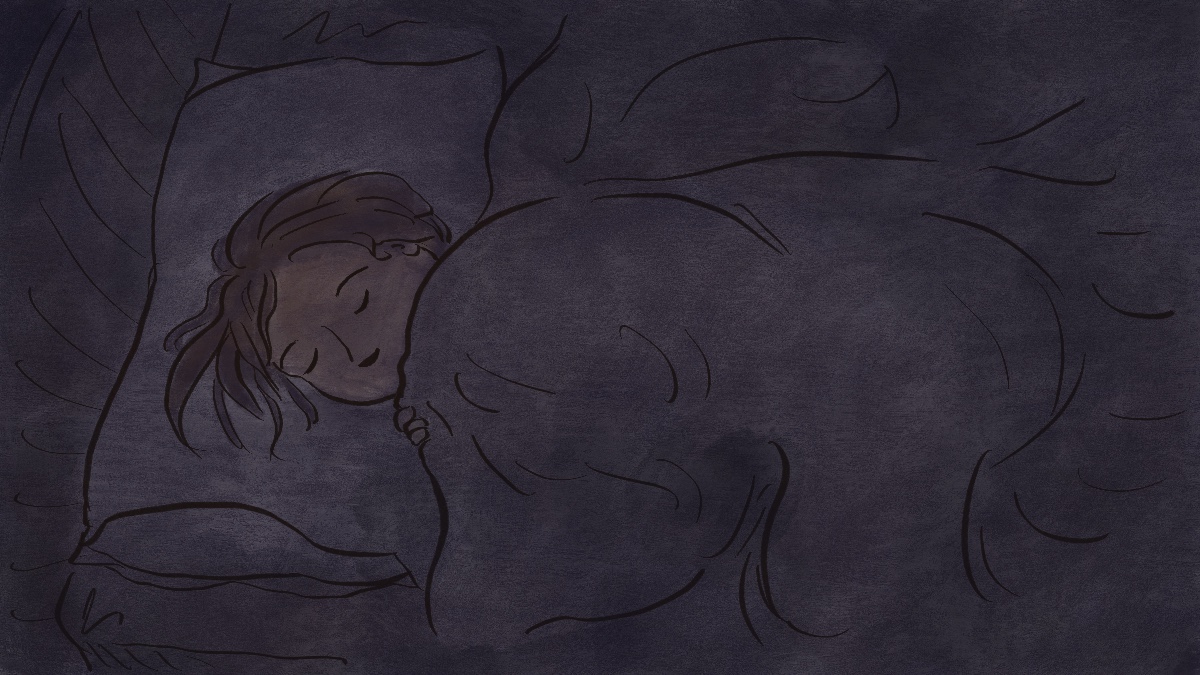
A little slumber, a little folding of the hands. Yes, hello darkness my old friend. Sleep is a friend. For some it is a friend who visits regularly. For others, not as regularly as we’d like, and for others, we kick them out of the house too early to our own peril.
In much the same way that we need friends, we need sleep. Except sleep is more immediately necessary. You will die sooner for lack of sleep than for lack of friends. But just getting the “bear essential” to function is also not good enough. Much the same as seeing our friends only the minimum required amount will not benefit the relationship. No, it will strain it. So it is that we need sleep, and we need good sleep.
What a thought – that we are intentionally made to sleep. God has made us this way. He made us so that we would be incapacitated for 7 ½ to 8 hours a day (yes that’s the standard for 98% of people, and no, you’re probably not one of the 2%. In fact there is only a 2% chance that you are!)
Why has God made us this way? We cannot answer that entirely. But we can say it highlights a significant difference between us and our Creator. As Geoff Robson points out, “There are many [differences between us and God], of course: the Lord God is omnipotent, omniscient, omnipresent, eternal, perfectly holy, and perfectly loving, to name just a few of his attributes. But how about this one: God never sleeps.” (p.15) So it is that our creatureliness is displayed in the very fact that we repeatedly must sleep yet God our Creator never sleeps. Now take a moment to consider how every night we are being reminded by the very nature of our necessitated rest that God never sleeps. Rather, He is tireless. No doubt, this rarely (if ever) crosses our minds as we place our brain capsules to the pillow and enter into the palatial darkness.
Because God’s sleeplessness is never much pondered by us, we can take this for granted. God has often used the most mundane aspects of our lives to speak into our lives. In much the same way that God uses food, friendships, work, or leisure to teach us, God uses sleep to teach us.
God uses our daily need for sleep, to teach us about himself. He needs no sleep because He never tires and His power never wanes. Which is good news for us. Robson puts it this way, “God never disregards his people – not for a second – and our ways are never hidden from him. Why? Because he simply never gets tired. He never sleeps. We may say we agree with this and understand this, but do we? When every task we set ourselves, every fibre of our being, is in some way tainted by our propensity to get worn out, how can we understand someone who literally never gets weary?” (p.18) Our earthly existence is woven with weariness. In the same way that we cannot fully grasp God’s sovereignty due to our limited sovereignty, we cannot fully grasp at his tirelessness due to our tiresome frame. But what we can know is that God is not like us. God uses this contrast, between him as creator and us as creation, to further show us what he is like. This ought to lead us into greater praise of him, and a greater trust in him and his power.
God also uses the difference between ourselves as creation and himself as creator to teach us about dependence. I think this is one of the greatest things about sleep, one of the best lessons it holds for us. We are dependent. In our lack of power to affect that which we want to with efficiency, we must be reminded that God is at work and he always accomplishes that which he purposes without ever diminishing his efficiency or effectiveness. This never changes for God. But how different the story is for us. I plan to do 10 things on my to-do list. I end up doing one. And it’s generally a patchy job. How will I ever get the other nine tasks done? Work myself down to the bone? Here’s what Robson says, “Most of us know the difference, right? We know the difference between an occasional late night or early morning because something important is on our plate or something urgent came up, and ignoring God’s sovereign care and thinking the world (or our little corner of it) depends mostly on us. It’s living the difference that’s hard. Because God’s work is decisive and ours is not, it is folly and vanity for us to stay awake longer than we should. All the extra effort in the world isn’t going to push our project over the line of success unless God blesses our efforts and enables our work to succeed (whatever ‘succeed’ might mean in each situation). But it’s hard to accept our limitations and leave things in God’s hands. Yet as hard as it is – and I may really be stretching the friendship to say it this way – staying up late may be worse than folly: it may be sinful. It may be a sinful attempt to wrest back the control that should gladly be relinquished into God’s hands, a sinful denial of our God-given human limitations, and a sinful failure to trust God.” (p.35) Robson’s words ought to be an insightful challenge to us. People aren’t going to be able to look from the outside and tell you the thoughts and intentions of your heart. And we ourselves can find it difficult to unravel our own motivations. But take Robson’s thoughts as an opportunity to pray through the attitudes you have regarding work (whatever that might be). Do you approach life knowing your own limitations, and resting in God to bless your efforts? Or not? Does the world rest on your shoulders?
Consider Psalm 127:1-2, “Unless the LORD builds the house, the builders labor in vain. Unless the LORD watches over the city, the guards stand watch in vain. In vain you rise early and stay up late, toiling for food to eat— for he grants sleep to those he loves.” (Psalm 127:1–2 NIV)
Robson, Geoff. Thank God for Bedtime: What God Says about Our Sleep and Why It Matters More than You Think, 2019.
 Bigvai and Shiphrah