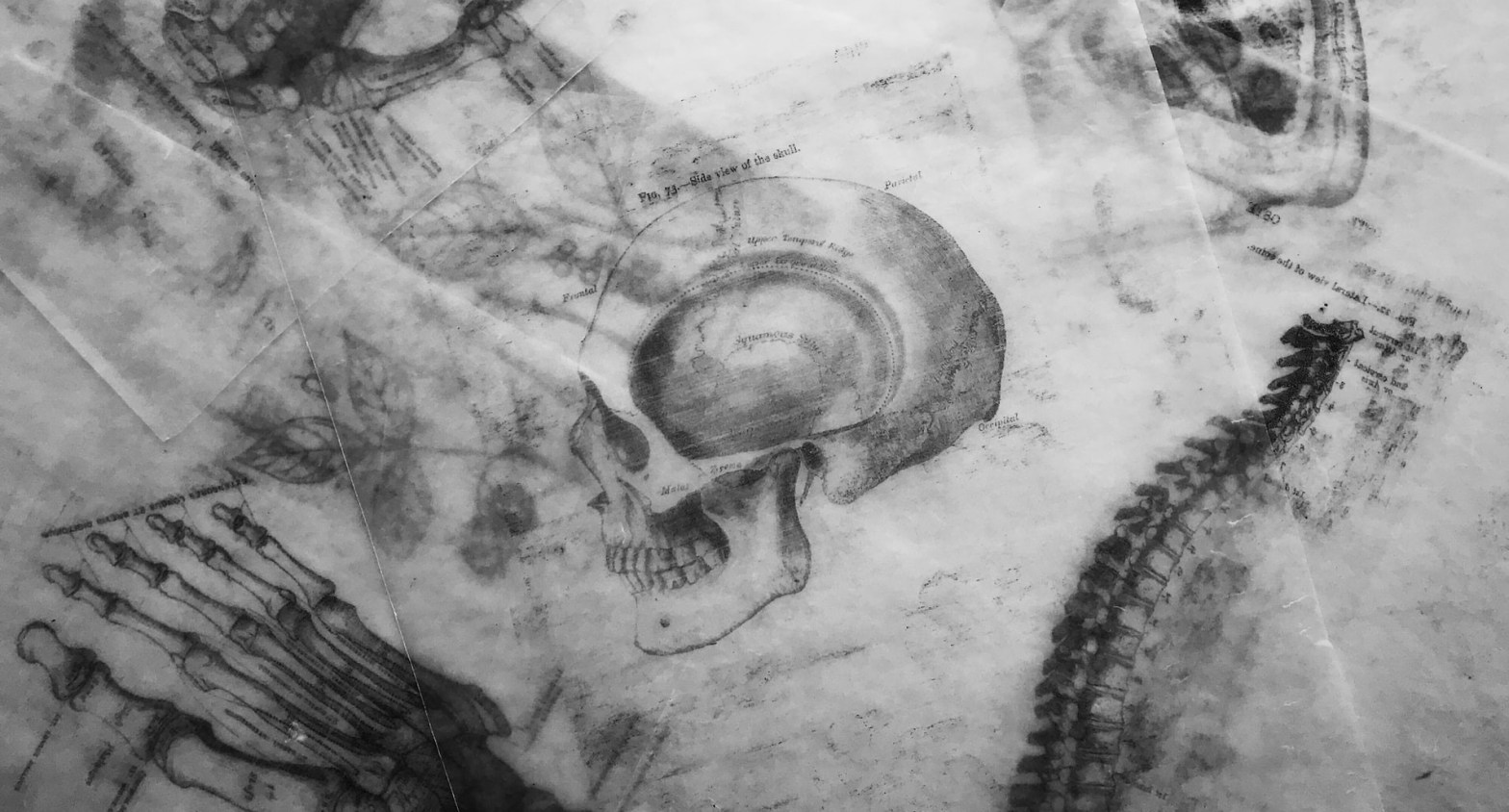
In Bill Bryson’s book “The Body”, you will find a truly remarkable account of the biological makeup of the human frame. There is a lot of detail about all its intricacies, as well as an account of the historic investigations that led to many of the discoveries in human biology. How Bill Bryson and his team managed to write on such a topic while doing it justice is quite astounding. It certainly helps that it’s a very fun read as well.
But I’m particularly interested in thinking about Bill Bryson’s book and what it does and does not say about God.
The body is both an unbelievably complex organism (of which humans cannot even create one of the most basic principle parts – the cell), as well as a dishearteningly fragile specimen which is susceptible to illness and ultimately death. These two aspects of the human body warrant theological consideration. To ponder them from merely a scientific perspective would not do justice to the kind of consideration that the body beckons in its complexity and its fragility.
So how does Bill Bryson talk about those two aspects?
When it comes to the complexity of the body, Bryson will always talk in high regard about the amazing fact that evolution somehow produced a conscious, functioning, world-changing creature such as the human without even trying. The explanation which is essentially unguided chance is an underwhelming account when Bryson is painting a picture of just how marvelous the human body is. The terminus of ones praises is in a mere theoretical principle, evolution. So what will continually happen is that we personify evolution, like it’s got some sort of grand plan, or has an intention, or volition. But it doesn’t, and we (kinda) know that. Which in itself undercuts our praises of it (and also makes us look silly in the process because, well, we are the ones praising it…). Evolution may very well be part of the story, but its not even the best part of the story. It might be a ‘how’, but it’s not even close to a ‘why’. It’s like me writing a blog post about the amazingness of Tolkein’s pen and missing the mind that guided the hand.
On the other side, Bryson will talk occasionally about people claiming the existence of the eye or what-have-you is evidence of intelligent design. He then goes on to propose that some other organ is more so worthy of delivering such a killer verdict (I forget what he cited at this point – forgive me, the book is large). But at the same time he says that any intelligent designer would be deranged to conclude that childbirth the way it happens for humans is a good idea given all the crazy processes needed to deliver a baby safely (albeit it is simultaneously a miracle, etc., etc. no contradiction here…). All that to say that if we were God we would do it differently. (By the way, why aren’t we God?)
All in all, the book (at least theologically and philosophically speaking) is a bit of a hodgepodge, but it’s not about delivering a robust explanation regarding anthropology from a theological or philosophical perspective. It is a biological and scientific exploration of the human body. So it shouldn’t surprise us that when theological and philosophical comments are made, they are done so in a rather “ordinary” fashion.
Given all that, I think it is well worth the read because it is such a fantastic biological and scientific exploration of the human body – the very purpose of the book! As Christians, we still have a lot to appreciate about this book. Read it knowing that the Lord our God has created us and that he has done so in such a magnificent way. The book will hopefully give you a greater sense of the grandeur of God. That’s certainly what it did for me.
Yet when it comes to the topic of death, decay, sickness and mortality, it is again a mixed bag. These topics aren’t light and breezy by any means and Bryson does a good job of acknowledging just how profound suffering is at certain times in the book. However, they ought to be pondered very, very thoroughly and deeply. I think it would have been an opportunity for Bryson to acknowledge his area of expertise and the scope of the book and point readers elsewhere for answers on these issues. I felt that he treated them rather quaintly overall. And in typical western fashion, when discussing the topic of death at the very end, he just kinda throws his hands up in the air and says “Oh well, life is a nice ride isn’t it …?” And you just gotta think to yourself, “But we are dealing with the topic of death here in stark contrast to the living specimen of the magnificent human body. Death is really bad. One can’t just sweep it under the rug or minimise it.” Not that he always minimises it, but he tries to play both cards at the same time. Which is typical. “Death is really bad [therefore, coping mechanism] but that’s just life aye?”
At this point, the Christian is most thoroughly equipped with the gospel. Death is always destructive and invasive no matter when (even in the seemingly “natural” end of our lives, in the so-called “season of death”). We live in the shadow of death. Mortality will not leave us alone. Don’t let Bryson fool you by minimising it. Instead, as you finish the book, take a moment to remember the gospel. The Lord Jesus conquers death in his human body for our sake, that he would redeem our bodies. We are more than just our bodies, but we are indeed embodied. The Lord Jesus in his incarnation has come to redeem our bodies, and in the end, bring them to glory.
Bear that in mind as you read this wonderful book.
Bryson, Bill. The Body: A Guide for Occupants, 2019.
 Bigvai and Shiphrah