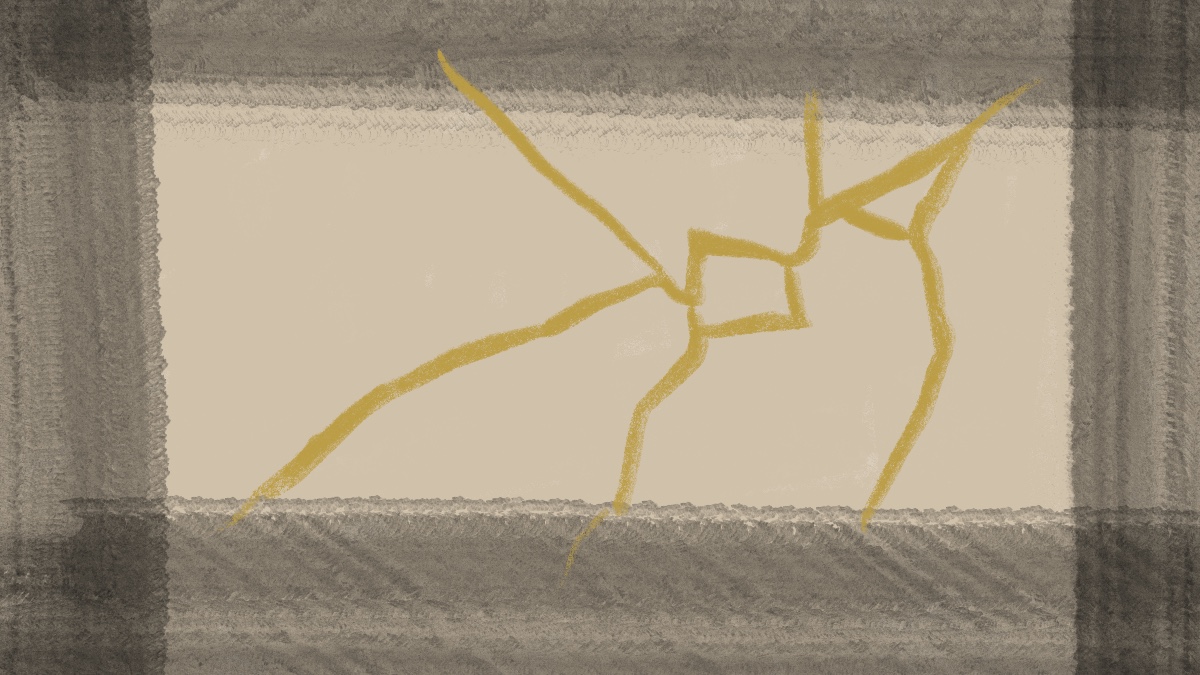
Some months back I was walking with a mate and we mentally meandered across the topic of Kintsugi. It is the art of repairing pottery with gold joinery. Turns out that this topic is getting the spotlight in Christian circles as a bit of a metaphor. Instead of deeming something un-valuable and not worth fixing (like ourselves) it is instead an opportunity to repair what was broken and make it more valuable than it originally was. To go through the process of being broken can in the end lead to greater value as we are repaired with golden glue. It is basically a metaphor that encapsulates the value of suffering and in a sense redeems the experience. The Christian can look at the work of Christ as having parallels with Kintsugi. We are made more valuable by the Lord Jesus who repairs us by his precious blood. Not bad, not bad.
I don’t mind this analogy, but that was actually incidental in the conversation. Me and my mate were particularly thinking about Kintsugi in regards to modern consumerism. We agreed, it’s got some good value to it. Let’s fight against our consumerist tendencies to merely replace what we break, let’s not give in to inbuilt obsolescence.
But how far do you go? What about repairing your broken jeans? How about learning amateur electronics to fix a broken power board? Do I learn how to bind books to fix the wear and tear mine have gone through? Or stitch myself together like action movie heroes do to themselves… I did do a nursing degree, hmmmm.
As we went through this process the difficulty of it becomes apparent. My mate labelled this difficulty as idealism. I think he was quite right in saying so. There is a sense in which, if you begin on the path of applying ‘Kintsugi’ into your life, you must ask, “where does it stop?” And if it stops sooner rather than later, does that mean you a bad person for not caring enough? When does convenience win?
Kintsugi is a hard practice in and of itself. But it is an especially hard ideal in the absolute sense. It is not convenient, it is against the tide, and time is indeed money. As a society we have lost many basic skills, such as mending things and basic agriculture. But we have gained a huge degree of specialisation. Every trade-off is obviously a trade-off. You are trading some goods for other goods. And in the case of modern consumerism it’s the ability to repair our own things and produce basic necessities for the sake of convenience.
This is not necessarily wrong. It’s just the trade-off we decided to pay. Convenience is not bad, just ask anyone whose clothes washer is broken for a week. It’s the reasoning behind our conveniences. The way we apply the rational of convenience is the issue. When you make the trade of convenience at the expense of justice, or compassion, or greed, you win in some way (such as more time, or ease of access) but you have done so at the cost of your integrity. Perhaps we might say it’s the integrity of your conscience which is now sullied.
In the end, Kintsugi is a nice idea applied more broadly (metaphorically speaking) to everyday life. That takes the art out of it in a sense, and devalues the wonder of Kintsugi. But that’s the price when life imitates art. However, in the end, I like my mate’s insight – it’s a hard master in its idealistic force. The weight of guilt this idealism would bring is impossible to deal with. I think justice warriors of our age might not get that, or they don’t see that (and most likely are just living by some unforeseen double standard).
 Bigvai and Shiphrah