
I don’t know what most parents expect as they buy their child’s first bike. Perhaps many see it as a necessary step in growing up, a milestone in independence as they are enabled to travel further faster. Or it could simply be a toy that happens to give them genuinely important life skills. After all, you never forget how to ride a bike.
When my parents first bought my bike, I’m sure they didn’t expect it to become such an integral part of my life for the next 15 years to come. I’m also fairly confident they didn’t know it would cause them so much stress and anxiety for those 15 years. My bike did enable me to travel further faster. However it was not with both wheels planted on the ground firmly, but with wheels sailing through the air at greater and greater heights, lengthier and more precarious distances, and at speeds that promised pain if those 2 wheels didn’t meet the ground perfectly at the end. Yes, their son became a BMX rider.
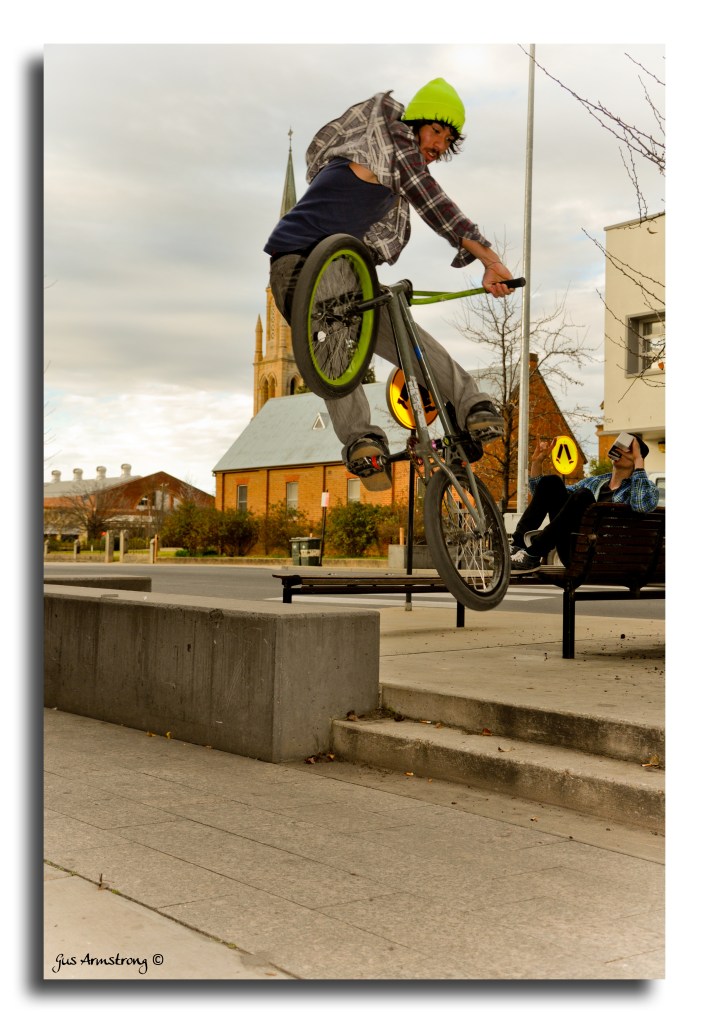
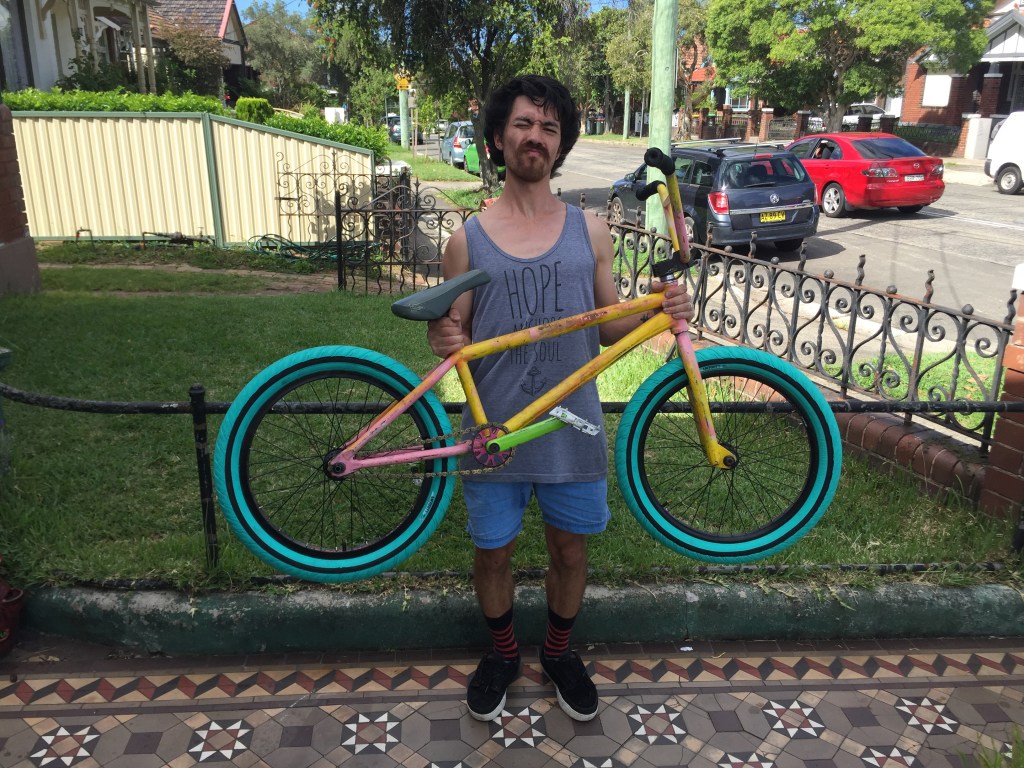
But earlier this year (2020) I sold my BMX. I’m getting older (28 is older in extreme sports terms), I don’t have as much time as I used to, and it’s taken a toll on my body. I sold it to a good dude who would put it to good use. Nevertheless, it was a very bitter experience selling my BMX bike. Seldom do I shed tears but that day I did. It was the first and only BMX bike I ever owned. I never bought a new one, I only ever replaced broken parts. In those 15 years, I’d hand-painted my bike and customised every part so it was a big deal to part with.
It felt like I’d really closed a chapter of my life and it prompted me to think about what those 15 or so years meant. What follows is simply my story and also my reflection.
My story
As I entered into the double digits of life I graduated from my tiny 16 inch Big W kid bike and started pedalling my yellow 20 inch Mongoose bike for the first time. It was heavier than I thought it would be and at first I found it hard to ride. But a little perseverance gets you a long way and competence soon followed. Bear in mind that by a little perseverance, I mean year upon year riding just about every day through high school.
I grew up in a town of about 5000 people which meant the resources for BMX were rather limited. The skate park was this tiny concrete pad with 7 or so metal ramps on it, none of which exceeded 2 m in height. All that to say, it was a perfect place to start. Just about every day my mates and I would go down there and push ourselves just beyond our limits. Then on the weekends we would branch out. I would go to the next town over, Mudgee, where they had a skate park equally as sketchy but it was bigger and made from concrete. If you know maths and physics, bigger ramps means bigger air (and also equally exponential pain upon failure).
But riding the skate park was not what I love to do most. I actually loved riding around town, riding around the streets and seeing what I could find. There was a particular kind of creativity that was required of you in this setting. The steep driveways became ramps. The public toilet wall was something to ride up. The library stairs and rail were to be cleared with a well-timed hop. Ledges became grind rails and street gutters were launch pads.

In one sense, this kind of creativity was pressed upon us as our skate park was quite small, which is okay because living in the country also provided me with other benefits. We had ample access to dirt, and as we all know, dirt is very mouldable and you don’t have to stop at 2 m high (especially when you have heavy machinery). I remember fondly how my friend would use an excavator to build dirt jumps in his paddock (which well exceeded 2 m!) It was an insane time while it lasted. I particularly recall (as it is seared into my mind) falling from a great height on 1 of those jumps and sliding down the haggard dirt on the other side on my legs and back. Although the wounds were superficial they were extensive. As I rode the 5 or more kilometres into town the wind would bite at my fresh wounds and it was unceasing. As I hobbled into my house, my mother was beside herself at my state. And although I dreaded the idea, I knew I had to have a shower and put water on these wounds… But it was all worth it of course. I don’t know why mum and dad couldn’t see that! Perhaps because they had to clean my bedsheets as my wounds would ooze freely… But I only speculate.
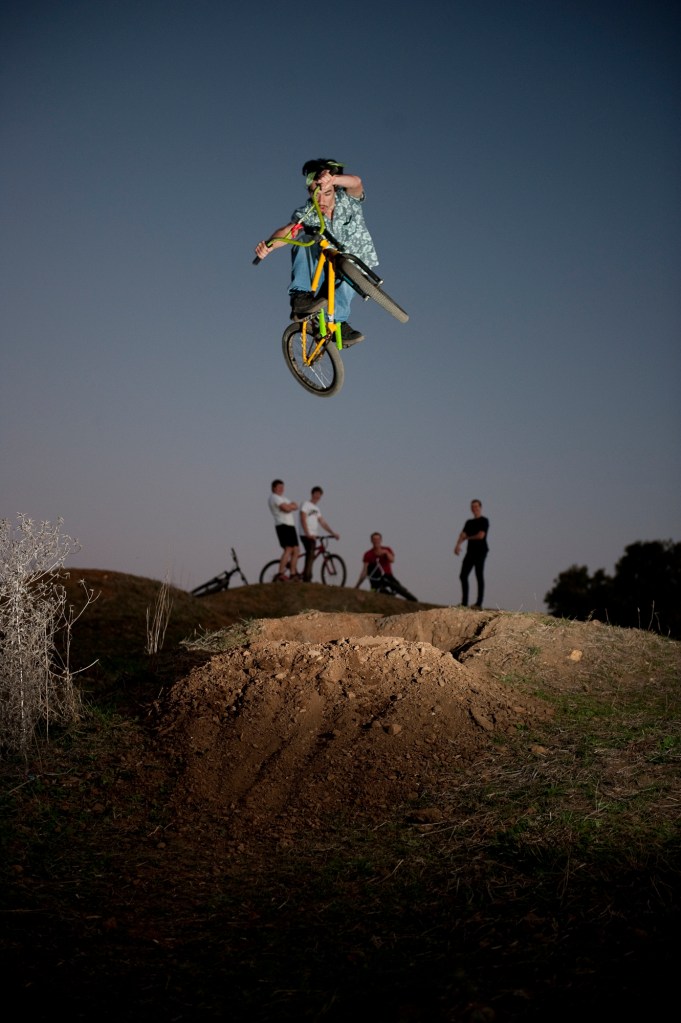
Eventually, in the last year of high school, the BMX crew would attain true freedom – P plates. And thus it was that we started road tripping (albeit, day trips) to other towns with bigger and better skate parks. We were also exposed to bigger and better BMX riders. At times that was intimidating because people at skate parks can be rough. Other times it was discouraging because they were so good and I wanted to be like them but couldn’t. But for the most part, it was great to see good riders because we were never exposed to many aside from the DVDs we bought at the newsagency.
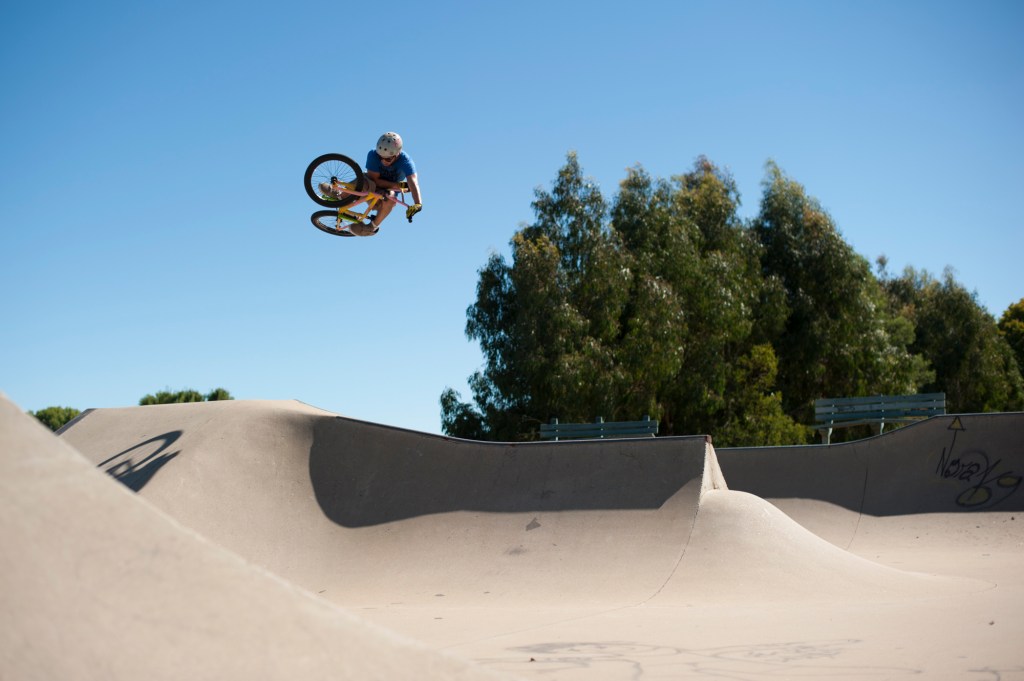
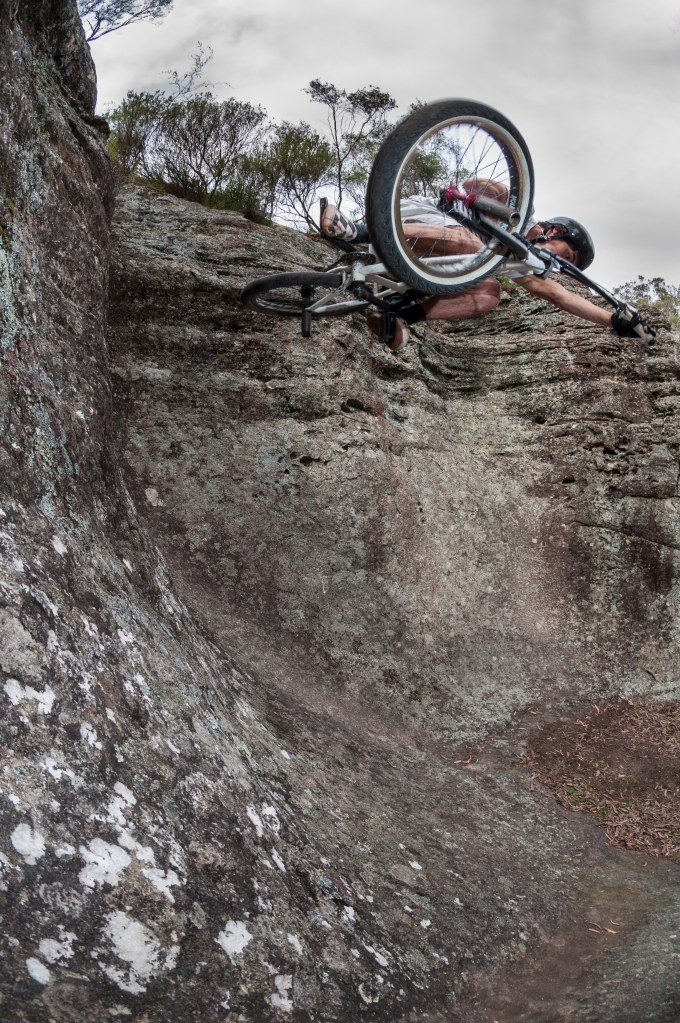
As high school ended so too did the continuous close contact with the crew become difficult. No longer could we ride at leisure whenever we wanted. But we had to make deliberate efforts to do so. And I’m so glad we did. Riding in the streets of Bathurst where I studied at university was some of the best riding I’ve ever done. I would consider myself at the peak of my abilities in those years. At one point I managed to make it into a BMX magazine called 2020. But it wasn’t a mere snap in the corner of the page, I surprisingly managed to be the “centrefold” as it were. I attribute that in no way representative of my skill but rather the lengths at which we would go for a good picture. We went out to a national park and rode on some of the rock formations that were around. It was an incredible time with old friends and especially so because we got such a good photo on the BMX.
However, by the later years of university BMX started taking the back seat. My friends and I became more distant which meant that I would ride more and more by myself which meant less riding in general. As I finished my degree and got a job as a nurse, I would move town. By this stage, I had taken BMX out of the back seat and put into the boot. I would still occasionally ride, but without my friends it was a lonely endeavour. This state of affairs persisted for many years. I stopped working as a nurse and moved to Sydney to study theology with my BMX still in the boot.
However, a couple of years into my bachelor of Divinity I began to ride more fervently again. This was mainly because I wanted to get out of the house and stay healthy (or perhaps I’m merely justifying my procrastination here). But I’d also discovered some more people to ride with. By this stage, my old friends were well and truly gone and instead I had a slow and steady trickle of random people that I would bump into at the skate park who would become BMX acquaintances. Of great help in picking up the BMX bike again was a friend at church who also rode BMX with me (and who, it turns out, I had run into some 6 or 7 years earlier one time at a skate park. How we recognised each other, I don’t know).
Revitalised, I rode for another 2 or 3 years. I certainly wasn’t as good as I used to be and nor did I want to be. It was that slow burn that I enjoyed. The simple joy of doing simple tricks with no real progress. There was something to that. In those years I won a BMX competition (really only because the guy that was definitely going to win it didn’t turn up), and I also tore a ligament in my shoulder. So they weren’t uneventful years and I literally have a chip on my shoulder to show for it.
What was particularly special about these last couple of years of BMX were the conversations. I became a Christian in university, really at the time when BMX was receding into the background a bit. So coming back to BMX afresh as well as doing a 4-year degree in theology meant that the conversations at the skate park were wonderful times to talk about faith and life. This was something I grew to love and long for. And was one of the harder things I knew I would be giving up as I gave up BMX (at least with the people at the skate park).
So why did I give it up? Mostly to do with my deteriorating back. I don’t know if BMX was causing the back pain or not. I assume it was, but equally, it may be another issue entirely. But at the end of the day, I was finding it harder to ride. In the moment I loved it. It was the next day… and the many days afterwards that were not to love. It seemed to me to be an unsustainable hobby and I thought it wiser to cease sooner rather than later. So I did, sadly.
After sitting on the decision to sell my bike for many many weeks possibly even months, I finally decided to sell it and did so very quickly. It was to a young lad who was starting off his journey in BMX. In fact, my bike was his first bike. And although I don’t really know the guy, my small interactions with him lead me to be confident that indeed the right person bought my bike.
The day I sold my bike I shed a few tears. I had to sit down and write in my journal about the experience. Which is a funny thing because in the weeks leading up to that day there were extended family that had passed away. I was not particularly close to them and so I was not moved as much by their passing (obviously not because I didn’t care, it was just a matter of emotional attachment), and yet at passing on my BMX bike I was moved very much. It was a strange experience to have come to such a bond with a bike.
What was it all about?
What did all those years of BMX mean in the end? When I sold my bike it made me ask this question. It was interesting to consider my life in that time. The most important thing that happened in that time was when I became a Christian. This perspective on life has changed the way I look at BMX and my time as a BMX rider.
You always want to be better at what you do and this was no different for me and BMX. There is an acute sense, as I remember it, of wanting to be better. I wanted to be better than I was the day before and I wanted to be better than others and I wanted others to see that. But as I reflect back on the many years, the best thing about BMX was the people. The people I rode with made those years, not just me and my bike, but me and my bike and my friends and their bikes.
And perhaps it has taken me all these years to learn that one simple lesson. If that’s all I’ve learnt, then I think it was very well worth it. In one sense it’s an obvious lesson. But of course I only say that now in retrospect. Our hobbies are never about our hobbies really, at least they probably shouldn’t be. Our hobbies should be about people. To enjoy the company of others as together we enjoy riding really fast and hurting ourselves, made the pain worth it and gave the skills and abilities we gained an anchor for meaning. I no longer have those skills like I used to which is okay because the skills only really mattered to those friends. Taken out of the context of those friendships, BMX was indeed a lonely affair. That is my main reflection as I consider those many years.
As I pick up new hobbies I’m hoping that this lesson endures through them all. What I do for fun isn’t necessarily about what I do for fun, rather it’s about the company of those pleasures. May it be the same with you, dear reader.
 Bigvai and Shiphrah
Woah. Yeah man. Thanks for sharing this hobbitual chapter. This is the first insight i’ve had into what makes bmx meaningful.
I think you do get to the heart of most hobbies – the paths shared, or eventually displayed, with appreciation of X.
Very understandable tears, I would feel the if I had to part with my formative violin. I have always considered hobbies as enduring or to persist with. My family was not one which chopped and changed, you had one costly extracurricular activity and you stuck to it. But you really honoured that hobbies can be chapters, and kudos to you honouring this chapter’s meaning, imprint, and purpose in the long run.
LikeLike
I appreciate your comment. i agree with you too, that i consider hobbies as enduring and persisting in too.
LikeLike